
Ever since I have consciousness of my earliest days, my memory is not filled with toys or cartoons, but with the sprawling, endless green oceans of sugar plantations. I was born in the heart of this green sea, in a small rural area called Saru, in Lautoka. To the outsider, it was just grass; to us, it was the world.
MY first subconscious memory is visceral, textured, and smells of earth and spices.
I can still feel the coarse cotton of my nani’s (grandmother’s) lengha bunched in my small fist as I toddled beside her.
She was a woman carved from resilience, carrying a battered aluminum kettli (kettle) steaming with lal cha (red tea) and a thariya (basin) heaped with bara and bhajia. We were walking toward the men — my uncles, brothers, and neighbours — who were battling the fields.
I remember being fascinated by them. They were like warriors of the soil, clad in long-sleeved shirts stained with sweat and soot, black pants that had seen better decades, and the ubiquitous topi (hat) pulled low against the blistering Fijian sun. In their hands, they wielded the cane knife — a blade that terrified and mesmerised me. It was an extension of their arms, flashing in the sun, rhythmic and deadly.
I would wait with bated breath for the cane trucks, those groaning, rusted beasts of burden, to rumble onto the field. Watching the men stack the cane, high and precise, was like watching the construction of a temple. It was labour, yes, but it possessed a dignity that I didn’t have the vocabulary to understand then.
If Saru was the green heart, my paternal roots were the golden veins. My paternal grandparents’ house stood in Vunqele, Vatukoula, Tavua. For generations, that side of the family had descended into the earth, working the Emperor Gold Mines.
But even there, amidst the allure of gold, the green stalks of sugarcane persisted.
It was a duality of existence. On one side, the dark, claustrophobic shafts of the mines; on the other, the open, sun-drenched fields.
Yet, it was the sugarcane that felt like the true currency of my childhood. It was the root of all finances. Every grain of rice on our plate, every school exercise book I scribbled in, every litre of fuel that powered our car — it was all funded by the sweet juice of that grass. The harvest wasn’t just a season; it was the difference between poverty and survival. When the cane payments came, the house breathed a sigh of relief. When the harvest was poor, the silence at the dinner table was deafening.
Growing up in Lautoka, the “Sugar City,” I developed a complex, painful relationship with the very thing that fed us. I remember the drive into the city, sitting in the backseat of my dad’s car, pleading with him to take the Kings Rd route, anything to avoid the Navutu Rd side.
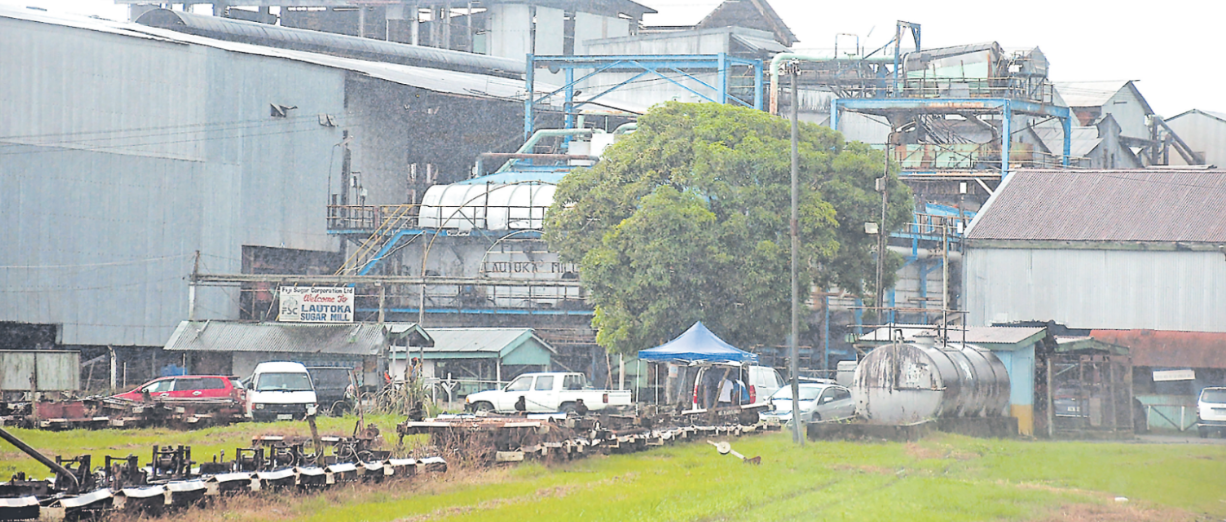
Why? Because I cringed at the sight of the Lautoka Sugar Mill.
It stood there like a dying leviathan, dominating the skyline. Its corrugated iron was eaten away by rust, its chimneys belching black smoke that settled as soot on our laundry and our lungs.
It looked tired. It looked broken. To my young, aspiring eyes, it looked like poverty.
I used to get a “complexion” — a deep, burning embarrassment — when I saw a pristine white cruise ship docked at the Lautoka wharf. I would imagine the tourists, fresh from the first world, standing on their balconies, looking down at our rusty, dusty mill. I projected my insecurities onto them: They must be judging us. They must think we are dirty. They must smell the molasses and the decay.
How wrong was I? How incredibly, naively wrong.
I didn’t see then that the rust was not a sign of neglect, but a badge of honour. That mill was not an eyesore; it was a monument. It was a cathedral built on the broken backs and the unbreakable spirits of our ancestors — the Girmitiyas. That “dirty” smoke was the incense of our survival. The smell was not stench; it was the smell of history being made, ton by agonising ton.
Today, the silence in the fields is louder than the trucks ever were. We must ask the hard question, the one that catches in our throats: Is the sugar dying? Or is it already dead?
The statistics are an eulogy. From the glory days of the 1990s, when we produced over 4 million tonnes of cane, we have plummeted to barely 1.3 million tonnes in 2024.
The crush is slow; the TCTS ratio (Tonnes Cane to Tonnes Sugar) is abysmal. The European Union’s preferential prices — the lifeline that kept us afloat after the Lomé Convention — are gone.
But it is not just economics. It is a spiritual death. My family’s sugarcane farming died with my grandparents. My parents, like thousands of others, packed their bags and moved to the urban centres. They traded the cane knife for the office pen, the sun for the air conditioner.
And honestly? I cannot blame them. Today, I would not uproot my life to go back to the fields. Why would one want to get into sugarcane plantation and farming now? The cost of fertiliser is skyrocketing, labour is non-existent because the youth have fled to the cities or overseas, and the climate itself has turned against us, battering the crops with cyclones and droughts. The land tenure system, the expiration of ALTA leases, left thousands of farmers – men like my grandfather – watching helplessly as the land they toiled on for decades was taken back, reverting to bush while they reverted to destitution.
This is the crux of our identity crisis. The sugarcane is a double-sided coin, and we have spent generations trying to flip it to the side that doesn’t hurt.
On one side, the coin represents our identity and victory. It is the undeniable truth that our ancestors were brought to Fiji not as tourists, but as beasts of burden for British sugar and cotton plantations.
They were “coolies,” numbered and dehumanised. Yet, from that “narak” (hell), they emerged not as victims, but as victors. They educated their children in candlelit shacks; they built schools before they built their own homes. They turned a sentence of servitude into a legacy of nation-building. The sugar industry was the ladder they built, rung by rung, to climb out of the indentured lines.
But flip the coin, and you see the stigma. The sugarcane represents the humiliation of colonial rule. It represents the “coolie” slur. It represents the whip of the overseer and the poverty of the barracks. It is everything bitter about our history.
This is why we run from it. We ran to Suva, to Sydney, to Auckland, to Vancouver. We become doctors, accountants, IT specialists — anything but farmers. We run to build our own narratives, to scrub the cane soot from our skin. We want to remind the world (and ourselves) that we succeeded inspite of the past, not because of it. We look at the cane field and see a prison we escaped.
But here is the hard-hitting truth we must face: We cannot let the sugarcane die.
If we let the industry collapse into the dust of history, we lose more than just an export commodity. We lose the physical tether to our genesis in this land.
The decline of the sugar industry is a mirror of our own fading cultural memory. As the mills rust into oblivion, so too does the memory of the struggle. When the last cane truck rumbles into the Lautoka mill for the final time, a silence will fall over Fiji that no amount of tourism dollars can fill.
We can change it. We can modernise it. We can move from raw sugar to ethanol, to refined energy, to bioplastics. We can fight for fair leases and dignified labour conditions. But we cannot abandon it.
That mill in Lautoka, with its peeling paint and wheezing machinery, is not a source of shame.
It is our Arc de Triomphe. It is our pyramids. It is the altar where our grandparents sacrificed their bodies so we could have a mind to critique it today.
To let sugar die is to sever the root. And a people without a root, no matter how high they fly or how far they run, will eventually wither. The cane field is not just dirt and grass; it is the marrow of the Fijian soul. It is our identity. We can modify it, we can evolve it, but at the end of the day, the sweetness in our blood comes from that struggle.
We must honour the rust. We must respect the grass. Because without it, we are just ghosts wandering an urban landscape, forgetting where we came from.
ASHNEEL JAYNESH PRASAD is a Fiji-born educator currently based in Shinagawa, Tokyo, Japan. He frequently contributes to this newspaper on themes of identity, cultural heritage, and social reform.

