
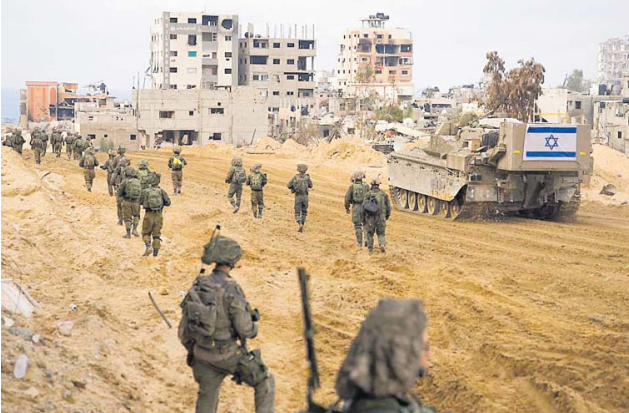
In the grand, tragic theatre of the Israeli-Gaza conflict, a perilous and incongruous invitation now extends to the South Pacific.
As traditional peacekeeping powers — from Indonesia to Arab states —hesitate, calculating the immense risk of a mission that is less about keeping peace and more about enforcing it, the request has landed on Fiji’s desk.
This is not a call to serve a settled peace; it is a summons to enter a fray where one protagonist, Hamas, has declared it will not lay down its arms. For Fiji to answer would be to confuse prestige for principle, and in doing so, betray a far more urgent duty to its own people.
Defence Minister Pio Tikoduadua’s surprise announcement, framed with solemn pride before returning peacekeepers, reveals the seductive pull. For a small island nation, being asked to help solve a world crisis whispers of elevated status, of becoming a “global player”.
Yet, this is a siren’s call. The proposed mission is peace enforcement, a mandate to actively dismantle militant infrastructure in a shattered territory where there is no consensus for foreign intervention.
It is a mission so dangerously ill-defined that regional actors are twiddling their thumbs, not rushing forward. Fiji would not be stepping into a neutral buffer zone, but into a political and military labyrinth of urban guerrilla warfare, with no clear exit strategy and every risk of becoming a permanent target.
This is not peacekeeping; it is a potential suicide mission.
The profound contradiction, however, lies not in Gaza, but in Suva. Just months ago, the Fijian government launched its inaugural National Security Strategy (NSS), a document of commendable clarity.
It wisely frames security not in terms of distant battlefields, but in the dignity, justice, and resilience of Fijians at home. It identifies the “blooming plague” of transnational crime and the methamphetamine epidemic as a clear and present danger, a crisis “shredding communities” and corrupting the nation’s fabric.
Record drug busts valued in the billions signal not victory, but the staggering scale of the invasion.
To even seriously contemplate deploying military focus and resources to Gaza is to declare this domestic war a secondary concern. It renders the NSS a performative document — a strategy in name only.
What is a national security strategy for, if not to guide the hardest choices about where to dedicate a nation’s finite courage, capital, and political will?
The government cannot credibly claim to wage a “critical battle for the soul of our nation” at home while diverting its attention and assets to a conflict thousands of miles away.
This brings us to the uncomfortable political calculus. Deploying soldiers can be framed as a patriotic, vote-winning demonstration of strength and international allegiance.
Yet, this reduces brave citizens to political tokens, sent into harm’s way for transient domestic gain. It evokes the mournful, cyclical refrain of the protest song “Where Have All the Flowers Gone?” — a lament for young men forever gone to soldiers, soldiers gone to graveyards, and graveyards forgotten until the cycle repeats.
The question posed by the song hangs heavy: “When will they ever learn?”
True sovereignty and courage are not demonstrated by the capacity to say “yes” to every request from powerful partners.
They are demonstrated by the wisdom to say “no”. The moral authority of Fiji’s military on the global stage is rooted in the strength and health of the society it serves.
To deploy soldiers from a nation struggling to secure its own ports, streets, and youth from criminal syndicates fundamentally undermines that authority.
The principled, unassailable response to the invitation is clear: “Our first duty, as mandated by our own National Security Strategy, is to secure Fiji for Fijians. We are engaged in a decisive fight for our future and cannot in good conscience commit to this enforcement mission abroad.”
Choosing this path is not isolationism; it is the pinnacle of strategic maturity. It would tell the world that Fiji takes its own security, its own strategy, and its own people’s lives with supreme seriousness.
The world’s fires will always beckon, and the instinct to help is noble. But when your own house is filled with the smell of smoke, the only responsible act is to defend your hearth.
Our soldiers’ courage is not in question. The question is the courage of our political leadership to resist the seductive glare of distant drama, to prioritize the palpable over the symbolic, and to match solemn strategy with solemn action.
The invitation from Israel is a test. Passing it requires the fortitude to decline. Saying “no” would be the highest mark of a nation that knows who it is, and where its true duty lies.

