
A few years ago, at Berlin’s Humboldt Forum, Nigerian writer Chimamanda Ngozi Adichie delivered a speech that was less an address than a moral thunderclap. She did not politely request; she righteously indicted. Her target was Europe’s hoarding of Africa’s looted heritage, and her argument pierced the heart of the matter: this is not about curatorial expertise, but about dignity. It is about the “paternalistic arrogance” that insists some cultures are incapable of guarding their own souls, and the enduring injustice that treats stolen memory as legal property.
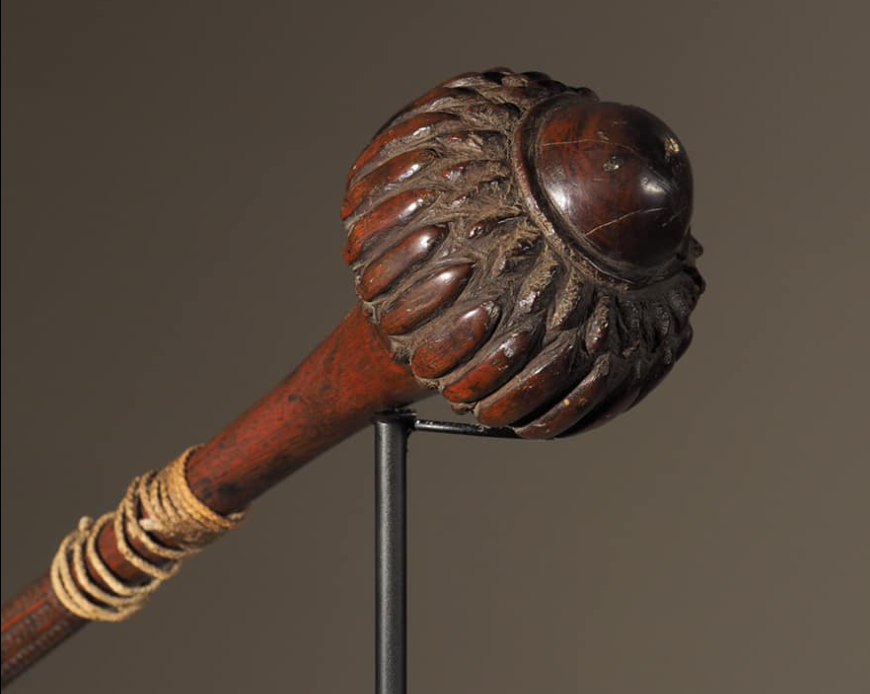
Adichie’s clarion call demands a broader geography of conscience. It compels us to look at ourselves and to the scattered i yau vakaviti, that languish in the climate-controlled silence of European museums. Their continued exile is a parallel testament to colonial theft and a glaring, unmet demand for restorative justice.
The history is not vague; it is specific and insidious. From 1874, under British colonial rule, a systematic extraction occurred. These were not the benign acquisitions of a bygone era of exploration. They were transactions – and outright seizures – conducted under a brutal power imbalance. Sacred tabua, the very currency of our social and spiritual life; wooden ancestor figures that housed the divine; and immense, genealogical masi tapestries and more, were taken. They were taken by colonial administrators, by naval officers, by missionaries who saw idolatry where iTaukei saw ancestors, and by collectors who saw curios where iTaukei saw the embodiments of vanua. This was not collection; it was a severing of cultural nerves. Today, these sacred objects sit in the British Museum, the Pitt Rivers in Oxford, the Museum of Archaeology and Anthropology in Cambridge, and others, labeled as “art” or “artifact,” their profound context reduced to a sterile caption.
To hear the arguments against their return is to listen to a broken record Adichie expertly scratched. There is the patronising refrain: But can Fiji care for them? This question, dripping with a colonial hangover, ignores the Fiji Museum in Suva, a steadfast institution actively pursuing repatriation and steeped in traditional knowledge. It ignores the Pasifika’s own sophisticated practices of preservation, which understand that an object’s life is in its use and connection, not just its atmospheric stability. Then, there is the grand, hollow myth of the “universal museum.” This idea – that these objects are better off in London or Berlin for all the world to see – is, as Adichie branded it, a “paternalistic arrogance”. It is a philosophical sleight of hand that transforms loot into a global public good. Whose public? Whose good? It frames Fijian heritage as a commodity for the global north’s enlightenment, while denying the source community the right to its own spiritual and cultural continuity. It is the ultimate act of narrative control: Europe gets to define the story, the significance, and the terms of access for the very heart of another people’s identity.
For Fiji, this is not a scholarly debate about museology. It is a matter of cultural and psychological repair. These objects are not “artifacts”; they are living documents. A tabua presented today in ceremony is a direct link to centuries of protocol and social binding. A returned ancestor figure can re-activate a lineage’s memory. Their absence is a void – a tangible gap in our cultural memory. Their return is a step toward making whole what was fractured. It is the difference between reading a description of your family in an archive and holding your own grandmother’s photograph.
Yes, there are cautious, bureaucratic stirrings. Some UK museums are engaging in “knowledge exchange” and “partnerships” with the Fiji Museum. This is a start, but it must be seen for what it often is: a delaying tactic, a way to appear progressive without relinquishing power. True partnership does not fear physical return. True respect graciously hands back what was never rightfully held. The precedent is no longer theoretical; Germany’s return of the Benin Bronzes shattered the illusion of impossibility. What is lacking is not precedent, but the moral and political will to follow it.
Therefore, revisiting Adichie’s call for Fiji is an act of intellectual and ethical necessity. It shames the incomplete conversation. The Pasifika’s colonial history – of conversion, indentured labour, and strategic imperialism – may differ in detail from Africa’s, but the underlying crime of cultural theft is identical. The principle is universal. As Adichie compellingly argued, “A society that believes in the rule of law does not debate returning stolen property. It returns it.” To debate is to dignify the theft.
The return of i Yau Vakaviti would be more than a transaction; it would be a transformative act of recognition. It would declare, unequivocally, that iTaukei history is not a peripheral exhibit in the story of empire, but a central, sovereign narrative that must be told by its own people. For Europe, this is the path to integrity. It would not be losing curiosities of a conquered past; it would be finally confronting that past and, in the returning, gaining a measure of the dignity it has long denied others. The world is watching. The moral reckoning Adichie demanded in Berlin echoes now across the Pasifika. It is time to listen, and to return.

