
Recently, we’ve heard endless talk from politicians, officials, and “experts” about how Fiji must fight against drugs.
We’ve heard calls for tougher enforcement measures and harsher penalties, and more recently renewed appeals for community and faith-based responses, including the need for prayer, and there is always a need for prayer.
But with all due respect, it’s time we admit that nobody really knows what they’re talking about, because Fiji has never dealt with criminal elements this sophisticated, and I am not talking about the foot soldiers who get caught here. I am talking about the sophisticated drug operations that are HQ’d in South America and China.
THE infiltration of drugs into Fiji has been swift, vast, and unstoppable, ripping through communities and not discriminating between ethnicity, age, or socioeconomic status.
The Australian Broadcasting Corporation has reported that various cartels use isolated ports in Fiji to traffic crystal meth and other drugs to Australia. Let’s talk about the cartels for a second.
The drugs they move alone are estimated to be worth between $US400 and $US600 billion. Fiji’s GDP is around 6 billion. These guys are well-equipped with the latest weapons, technology, and a network of paid contacts that make them a force to be reckoned with.
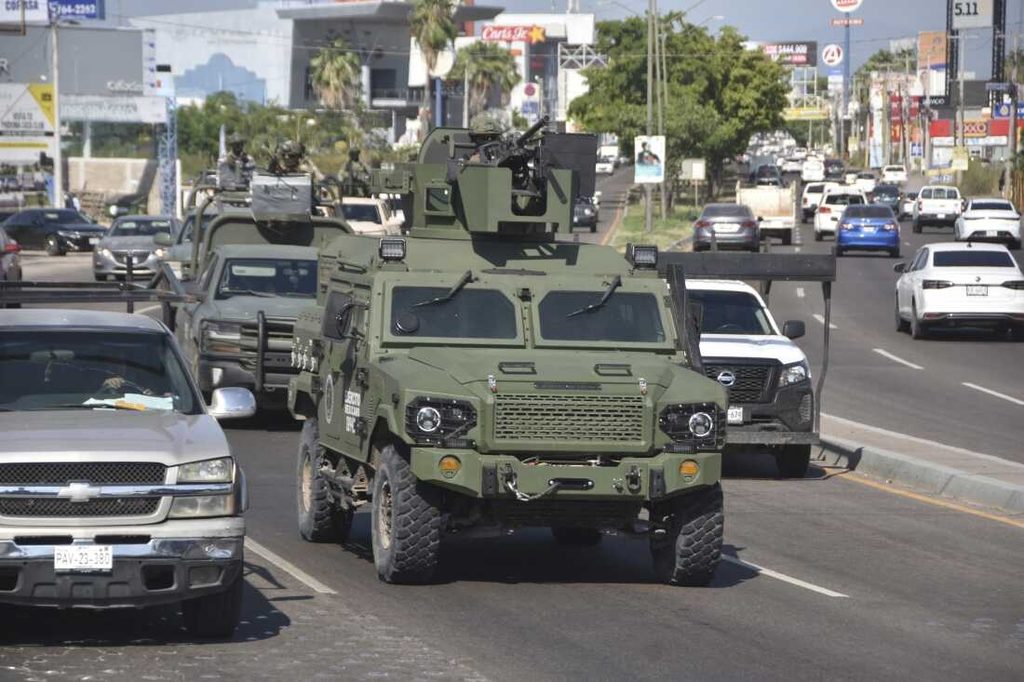
Some of these organisations have heavy armoured vehicles. They have drones. They have submarines. There are even rumours that they have fighter jets. They have attack helicopters.
They’re technologically sophisticated in ways Fiji’s never imagined and make our tech organisations look like children playing with a Game Boy Advance.
In Mexico, the town of Aguililla, Michoacán, is an infamous example. There, cartels like the Jalisco New Generation Cartel essentially hold territory, and even Mexico’s military forces have been driven out.
To put that into perspective, Mexico has a military far more capable, battle-trained, and equipped than Fiji, and operates its own tanks and air force.
Now compare that to Fiji’s military and Police. We use outdated equipment, are underpaid, and are easily bribed, and are very clearly outgunned in every department. Facing the cartels is not the same as guarding a checkpoint in Sinai, as much as it hurts me to say.
Better and much more powerful security forces are being completely outplayed by the drug cartels, and we can all clearly see that our forces are totally out of their depth.
Let’s not kid ourselves. Australia and New Zealand, with their vast security forces, are struggling. And here we are thinking a few busts will save us. You bust 100 tonnes of cocaine, 1,000 more are waiting to flow in. You take down a hundred cartel enforcers, they have hundreds more ready.
Let’s not forget China’s role in the methamphetamine trade, which is well documented. Chinese chemical companies produce precursor chemicals like ephedrine and pseudoephedrine, which are then shipped to cartels in Mexico and elsewhere.
The US has previously accused China, including President Trump, of fuelling the fentanyl and meth crisis through these chemical exports.
And what do we do? Open up visa-free travel between Fiji and China. Are we really surprised that we find Chinese nationals selling drugs?
So what can we do?
I am writing this piece in the hope that people understand the true scale of what we are facing and accept a hard reality. No politician, no police unit, and no military operation is going to save us.
Families are the last line of defence.
Media reports are already warning that meth and other hard drugs are reaching younger age groups, including high school students, and possibly even filtering into primary-level environments.
There is a culture in Fiji, and I say this as someone who grew up in it, where children are often left largely unsupervised after school and during long holidays.
Today, unsupervised time is vulnerability.
Parents and guardians must become more intentional and more watchful. Know where your children are. Know who their friends are. Speak to their friends’ parents. Build small parent networks. Share information. Check patterns. Notice behavioural changes. Ask questions. Stay involved.
As long as we leave children to navigate this new landscape alone, while adults remain consumed by work, distractions, or social habits, criminal networks will continue to find openings. Drug recruiters do not knock loudly. They enter quietly, through gaps in supervision and attention.
And once addiction takes hold, the cost to the child, the family, and the community is devastating.
Also, we need a specialised and independent drug task force which can investigate the Police, but that’s for another day.
Until next week, take care and be safe.

