
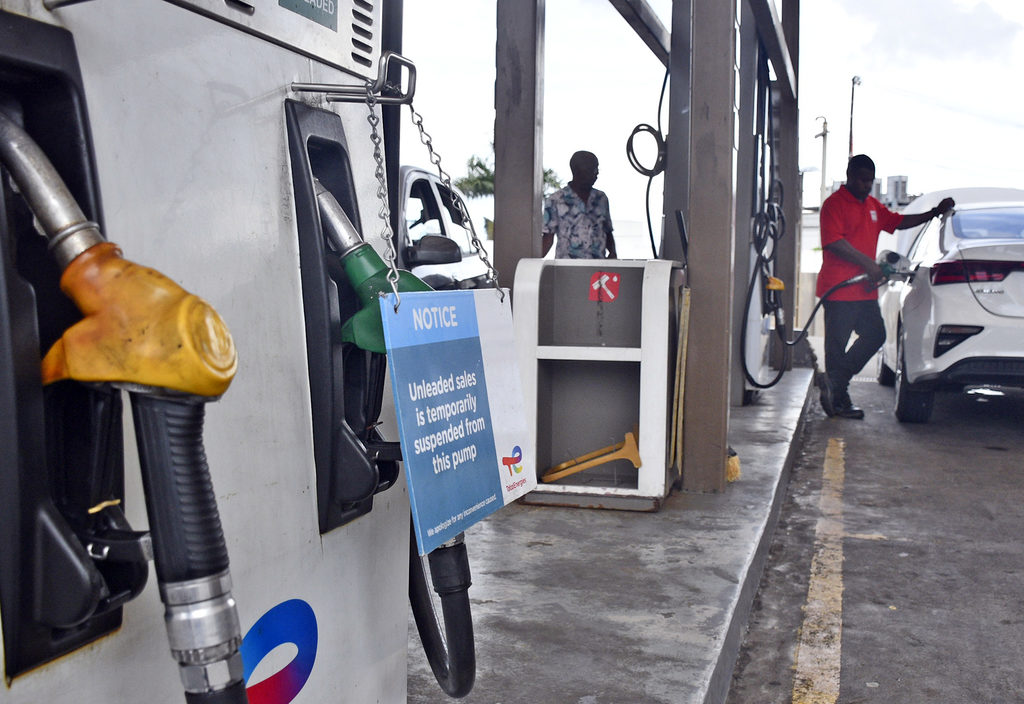
ON April 1, 2026, the Fijian Competition and Consumer Commission (FCCC) delivered numbers that stopped Fijians at the pump.
Petrol rose 49 cents per litre, from $2.44 to $2.93, a jump of 20.1 per cent. Diesel surged 75 cents, from $2.14 to $2.89, an increase of 35.1 per cent. Kerosene, the fuel of Fiji’s rural poor and maritime communities, climbed 71 cents from $1.69 to $2.40, a 42 per cent increase.
In Rotuma, kerosene now sells for $3.14 a litre. These are not incremental adjustments. They are a structural cost shock to an economy with no domestic energy production, no strategic fuel reserve, and a population in which the majority depends on regulated public transport to reach work, school and market. The FCCC extended its reference period by an additional twenty days beyond the standard one-month window to capture accelerating replacement costs following the closure of the Strait of Hormuz.
The change in methodology was disputed by Fijians, due to the sudden jolt on the poor, especially for the 42 per cent increases on kerosene for cooking.
The global trigger
The global driver is the United States-Israel campaign against Iran, launched on February 28, 2026 as Operation Epic Fury, which triggered Iran’s closure of the Strait of Hormuz, the waterway through which approximately 20 per cent of the world’s traded oil passes.
Brent crude surged above $US117 a barrel at the conflict’s peak before the April 8 ceasefire brought prices to the $US95 to $US100 range, still forty per cent above pre-crisis levels.
The Strait remains constrained, shipping insurance premiums remain elevated and the ceasefire is fragile.
The FCCC has been explicit: replacement supply is being secured at significantly higher cost, and prices could rise further if global routes remain disrupted.
Fiji holds above 50 per cent of its fuel supply with shipments secured to end of May 2026. Beyond that date, continuity depends entirely on geopolitical conditions in a theatre over which Suva has no influence.
The Government’s four pillars
Prime Minister Sitiveni Rabuka announced the response following a National Security Council and Cabinet meeting.
Four pillars: direct subsidy to bus operators to maintain fare stability; diesel cost support for Energy Fiji Limited (EFL) to secure electricity supply; increased welfare payments for pensioners and social assistance recipients; and a proposed 20 per cent pay reduction for Ministers, Assistant Ministers and MPs, subject to parliamentary approval.
A further proposal to reduce Fiji National Provident Fund (FNPF) contributions was flagged, also contingent on Parliament. These are the announced measures. It is worth separating what has been decided from what has merely been discussed, and what has been implemented from what still requires legislative passage.
The business community and the public are entitled to ask a harder question: which of these will reach them, when and through what mechanism?
The bus subsidy accountability gap
The bus subsidy is where the transmission risk is highest. Bus transport carries the majority of Fiji’s workforce to employment daily, making fare stability a direct input into household disposable income.
A subsidy without binding service obligations, route frequency guarantees and compliance monitoring cannot be assumed to deliver its economic purpose.
Bus operators have already reduced service frequency and cut lower-volume routes in response to rising costs, with no regulatory consequence.
If that pattern continues under a subsidised fare regime, the government pays operators to run fewer services than before the crisis.
Fiji Labour Party leader Mahendra Chaudhry identified the structural flaw: “Provide direct relief to bus operators is ambiguous and does not guarantee that support gets to the people.”
Without enforceable performance conditions, the subsidy is a budget cost with an uncertain economic return.
EFL, FNPF and the corporate welfare question
The diesel subsidy for Energy Fiji Limited addresses a genuine economic exposure. Unsubsidised diesel cost increases at EFL flow directly into load shedding risk, with measurable consequences for SME production, cold chain integrity, healthcare operations and tourism revenue. The economic case is sound; the absence of published performance terms for what EFL must deliver in return is a transparency gap. The FNPF proposal carries a different risk profile. Reducing mandatory superannuation contributions provides short-term cash flow relief to businesses and households but directly erodes long-term retirement savings for workers with no alternative formal provision. Labour leader Mahendra Chaudhry warned it would “negatively impact the savings that workers need for their retirement.”
Trading a short-term liquidity gain for a structural long-term liability is a risk the business community itself should scrutinise carefully.
The gaps: Taxis, SMEs and the sugar harvest
The relief framework contains sectoral gaps with direct economic consequences. The taxi industry, providing essential transport for medical, rural and after-hours movement, has received no targeted support despite regulated fares unchanged for fourteen to sixteen years. At $2.89 a litre for diesel, operating economics are structurally negative at current fare levels.
Fiji Taxi Association board member Bal Naidu confirmed drivers are absorbing rising fuel costs against fixed weekly payments to vehicle owners, leaving margins that cannot sustain the current environment. The SME sector, accounting for a significant share of private employment and retail activity, has received no sector-specific relief. Most critically for national revenue, the 2026 sugar cane harvest begins in June at precisely the moment fuel supply security beyond May becomes uncertain.
Higher diesel costs for harvesting and haulage translate directly into reduced FSC throughput and compressed export earnings.
Medium-term pricing risk
From a business planning perspective, the central risk is not the April increase alone but the medium-term pricing trajectory.
A ceasefire is not a price reset, and businesses that plan as though it were will be caught again. Brent crude rebounded sharply within 48 hours of the ceasefire as Strait constraints persisted; the Baltic Dry Index, which directly influences Fiji’s fuel import landed costs, remained elevated through early April. Global oil markets typically require months to stabilise following a major supply shock, with freight rates and insurance premiums persisting well after hostilities end.
ANZ regional economist Dr Kishti Sen has previously warned that Fiji’s fuel import structure leaves it acutely exposed to elevated pricing with limited domestic policy levers to offset the impact. The IMF’s most recent Article IV consultation flagged Fiji’s fuel import dependence and thin fiscal buffers as compounding risk factors. For businesses, the horizon is not whether prices return to March 2026 levels, but how long the current range persists and whether relief measures remain operational when the next FCCC determination is issued in May.
Four measures that would help
Four practical improvements would strengthen the current response. First, the bus subsidy must carry enforceable service obligations: minimum route frequency, published timetables and a compliance mechanism with financial clawback for non-performing operators. A subsidy with no strings is a transfer with no guarantee. Second, direct cash assistance to low-income households delivers relief to consumers, not intermediaries. Third, a time-bound reduction in excise on kerosene, the fuel with the sharpest increase and deepest impact on rural and maritime households, would provide immediate broad-based relief.
Fourth, minimum wage adjustment is overdue
Chaudhry has called for an increase and the arithmetic is simple — wages that do not move when fuel costs rise by 42 per cent are a real wage cut compounding every other cost the household faces.
The government has outlined a direction; the public needs delivery with timelines, accountability structures and published metrics.
Several significant measures, including FNPF contribution adjustments and the ministerial pay reduction, still require parliamentary debate with no confirmed sitting date announced.
Parliament moves at its own pace; fuel prices do not wait. Comparable regional economies activated relief frameworks within days of the Hormuz closure: Australia, New Zealand and Papua New Guinea all moved in the first week of March. Fiji’s announcement came in early April.
As of today, not one cent of the promised relief has reached an ordinary Fijian in any form whatsoever.
-Dr Sushil K Sharma BA MA MEng (RMIT) PhD (Melbourne), is a World Meteorological Organisation accredited Class 1 Professional Meteorologist, a former Associate Professor of Meteorology at the Fiji National University and Manager Climate Research and Services Division at the Fiji Meteorological Services. The views expressed are those of the author alone and not of this newspaper.
Dr Sushil Sharma for Picture Byline.
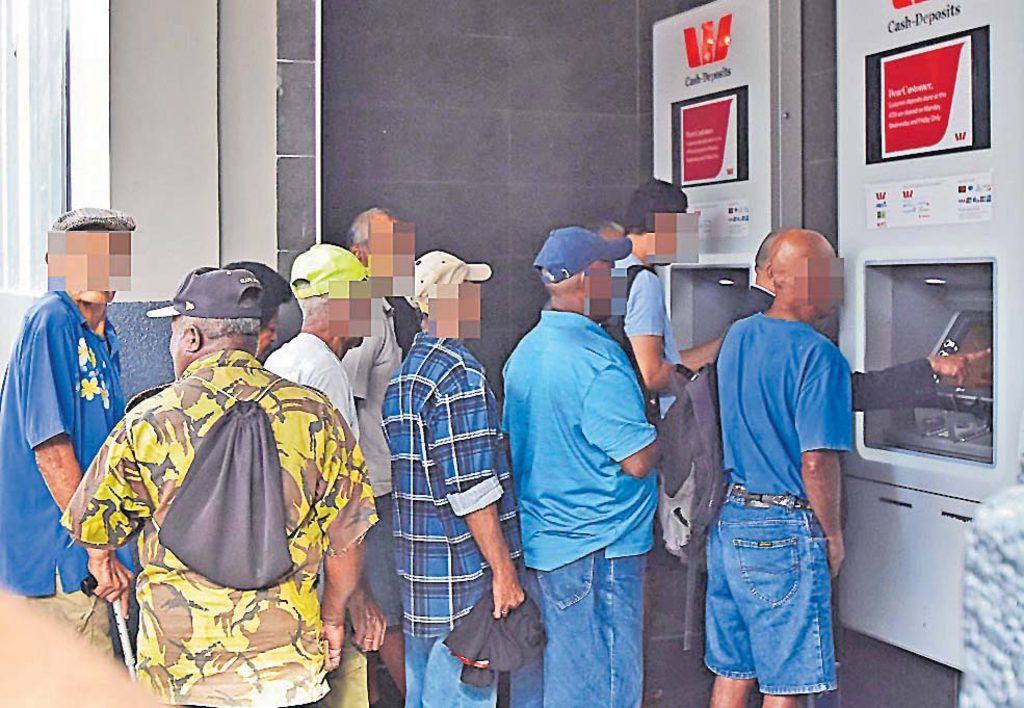
Direct cash assistance to
low-income households delivers relief to consumers, not intermediaries, writes Dr Sushil Sharma.
Picture: FILE

