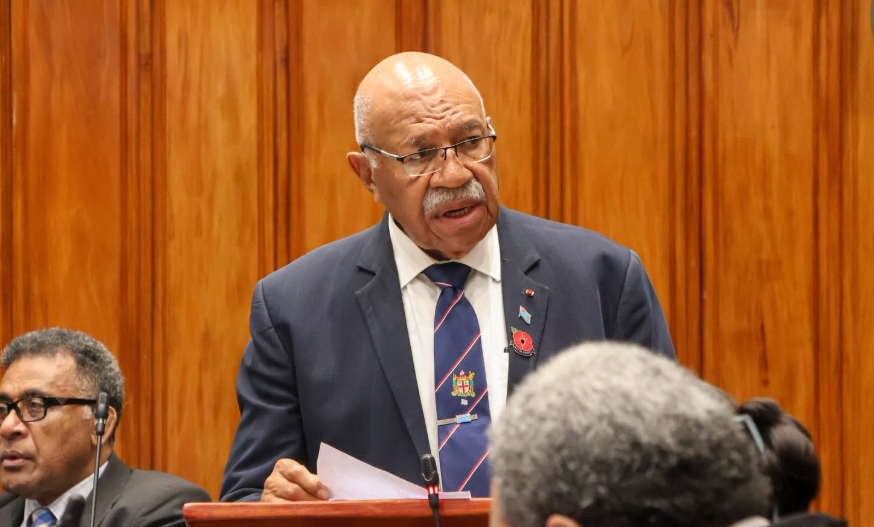
This last week has seen a very positive development with Prime Minister Rabuka proposing that all ministers take a 20 per cent pay cut and reduce all their frequent overseas trips.
While some cynics have publicly labelled this as a superficial gimmick before the next election, nevertheless the measures proposed will save some taxpayers’ money.
May I suggest to the Prime Minister that he could save some more of taxpayers’ funds by advising his 2026 Constitution Review Committee that they do not waste tax-payers’ money on community wide consultations for the public’s views on desirable electoral reform.
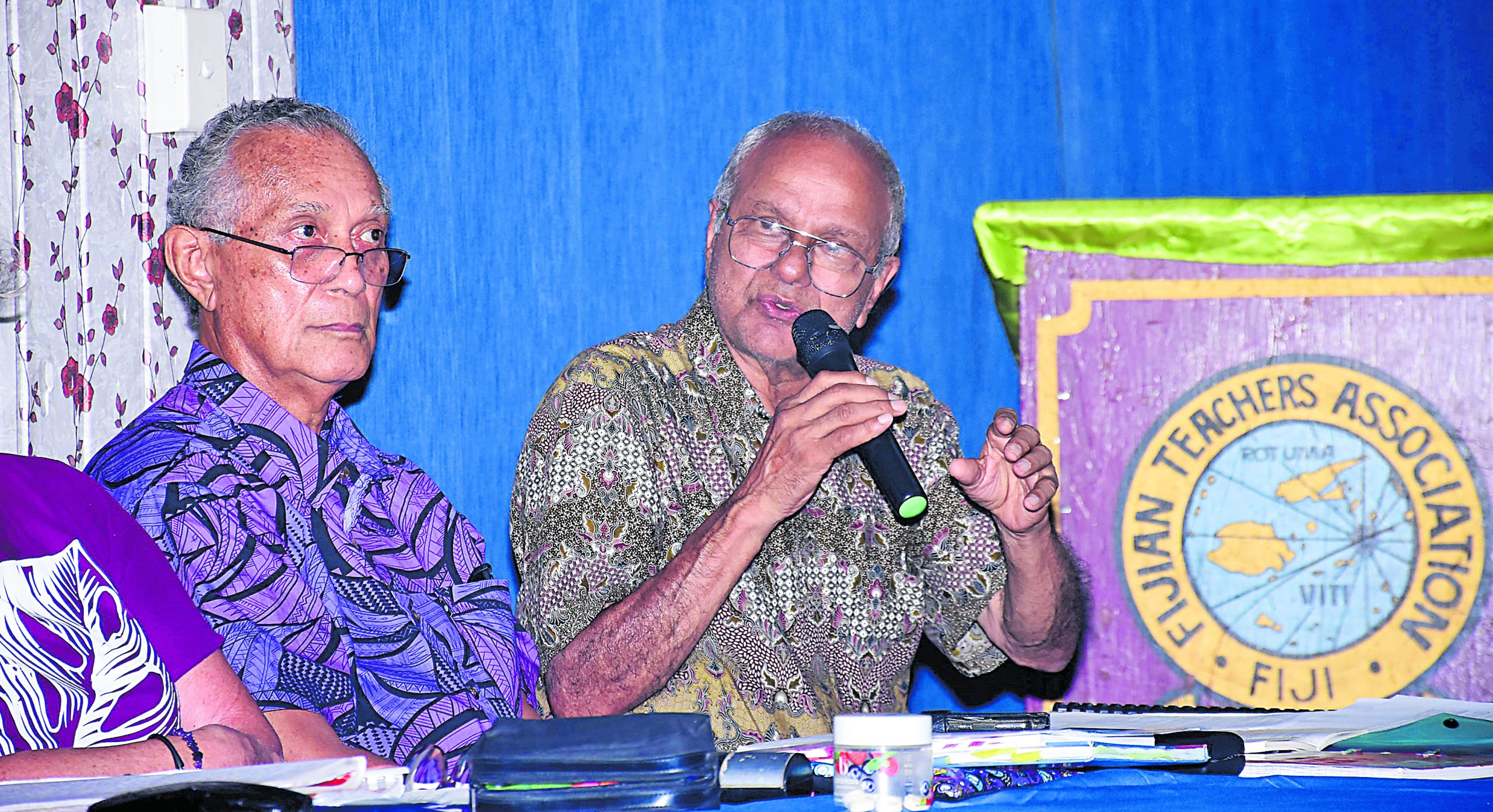
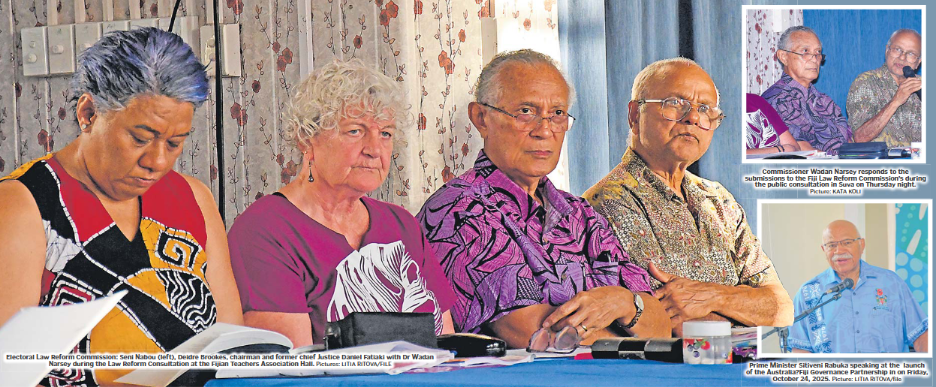
This would merely cover the same grounds that the 2025 Fiji Electoral Law Reform Commission (FELRC) chaired by Danial Fatiaki (former Chief Justice), and comprising Professor Wadan Narsey, Seini Nabou and Dr Deidre Brookes – covered quite comprehensively – in the words of the Fiji Law Reform Commission, demonstrating Fiji’s commitment to inclusive and participatory policymaking. The final report will be made publicly available in due course.
Nine months on, while that report has not been made publicly available or even tabled in Parliament, Mr Rabuka can remind the 2026 CRC that the 2025 FELRC had focused on electoral law reform in their Terms of Reference (TORs), far more comprehensively than required of the 2026 CRC.
The TORs given to the 2025 FELRC
The 2026 CRC should confirm that the FLRC had asked the 2025 FELRC to ensure that;
(a) the proposed electoral system should uphold the principles of democracy and good governance, equality, inclusion, and fairness;
(b) promote the representation of women by the inclusion of special measures; which comply with Fiji’s obligations under international law, including CEDAW;
(c) strengthen the accountability of elected representatives to voters;
(d) review the restrictions placed on civil society actors;
(e) review the powers of the Supervisor of Elections, electoral offences and penalties; and
(f) carry out community-wide consultations.
With the excellent assistance of FLRC staff (Leighton Fatiaki and Leah Duru) and two staff from the Fiji Elections Office (Anaseini Senimoli and Mesake Dawai), the FELRC team went all over Fiji, twice, seeking the views of the people.
The website of the FLRC accurately noted:
“The report marks a significant milestone in Fiji’s journey toward electoral reform and democratic enhancement. The review was conducted with support from the Ministry of Justice, Electoral Commission, Ministry of Women, Ministry of Rural and Maritime Development, Ministry of iTaukei Affairs, Ministry of Information, and the Fijian Elections Office.
It included a four-month nationwide consultation across all four divisions and Rotuma.
The process featured simulations with political parties, outreach in places of worship, villages, and universities, and materials translated into Vosa Vakaviti, Hindi, and Rotuman—demonstrating Fiji’s commitment to inclusive and participatory policymaking.
The final report will be made publicly available in due course.
While the final report of the FELRC (An Electoral System for the People from the People) has been inexplicably “embargoed”, I had already conducted a full simulation/validation exercise at the Fijian Elections Office (June 20, 2025) to which all the political parties were invited and were present. So they all know what we were recommending.
Secondly, I can refer to the contents of my Narsey power-point presentation I personally made on the June 30, 2025 by Zoom to Prime Minister Rabuka from Melbourne.
The views here are therefore my own, and not necessarily of my colleagues on the FELRC whose final report was handed to the FLRC on July 7, 2025.
What the people complained about
If the 2025 CRC is given full access to the report of the 2025 FELRC including all the detailed annexes, they can confirm that virtually everywhere in Fiji the people/voters complained;
(a) about the confusing Sudoku style ballot paper with hundreds of random numbers with no candidate name or picture, and no party names or symbols;
(b) the absence of an identifiable local MP who would be accountable to the voters in his/her local community;
(c) the unfairness of a system which allowed candidates with insignificant number of votes to become MPs while others with thousands of votes were excluded;
(d) the unreasonable and onerous requirements for registration of political parties;
(e) the increasing criminalisation and excessive penalties for minor infractions;
(f) Excessive powers of some electoral officials; and
(g) many other criticisms outlined in the full report of the ELRC.
What did the people want in their electoral system?
The 2026 CRC can also confirm through a detailed reading of the annexes that;
(a) Voters throughout Fiji wanted their own local constituencies and MPs who would identifiably be accountable to them;
(b) Maritime voters wanted their own voices in Parliament and not be submerged in mainland constituencies and MPs;
(c) Voters wanted simple ballot papers with candidate names, party symbols, and photographs of candidates, not just numbers easily jumbled and ticked.
(c) They wanted simple voting with ticks (no complicated counting of preferences);
(d) they wanted transparent counting of ballot papers in front of candidates (and their agents) and the public; and
(e) A few knowledgeable witnesses (like Dialogue Fiji) wanted proportionality at the national level, one of the great benefits of the 2013 Constitution (which I totally agreed with and went beyond the 2013 Constitution); and
(f) many witnesses stated that if the 2013 Constitution prevented what they wanted, then Government should throw out the 2013 Constitution and its electoral system which had never been approved by any parliament or referendum.
The 2025 FELRC therefore attempted to ensure that the electoral system being recommended would be consistent with the 2013 Constitution which was the Supreme law of Fiji, until such time that it could be lawfully changed, as Prime Minister Rabuka stated publicly (FT June 29, 2025).
The Electoral System recommended by the 2025 FELRC: the POLCS
It has been previously revealed (FT November 16, 2025) that while the eventual total numbers in parliament could be reduced by Parliament, the Proportional Open List Constituency System (POLCS) recommended by the FELRC would comprise three essential elements;
(a) 25 open constituencies (with five maritime ones), with no ethnic requirement for candidates or voters; (for the first time there will be MPs representing Kadavu, Yasawa/Mamanuca, Rotuma, Lomaiviti/Ovalau and Lau;
(b) 25 reserved seats for women in the same 25 constituencies, all voters voting and only women standing;
(c) 21 list seats to ensure proportionality;
This would result in 71 MPs, the same size as in the 1997 Constitution. The numbers could be less.
Keeping Parliament at 55 MPs?
If Parliament decides to have the same 55 MPs in Parliament (to keep costs down) then the system could comprise;
-22 Open seats;
-22 Reserved seats for women; and
-11 list seats.
The maritime communities would probably be merged with mainland constituencies as in the 1997 Constitution, surely undesirable.
Voters wanted simple voting and simple counting
Each voter would get two ballot papers, one for the Open Constituency, and one for the RSW.
Each ballot paper will have the names, party symbols (including Independents) and photos of all the candidates for that constituency alone.
There will therefore be 25 MPs from the 25 Open Constituencies.
There will similarly be 25 women MPs from these same constituencies.
The losers from the Open Constituencies would then go on to the Open List where they will be ranked according to “standardised votes” which take into account that some Open Constituencies will be very large (and losers will tend to have large numbers of votes) and some (eg. Maritime Constituencies) will be quite small (and lowers will tend to have smaller numbers of votes).
Only political parties who have a minimum of 5 per cent of the total votes cast will qualify to draw the required number of MPs from their ranked Open List, to ensure that, without fail, the “proportion of their total MPs in Parliament” is the same as the “Proportion of their total party votes in total votes cast for qualifying parties”.
But note that any small party which has great support could win a seat without getting 5 per cent of the total votes cast in Fiji.
Advantages of reserved seats for women
The full report of the FELRC explains why there are urgent economic reasons to strengthen women politically in Parliament, because historically, women have never been more than 15 per cent of Parliament despite all the encouragement by women’s organisations.
Women have extremely small shares of total wealth, total income, paid formal employment, and even leisure, while doing more than 54 per cent of all work in Fiji (paid and unpaid).
For the first time ever in the history of Fiji, the Fiji Government will be able to tell the world that Fiji satisfies the CEDAW target of at least 30 per cent of Parliament being women- at least 25. Currently there are only five.
The PM will have far more women to choose from as his Ministers and Assistant Ministers than currently.
With the 25 Open and 25 RSW boundaries being the same, then male and female candidates for any party can campaign together, giving greater security to campaigning women candidates. There will be no shortage of women candidates as currently.
Note also that giving women their own reserved seats will also ensure that good male candidates are not pushed out of the 25 Open Constituencies.
Other valuable national guarantees
The people of Fiji should note that at least in 1987 and 2000 there have been coups because indigenous Fijian parties did not control government after elections.
There are therefore many benefits that the element of proportionality through the Open List system will ensure, without fail, given the current demographic reality and trends of the numbers of ethnic voters (and even more extremely in the future).
If the two major ethnic groups vote as groups, then whoever they vote for;
-iTaukei/Indigenous Fijians will elect 63 per cent of the MPs (even more in the future); and
-Indo-Fijians will elect 31 per cent of the MPs (decreasing into the future as Indo-Fijians keep emigrating)
This never happened in any election from 1970 to 2006.
This may have happened in some fashion under the 2013 Constitution and Electoral System and that element needs to be preserved for the future.
It is also important to note the importance of regional balance of MPs under the POLCS. If all the voters in each division vote only for candidates from their division, then the distribution in parliament will be;
-Central 43 MPs;
-Western 28 MPs;
-Northern 14 MPs; and
-Eastern 3 MPs.
No division will be unfairly marginalised.
There will therefore also be absolutely no advantage to be gained by any political party trying to change boundaries here and there (called “gerrymandering” in political theory): a seat artifically gained in a constituency by shifting boundaries, will mean a seat lost in the list allocation, to keep the national proportions of Ms owed to each party the same.
Other advantages
-For the first time since 2014, there may be Independents winning. Since 2014 there have been no Independents in Parliament; and
-For the first time since 2014, there may be small parties winning in local constituencies even if they do not get 5 per cent nationally.
Currently at least two small parties are unfairly excluded. If the next election is held under the same 2013 system, then it is possible that the current two small parties in Parliament may not make the 5 per cent threshold.
Even current newly created parties who were elected under the Fiji First Party banner may fail to get the 5 per cent threshold given that the two FFP Supermen may not be allowed to stand for elections.
The 2026 CRC can save taxpayers’ money
I would like to suggest that the current 2026 Constitution Review Commission could first request their authorities to make available to them the Full Final Report of the Fiji Electoral Law Reform Commission (An Electoral System for the People from the People), including the Annexes.
That Report also has detailed annexes listing all the communities consulted throughout Fiji, as well as detailed verbatim records of the witnesses, also in the vernacular.
The 2026 CRC can then decide whether they need to consult further on these terms of reference or new areas not covered by the 2025 FELRC.
The 2026 CRC could also make their own recommendations on what kind of electoral system they think more appropriate, consistent with their overall Terms of Reference, of which the electoral system is only a part.
But without doubt, a significant amount of taxpayers’ funds may be saved if the 2026 CRC do not attempt to duplicate the in-depth work of the 2025 FELRC.