
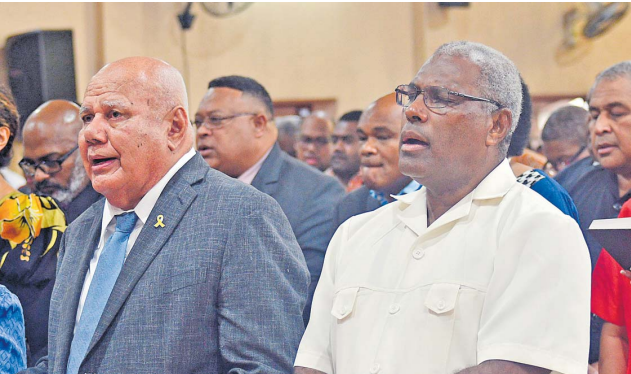
As Fiji enters 2026 — and with an important democratic process ahead — many people will be thinking about political leadership: what we need, what we fear, and what we hope for. This reflection is not an endorsement of any party or person. Rather, it is a biblical meditation on how societies are renewed: the Psalms teach that lasting change begins when a people become prayerful, humble, and committed to justice.
The final section of the Psalms, from Psalm 111 to Psalm 150, tells a powerful story. It is not a story about election outcomes. It is a story about people, prayer, and the long journey from crisis to healing — a journey that has real relevance for the kind of leadership a nation can recognise, support, and sustain.
Worship first, then character
Psalm 111 begins with praise. It calls people to remember who God is and what He has done. Immediately after, Psalm 112 describes what happens when that worship is genuine: people become steady, generous, just, and courageous.
The message is simple but profound: healthy societies grow out of healthy hearts, and healthy hearts are formed by reverence, humility, and gratitude. In other words, renewal does not begin with leaders — it begins with people.
Discipline before deliverance
Psalm 119 reminds us that renewal is not instant. It speaks of discipline, truth, and daily commitment — guarding one’s conduct, and living by what is right even when it is difficult. It even speaks of rising early to seek God.
This psalm teaches that transformation takes time and consistency. There are no shortcuts to becoming a people marked by integrity.
Crying out before being restored
As the Psalms move toward their conclusion, Psalms 140 to 144 give voice to distress. They speak honestly about danger, injustice, fear, and moral struggle. These are not polite prayers. They are raw cries for help.
But they do not end in despair. They move steadily toward a turning point.
The turning point: Who really reigns?
That turning point comes in Psalm 145, which declares that God is King — merciful, faithful, and concerned for the vulnerable. This psalm does not argue or complain; it proclaims.
The lesson is clear: before life can be healed, authority must be rightly understood. When people recognise that power ultimately belongs to God, not to human ambition, something shifts.
Life after the turning point
The final five Psalms — 146 to 150 — contain no lament at all. They are full of praise. They describe a world where justice matters, the broken are healed, communities are rebuilt, creation is respected, and life itself becomes an act of gratitude.
This is the Bible’s vision of a healed society. Not a perfect one — but one oriented toward justice, mercy, and humility.
What this means for Fiji
As we enter 2026, Fiji stands at an important moment. Conversations about leadership, governance, and the future are already underway. The Psalms remind us that lasting renewal cannot be engineered from the top down.
Before God changes a nation’s leaders, He changes the hearts of a praying people.
This is not a political slogan. It is a spiritual principle.
Prayer, fasting, reconciliation, and moral self-examination are not signs of weakness. They are signs of wisdom. They prepare societies to recognise and support leaders who serve rather than dominate, who act with integrity rather than fear, and who seek the common good.
A quiet invitation
The Psalms do not tell us whom to vote for. They tell us how to live. They invite us to become a people who value truth, justice, compassion, and restraint — long before ballots are cast.
As Fiji steps into a new year, perhaps the most important question is not, “Who will lead us?” but rather, “Who are we becoming?”
If we become a people shaped by prayer, humility, and care for one another, the right kind of leadership will have room to emerge.
The Psalms end with a simple line: “Let everything that has breath praise the Lord.” That may be the wisest place to begin.

