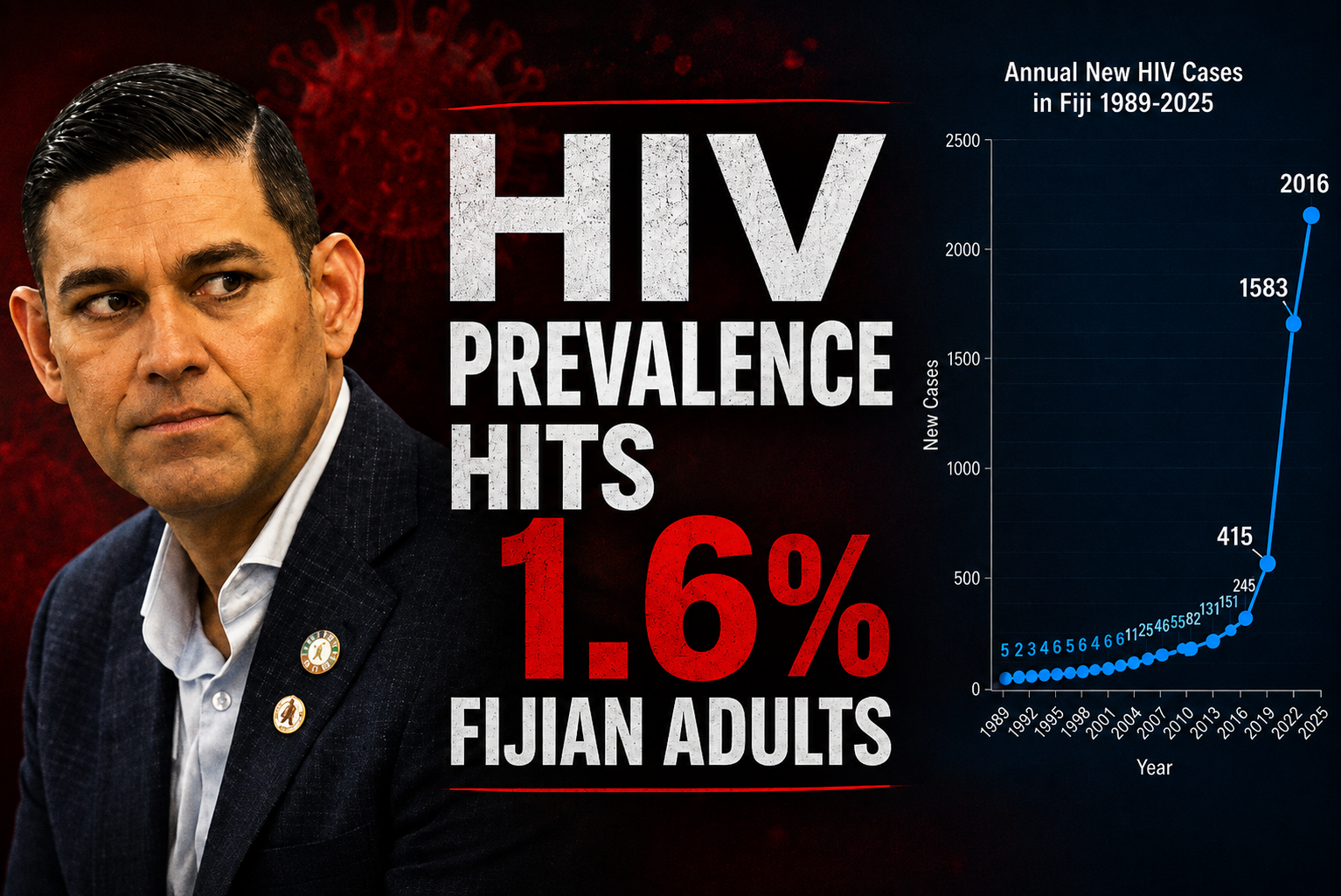
An estimated 1.2 per cent of Fijians aged 15 to 49 – about one in every 60 adults – are now living with HIV, as the country’s outbreak continues to escalate beyond high-risk groups into the wider community.
Speaking at the International AIDS Conference (AIDS 2026), Dr Jason Mitchell, chair of Fiji’s National HIV Outbreak Cluster Response Task Force. said the country is facing one of its most serious public health crises, with HIV infections increasing 14-fold over the past five years.
He said around 12,000 people are now believed to be living with HIV in Fiji, a nation of fewer than one million people.
“In January 2025, we declared a national HIV outbreak, which was initially confined to the population of people who inject drugs. The epidemic is now spilling over into every other population group in the country,” Dr Mitchell said.
He said UNAIDS estimates HIV prevalence among people aged 15 to 49 now stands at 1.2 per cent and continues to rise.
“That’s roughly one in every 60 adults,” he said.
Dr Mitchell said the situation among pregnant women is also deteriorating, with HIV prevalence in antenatal clinics now exceeding 2 per cent.
“In 2025, one child was born with HIV every week, and we lost one child to HIV-related matters every month,” he said.
He described the situation as “the greatest crime and shame of all” because it is preventable.
The conference heard Fiji recorded the highest mother-to-child HIV transmission rate in the world last year, with about 18 per cent of HIV-positive mothers passing the virus to their babies.
Young adults continue to be the most affected, with two-thirds of new HIV diagnoses last year involving people aged between 20 and 34 years.
Dr Mitchell said 94 per cent of those diagnosed were from the iTaukei community, while infections among women continue to increase. There has also been a 45 per cent rise in HIV infections among children and teenagers aged 10 to 19.
He attributed the rapid spread of HIV among people who inject drugs to the communal sharing culture and a shortage of clean needles and syringes.