
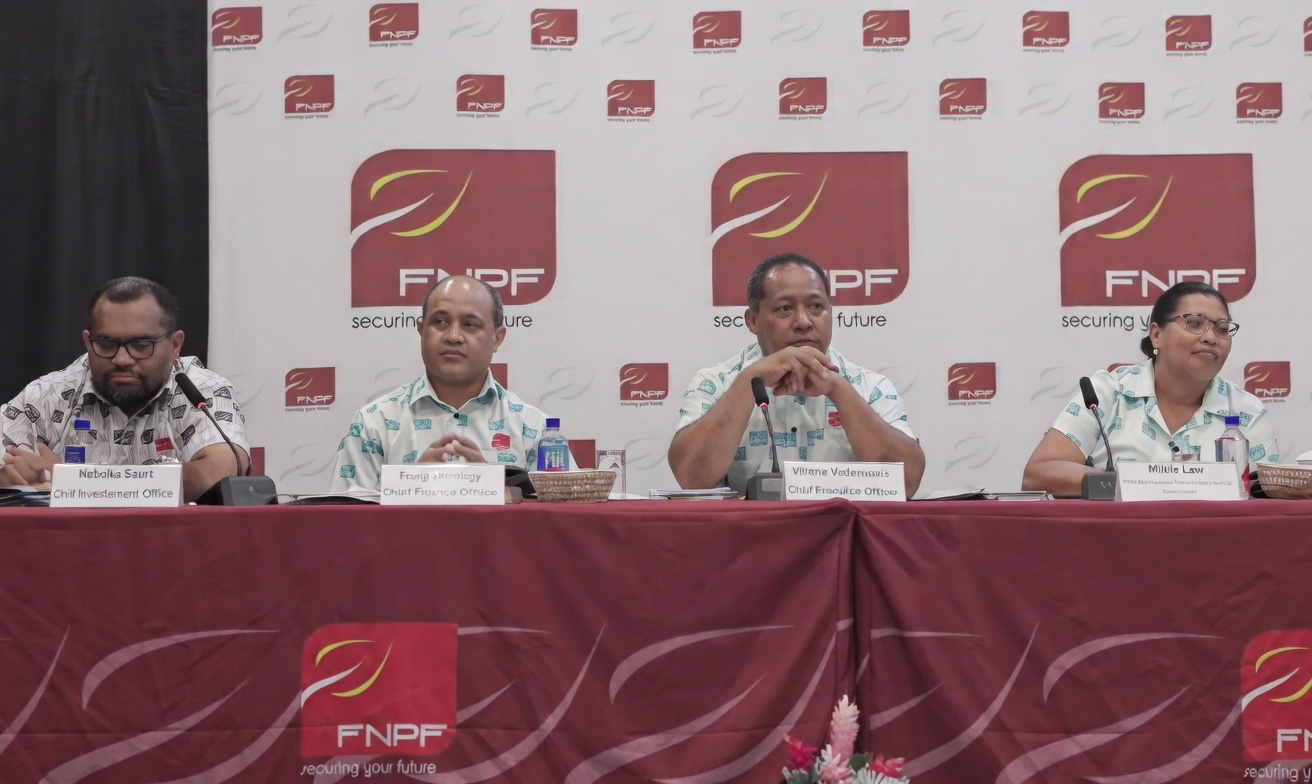
MEMBERS of the Fiji National Provident Fund (FNPF) who opt for life pension when they turn 55 do not get any Cost-of-Living-Adjustment (COLA) on their pension rates despite any improved financial performance or investment growth experienced by the fund. This was clarified by the fund during the FNPF Members Forum in Suva on Tuesday night, where they discussed the results of the 2025 financial year (ended June 30, 2025).
FNPF member Nimesh Raniga had asked the panel during the Q&A session if pension rates, which are currently fixed for both single and joint life pension products, would improve to reflect improved performance by the fund.
“And also with pension rates or life pension, currently the pension is basically fixed for the period. Shouldn’t there be a Cost of Living Adjustment (COLA) adjustment year after year,” Mr Raniga said.
In response, FNPF general manager Business Development & Strategy Millie Low said the pension rates are determined by the actuaries and remain fixed for the duration of the pension.
“The pension rates is actuarially tested, so the rates that you get, which is currently 8.7per cent (for single life pension and 7.5per cent joint life pension) when you opt, is what will remain for the rest of your life.
“Those rates are actuarily tested and we don’t adjust it during the period of when you are a pensioner,” Ms Low said.
“Secondly on Cost of Living Adjustment, the answer is the same. We don’t do Cost of Living Adjustments or inflationary adjustments on pension conversion rates.”
The FNPF, according to its chief executive officer Viliame Vodonaivalu in his presentation, had separated what was previously one fund into three separate funds as part of the FNPF reforms of 2011.
“The FNPF Fund – which is your retirement savings. It is invested in assets that help your money grow over time.
“The SDB Fund & Retirement Income Fund – these funds are used to pay pensions and death benefit claims. They are invested in safer options like government bonds and cash, so they can always meet their obligations.
“Separating the funds helps protect your savings and ensures FNPF can continue supporting members now and into the future,” Mr Vodonaivalu said.
In response to Mr Raniqa’s further questioning as to why the FPNF could not at least pay back three per cent to pensioners from returns from these “safe options”, even if returns were as low as six per cent (from Government bonds), Mr Saune said “there is no risk-taking activity for anything with regards to pension”.
“If you look at the assets that are already pegged, the whole pension is already sitting with Government bonds, and it’s the Government bonds that have been bought previously. And these are locked – some are 10yr, 15yr, some are 30yr bonds.
“So these are locked and Government pays coupons over the period of time.
“At the moment, again the yield curve now has come to about six per cent for a 20yr Government bond, so it hasn’t really moved from previously when at some point, we used to have about 14per cent back in the days.
“So you see that the interest curve, the yield curve on the Govt bond has really come down.
“And the reason it is pegged for pensioners is because there is no risk-taking activity for anything with regards to pension,” Mr Saune said.
FNPF’s pension take-up rate has steadily declined over the years, with more members opting for either full withdrawal or other newly introduced pension products such as Pension Draw Down or Term Annuity.

