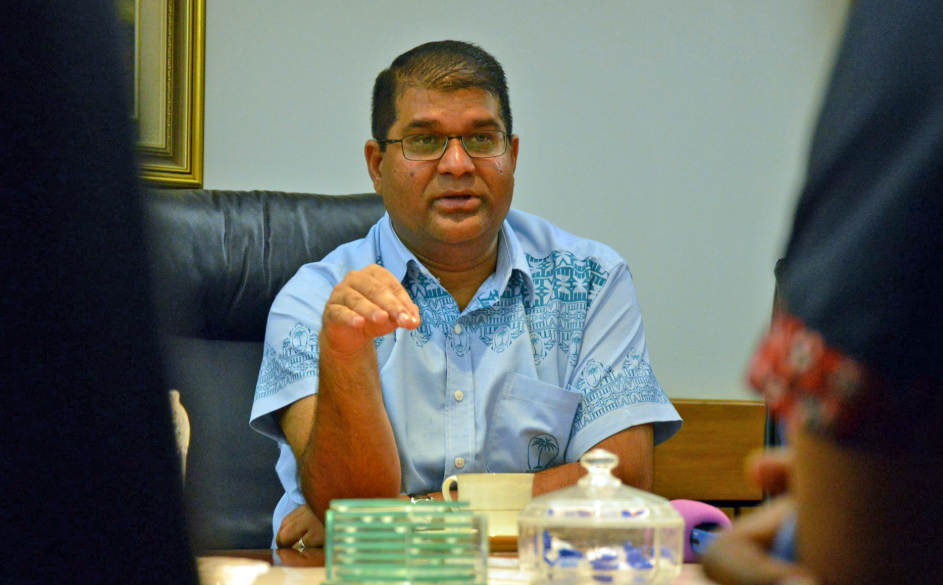
Foreign-funded persons and organisations are not subject to a blanket prohibition on undertaking campaign-related activities under the Campaigns and Foreign Funding Rules 2026, says Supervisor of Elections Ana Mataiciwa.
Speaking at a media briefing today, Ms Mataiciwa said recent amendments to Section 115 of the Electoral Act 2014 had removed the previous blanket prohibition, allowing foreign-funded individuals and organisations to engage in campaign-related activities provided they complied with rules issued by the Electoral Commission.
“What is important for our stakeholders to understand is that these amendments do not impose a blanket prohibition on foreign-funded persons or organisations undertaking campaign-related activities,” she said.
Under the amended provisions, the Supervisor of Elections may direct individuals or organisations to modify or cease campaign-related activities that do not comply with the rules.
Those affected by such directives have the right to appeal to the Electoral Commission, whose decision is final under the applicable electoral provisions.
Ms Mataiciwa said the definition of a campaign extended to debates, public forums, meetings, interviews, panel discussions and the publication of material relating to elections or election-related matters, regardless of whether the activity was intended to influence voting.
Addressing concerns about academic research, policy discussions, public commentary and mainstream media activities, she said the applicability of the rules depended on the nature of the activity and the funding circumstances of the organisation or individual concerned.
“An organisation receiving foreign funding for its general operations does not automatically become subject to the Rules in respect of every activity it undertakes.
“However, where an organisation receiving foreign funding undertakes an activity that falls within the definition of a campaign, the source of funding for that particular activity alone does not necessarily determine whether the Rules apply.”
Ms Mataiciwa also addressed concerns over the seven-day timeframe for determining applications, particularly in relation to urgent public debates, breaking political developments and time-sensitive media commentary.
“While the Rules provide a seven-day timeframe, this does not necessarily mean that every application will take seven days to determine.
“We appreciate the time-sensitive nature of electoral activities, particularly during an election period, and we will make every effort to determine applications as promptly as possible.”
On concerns that the rules could restrict legitimate criticism of the Government, Electoral Commission or electoral process, Ms Mataiciwa maintained that the commission was an independent and neutral institution committed to treating all stakeholders equally and exercising its powers fairly and impartially.
Meanwhile, the Electoral Commission is scheduled to meet tomorrow to further deliberate on the rules following submissions received from civil society organisations during consultations last week.
“The Commission will communicate its decision accordingly, and I do not wish to pre-empt those deliberations,” Ms Mataiciwa said.
She said questions regarding consultations undertaken before the introduction of the rules were matters for the Electoral Commission to address.