
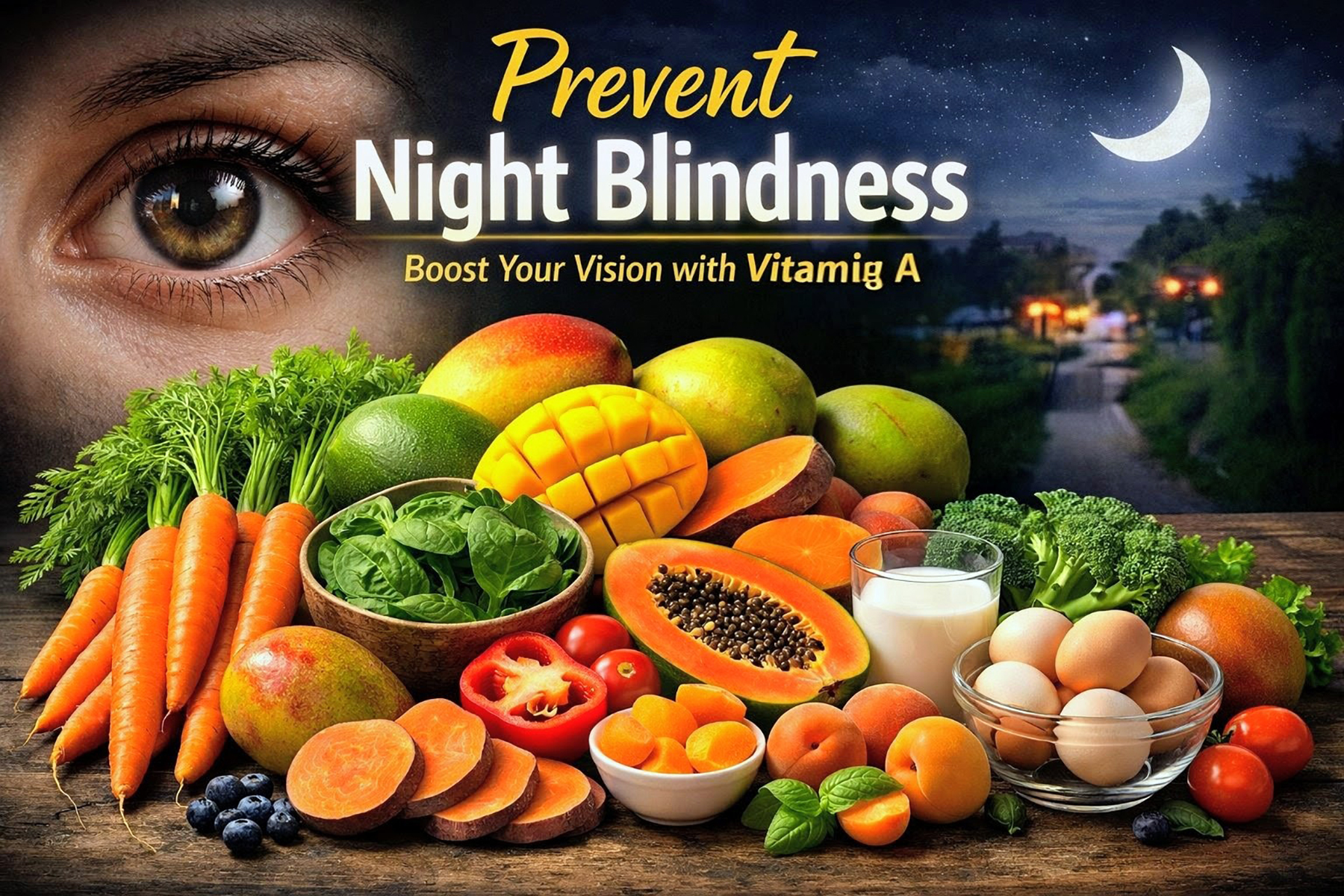
Night blindness, also known as nyctalopia, is a condition in which a person finds it difficult to see in low light or at night.
It does not mean complete blindness after sunset, but it can make activities like driving at night, walking in dimly lit areas, or adjusting to darkness very challenging.
Night blindness is usually a symptom of an underlying eye problem rather than a disease on its own.
One of the most common causes of night blindness is vitamin A deficiency. Vitamin A plays a key role in maintaining healthy vision, especially in low-light conditions.
When the body lacks this essential nutrient, the retina cannot function properly, leading to poor night vision. Other causes include eye conditions such as cataracts, where the lens becomes cloudy and blocks light from reaching the retina, and glaucoma, which damages the optic nerve.
Refractive errors like near-sightedness can also worsen night vision if not corrected with proper glasses or contact lenses.
In some cases, inherited retinal disorders such as retinitis pigmentosa are responsible for night blindness.
Prevention of night blindness largely depends on addressing its underlying causes. A balanced diet rich in vitamin A is one of the simplest and most effective preventive measures.
Foods such as mangoes, papaya, cantaloupe (rockmelon), carrots, spinach, watermelon, sweet potatoes, eggs, fish, and milk help maintain good eye health.
Regular eye check-ups are equally important, as they allow early detection and treatment of conditions like cataracts or glaucoma before they seriously affect vision.
Wearing prescribed glasses, protecting eyes from excessive strain, and managing chronic illnesses like diabetes also contribute to preventing night vision problems.
In conclusion, night blindness can significantly affect daily life, but in many cases, it is preventable and treatable.
Paying attention to eye health, maintaining a nutritious diet, and seeking timely medical advice can go a long way in protecting vision.
With proper care and awareness, most people can reduce the risk of night blindness and enjoy clearer vision even in low-light conditions.
n Ukash Manger is a Consultant Optometrist- Asgar Optometrist Lautoka Branch

