
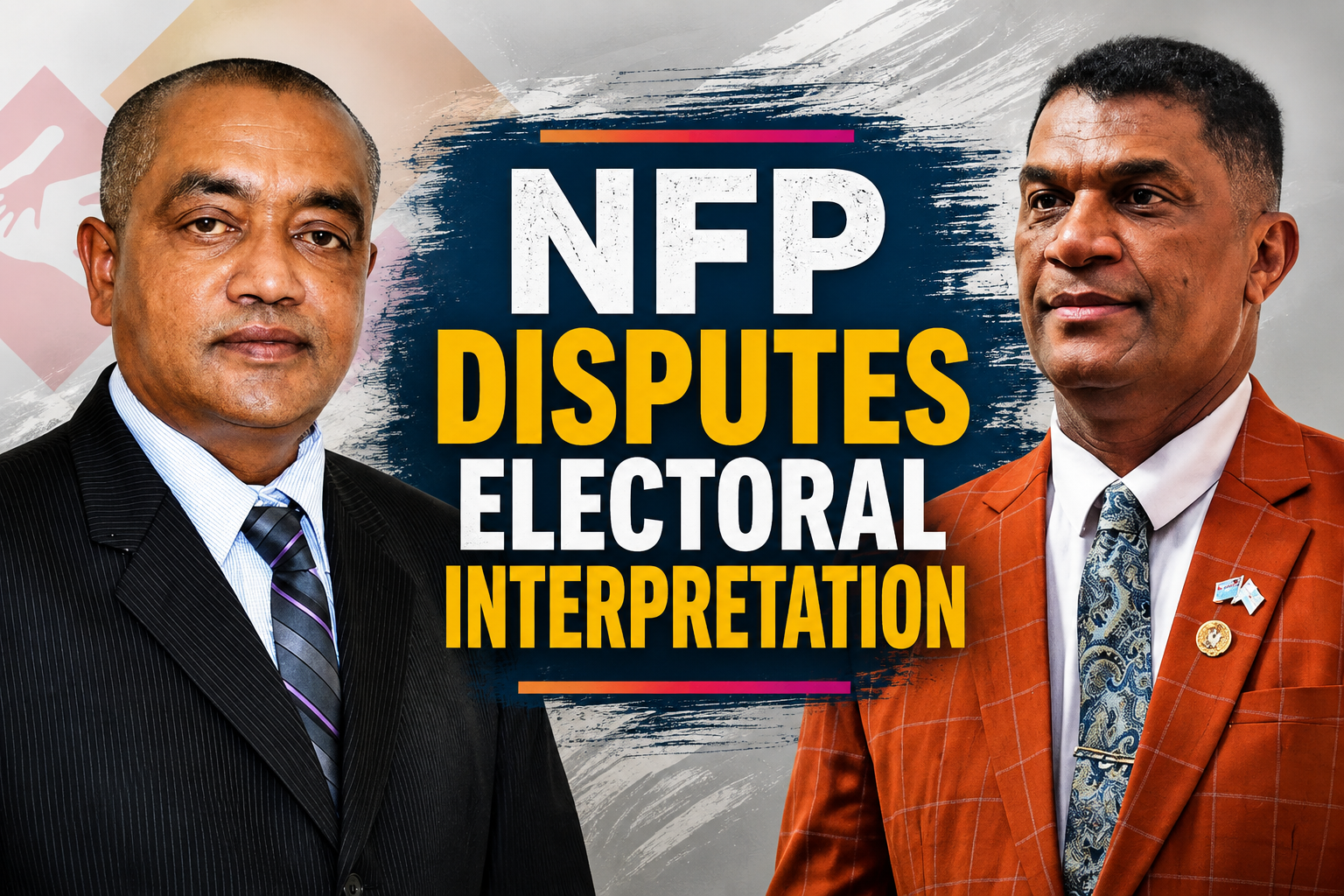
The National Federation Party has accused Education Minister Aseri Radrodro of misrepresenting the Electoral Act by imposing restrictions on the use of school halls for political meetings.
In a statement, NFP general secretary Kamal Iyer disputed the Minister’s interpretation of section 113 of the Electoral Act, arguing that the provision prohibits campaign activity inside a public office but does not apply broadly to all schools.
Radrodro had said that approval will need to be obtained first before political meetings can be held in school premises.
“Section 113(4) prohibits campaign activity inside a public office. It does not say ‘all schools’. It does not say ‘public infrastructure’,” Iyer said.
“It does not say every community, religious or organisation owned school becomes Government property simply because Government pays the teachers.”
Iyer also questioned any requirement for school management committees to obtain approval from the Education Permanent Secretary before allowing political meetings at their facilities.
He argued that if political activity at a school was prohibited under section 113, approval from the Permanent Secretary could not override the legislation.
“If his argument is that political activity in a school is illegal under section 113, then approval from the Permanent Secretary cannot suddenly make it legal. Section 113 contains no such exception,” Iyer said.
The NFP general secretary said many schools had been established, maintained and funded by communities, churches, religious organisations and education societies over generations.
“Government may pay teachers. Government may regulate education standards. But that does not give the Minister the right to behave as though every school compound in Fiji constitute a public office,” he said.
Iyer described a policy requiring school management committees to seek approval before allowing lawful meetings outside school hours as “excessive, controlling and undemocratic”.
He said the NFP accepted that teachers, as public officers, must not engage in political campaigning but argued that this was different from restricting how community-owned school facilities could be used after hours.
“These facilities generate income for the school management when they are hired for any activity like weddings, receptions and even political meetings,” Iyer said.
The NFP maintained it would comply with the Electoral Act but would challenge what it considers an incorrect interpretation of the legislation.
“The NFP will comply with the Electoral Act. But we will not accept a Minister twisting section 113, frightening school communities, and using Ministry policy to claim authority over facilities that Government does not own,” Iyer said.
“Fiji is a democracy. School communities are not colonies of the Ministry of Education.”
Iyer called on Radrodro to withdraw the directive immediately.

