
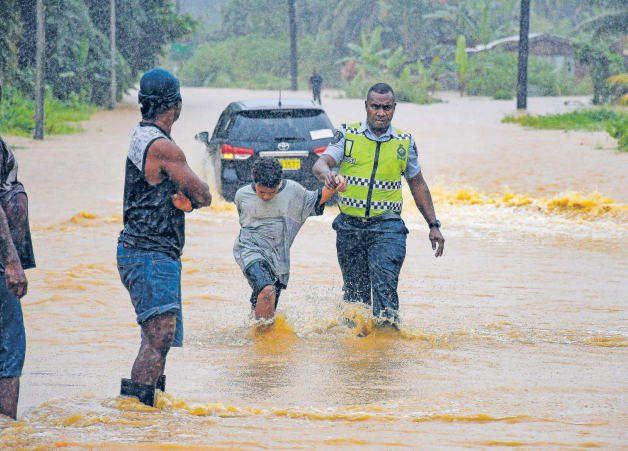
CLIMATE change is increasingly emerging as a driver of conflict in the Pacific, with its impacts extending beyond environmental damage to social, legal, and governance challenges.
Speaking at the Pacific Voices for Global Peace dialogue on Saturday, High Court judge Justice Thushara Rajasinghe said Pacific Island countries, despite contributing only a fraction of global greenhouse gas emissions, are facing some of the most severe and immediate impacts of climate change.
Justice Rajasinghe said climate change acts as a “threat multiplier” in the region, intensifying existing vulnerabilities such as poverty, inequality, land disputes, weak governance structures, limited state capacity, and historical grievances.
“When climate change stresses these vulnerabilities, the risk of escalating conflict is increasing significantly,” he said.
Land, identity and cultural significance
Justice Rajasinghe said land in the Pacific cannot be viewed merely as an economic asset, as it holds deep cultural, spiritual, and identity-based significance for Pacific peoples.
He said land is closely tied to ancestry, belonging, and social order, and when climate change threatens land through rising sea levels, erosion, flooding, or forced relocation, it becomes more than an environmental issue.
“When climate change threatens the land, it threatens the identity, culture, and dignity of these people,” he said.
“Such deeply emotional issues, if mishandled, could easily escalate into conflict.”
Drivers of climate-related conflict
Within the context of climate change in the Pacific, Justice Rajasinghe identified the loss of customary land due to sea level rise as one of the most significant drivers of conflict.
He said disputes over relocation and resettlement are likely to become increasingly complex, as land ownership in the Pacific is largely governed by traditional and customary systems.
He also highlighted growing competition over freshwater resources, noting that many Pacific islands already face limited freshwater availability, which is further strained by prolonged droughts and severe climate conditions.
Food security was also identified as a major concern, as many Pacific communities depend on coastal ecosystems for their livelihoods.
Justice Rajasinghe said warming sea temperatures and coral bleaching are shifting fish stocks away from traditional fishing grounds, contributing to food insecurity and tensions between host communities and relocated populations.
Pressure on government institutions
Justice Rajasinghe said climate change is also placing added pressure on government institutions and service delivery across the region.
“Many Pacific states are young democracies still in the process of strengthening institutions and building service capacity.
“The added responsibility and vulnerability imposed by climate change is putting extra pressure on government institutions and service delivery.”
He warned that when such pressures are ignored, poorly communicated, or addressed without fairness and inclusion, disputes can arise between land-owning units, villages, provinces, and even between states.
Early warning signs of conflict
The importance of recognising climate change as a conflict driver, particularly when developing climate adaptation policies, was stressed by Justice Rajasinghe.
He outlined early warning signs of climate-related conflict across four key areas: social and community indicators, economic and livelihood indicators, political and government indicators, and environmental indicators.
“At the social and community level, early signs often include increased disputes over land ownership, growing resentment and mistrust between neighbouring communities or clans, exclusion of affected groups from decision-making, and the weakening of traditional dispute resolution mechanisms,” he said.
He also pointed to the loss of trust in customary leaders, community elders, and local institutions as a significant warning sign.
Economic, political and environmental indicators
He also said economic and livelihood indicators include food insecurity, declining fish stocks, limited freshwater resources, and the impact of these challenges on agriculture.
“These pressures can lead to poverty and social stress in rural areas, which in turn may drive unplanned urban migration and contribute to conflict in urban centres.
“On the political front, weak or perceived unfair governance can amplify climate-related tensions, particularly where there are delays, inconsistencies, or a lack of transparency in decision-making.”
He also highlighted concerns about the perceived unfair distribution of adaptation and relocation resources, especially among marginalised and affected communities.
He said outdated legal systems inherited from colonial administrations further complicate climate governance, noting the need to modernise environmental and land laws to respond effectively to climate change challenges.
Environmental indicators, he said, include repeated flooding, severe weather events, and saltwater intrusion into freshwater supplies.
Managing conflict and preventing escalation
Justice Rajasinghe said while disputes cannot always be prevented, the key challenge lies in managing them constructively and preventing escalation into violence.
He said early identification of conflict, effective communication mechanisms, and inclusive dialogue platforms are essential, particularly for minorities, marginalised groups, and affected communities.
He also stressed the need to recognise power imbalances within societies, including those between majority and minority groups, urban and rural communities, and different social classes.
According to Justice Rajasinghe, addressing these imbalances fairly and inclusively is critical to managing climate-related conflict and maintaining peace in the Pacific.

