
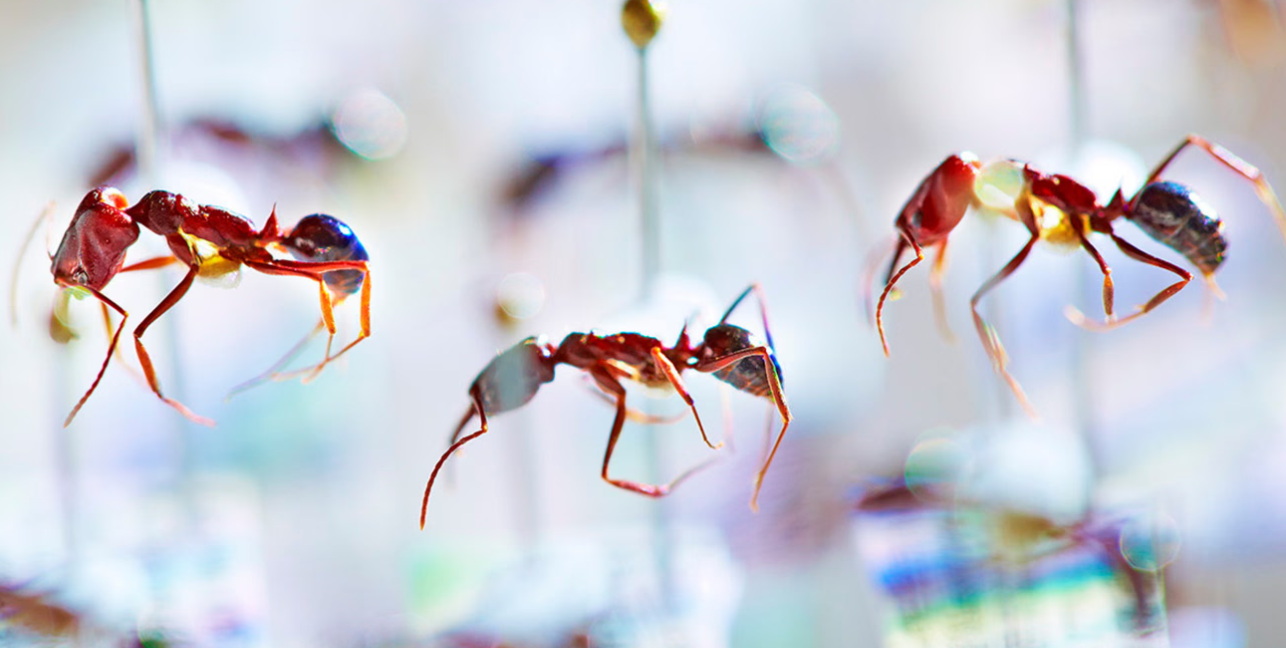
Fiji’s native ant population has plummeted since the arrival of humans, highlighting growing global concerns over what scientists are calling an “insect apocalypse.”
An international team of researchers, including scientists from Australia and Japan, has found that nearly 80 percent of Fiji’s native ant species are in decline, while invasive ant species are expanding rapidly.
The findings, published in the prestigious journal Science, were released in a statement by the Australian National University (ANU) on Friday.
“Ants are part of the ‘little things that run the world’ and are essential for maintaining healthy ecosystems,” said ANU’s Professor Alexander Mikheyev, who led the study.
The researchers used fragments of DNA from historical museum specimens to reconstruct population trends across multiple species, a scientific breakthrough that allows for tracking biodiversity changes over time.
Professor Mikheyev said the global loss of insect species is often overlooked in conservation work, which tends to focus on larger, more visible animals.
“This study helps us understand the causes of the insect apocalypse — the sharp, worldwide decline in insect numbers and diversity,” he said.
Although the research focused on Fiji’s ant species, the authors say the findings have wider implications for global biodiversity.
Co-author Liu Cong, from Japan’s Okinawa Institute of Science and Technology, said island ecosystems are particularly vulnerable.
“Most recorded animal extinctions have historically come from islands. Being closed and isolated ecosystems, islands are likely to feel the effects of human impact much sooner. They’re like a canary in the coal mine,” Liu said.

