
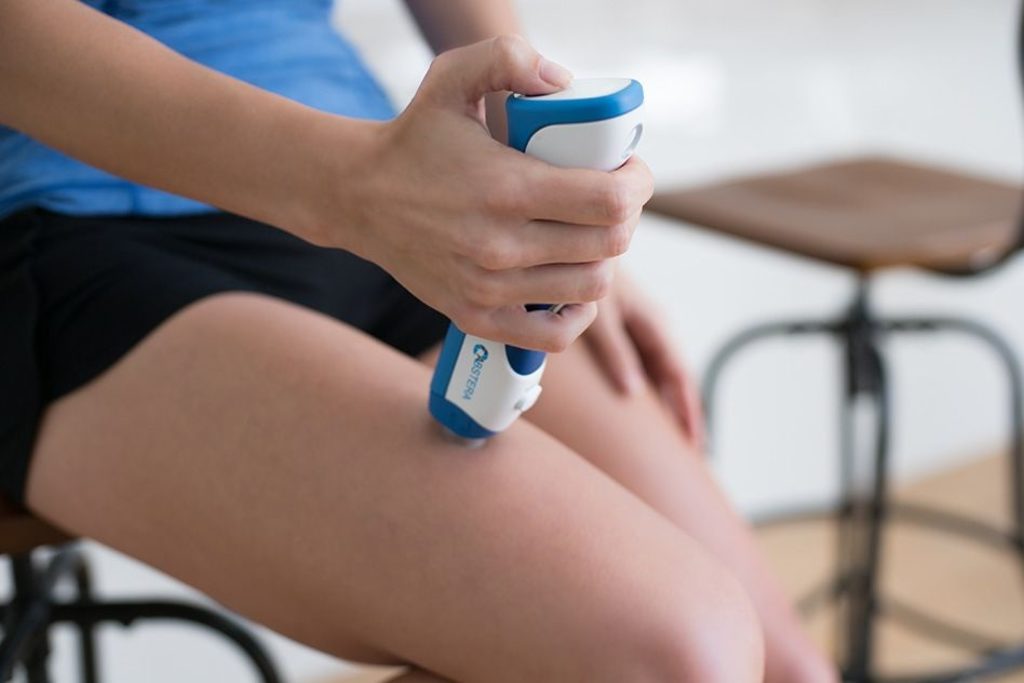
HOW many of us have dreaded a doctor’s visit simply because of the needle? The sharp sting, the anxiety, and for many children and adults alike, the overwhelming fear—needles have been a necessary evil in healthcare for decades. But what if injections didn’t involve needles at all?
Thanks to advances in needle-free injection technology, this could soon become a reality.
Needle-free technology is transforming the way we think about medical injections, offering a safer, more comfortable, and environmentally friendly alternative to traditional methods.
Companies like FlowBeams, a leader in this space, are spearheading innovations that could revolutionise drug delivery systems globally.
Unlike traditional injections that rely on needles to pierce the skin, needle-free systems use cutting-edge methods such as lasers, pressurised liquids, and micro-bubble technology.
For instance, FlowBeams’ approach involves using lasers to create micro-bubbles within the liquid medication.
These bubbles expand rapidly, propelling a high-speed jet of liquid through the skin, delivering the drug directly to the desired layer for quick and effective absorption.
What’s truly remarkable is the level of control that needle-free systems provide. By fine-tuning the velocity of the jet, they ensure precise delivery into specific skin layers. Additionally, the dosage can be split into multiple micro-injections, allowing for exact control over the amount administered.
The company originated as a spin-off from the University of Twente, where its co-founder and chief scientific officer, Prof David Fernandez Rivas, led groundbreaking studies on needle-free jet injection.
Since its inception in 2016 as a visionary idea, FlowBeams has evolved into a fully-fledged company, officially founded in 2021. The research continues today, with Prof Rivas and his Bubble-Gun team of researchers and students working to refine and expand the technology’s capabilities.
The benefits of needle-free technology
The benefits of needle-free technology are transformative and far-reaching, offering significant improvements to healthcare systems and patient experiences.
One of the most critical advantages is its potential to streamline mass immunisation campaigns. In regions with limited medical infrastructure, needle-free systems simplify the logistics of large-scale vaccination programs, making it easier to deliver essential vaccines to underserved populations efficiently.
Another remarkable aspect of this technology is the comfort and safety it brings to both patients and healthcare workers. By eliminating needles, the anxiety associated with injections is significantly reduced, particularly for individuals who suffer from needle phobia. Additionally, it removes the risks of needlestick injuries and cross-contamination, ensuring safer medical practices for all involved.
Needle-free systems also expand the possibilities of drug delivery. Unlike traditional syringes, these advanced devices can administer medications that are too viscous for conventional needles, broadening the range of treatments that can be offered to patients. This versatility makes needle-free technology an invaluable tool in modern medicine.
Furthermore, the introduction of needle-free injections has the potential to increase compliance rates. For individuals who avoid necessary vaccinations or treatments due to a fear of needles, this technology provides a less intimidating alternative, encouraging more people to prioritize their health.
The environmental impact of needle-free systems cannot be overstated. Traditional syringes contribute significantly to medical waste, with billions of single-use needles discarded annually. By transitioning to needle-free injections, healthcare systems can reduce this waste, promoting greener and more sustainable practices in line with global environmental goals.
In essence, needle-free technology is not only redefining the way medications are delivered but also addressing long-standing challenges in patient care and sustainability. It marks a pivotal step forward in creating a healthcare system that is more accessible, safe, and environmentally responsible.
Beyond FlowBeams, several other needle-free technologies have entered the market. Tropis® Intradermal System: A spring-powered device delivering 0.1 ml doses for intradermal injections. Stratis® Intramuscular or Subcutaneous System: Designed for 0.5 ml doses, catering to intramuscular and subcutaneous applications. Sol-Millennium® Needle-Free Injection Device: Specifically developed for insulin delivery.
Challenges
Needle-free technology holds great promise, but challenges remain. High production costs make these systems more expensive than traditional syringes, limiting accessibility in low-resource settings. Additionally, not all medications are compatible with jet injection, especially those requiring deeper penetration. Scaling this technology for widespread use, particularly in developing nations like Fiji, will take time. Advanced infrastructure and reduced costs are necessary for accessibility. However, with continued innovation and investment, needle-free systems have the potential to revolutionise healthcare, offering safer, more sustainable solutions for all.
A glimpse into the future
Needle-free injection systems are already demonstrating their potential in applications beyond traditional medicine, from painless tattoo removal to precise cosmetic treatments and efficient vaccine distribution in remote areas.
These innovations have the power to reshape the global healthcare landscape, offering safer, greener, and more patient-friendly solutions.
While this innovation brings hope to countless children—and adults—who dread needles, it may be some time before such technology becomes accessible in Fiji.
Like many groundbreaking advancements, needle-free injection systems are likely to be introduced first in developed nations, where resources and infrastructure can support their rollout.
For Fiji, this means waiting for further testing, refinement, and eventual affordability.
For now, traditional injections will remain a part of our healthcare reality.
But as needle-free technology gains traction globally, there’s reason to believe that even small island nations like ours can look forward to a future where fear of needles is a thing of the past.
It’s a hopeful reminder of how innovation has the power to reshape lives—one step at a time.
This article in no way suggests that I am afraid of needles. The views expressed herein are the author’s and not of this newspaper. Until next week, take care and be safe!

