
In an interview with The Fiji Times last week, former governor of Reserve Bank of Fiji, Savenaca Narube pointed out what he believed was a lack of an overarching plan for the economy and the need to transform it. Minister for Finance Professor Biman Prasad spoke to The Fiji Times this week detailing the state of play.
FT: The government has been criticised for not having an economic vision.
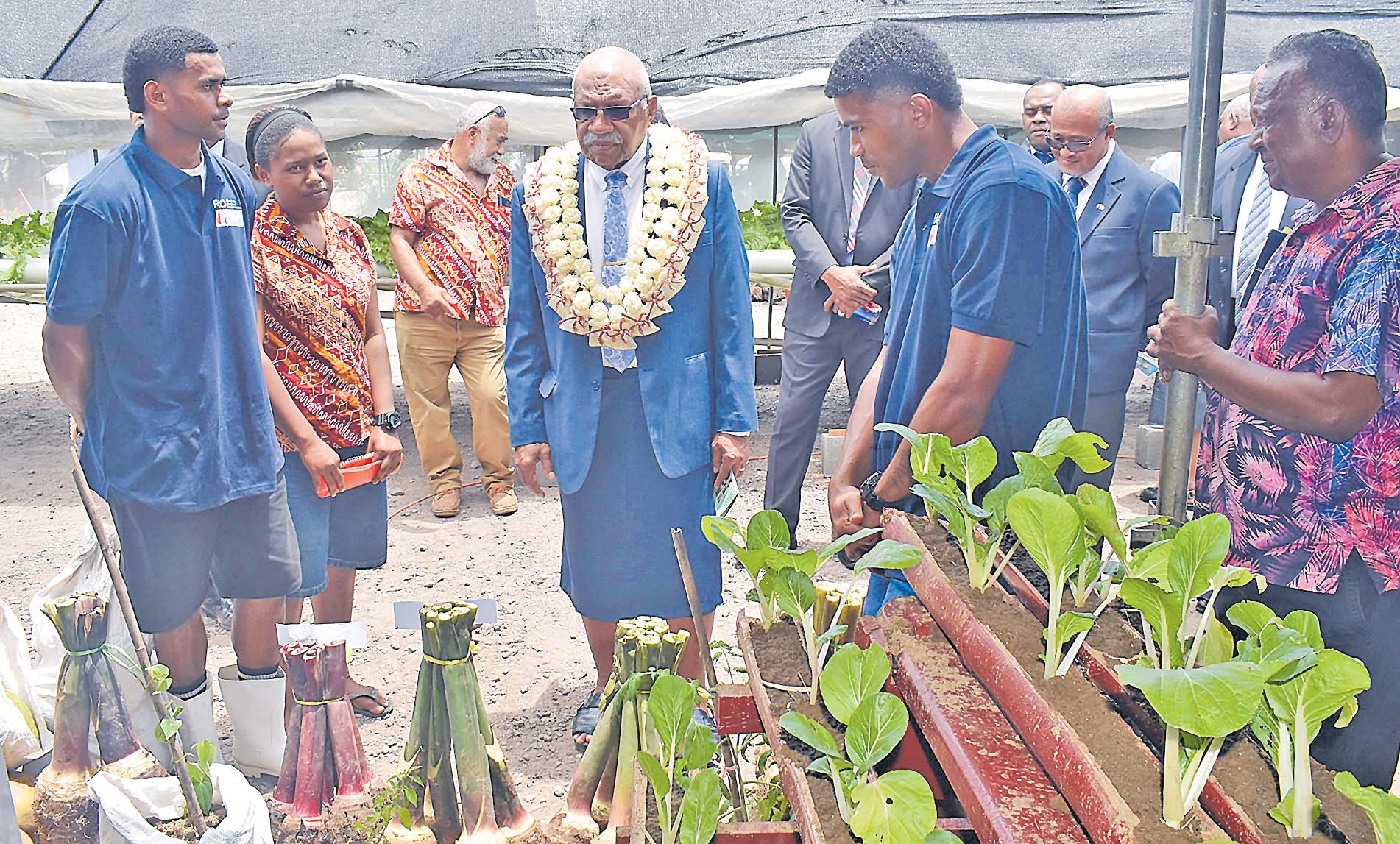
Prof Prasad: People should know that this is a government that started with a very clear intention to consult to have dialogue and we appointed a Fiscal Review Committee which produced a very comprehensive report and all the consultations that we had during that period culminated into some of the provisions in the budget. But before the budget, we had put out a mid-term fiscal strategy where we laid out our fiscal consolidation plans, what the government felt with respect to the debt, what we felt with respect to our expenditure, tax policies and what we felt about other sectors such as social welfare, social protection, health, education and infrastructure. So the budget itself is a very clear plan and signal as to what the government has set out to do. Now that does not capture everything for the next 10 or 15 years. We obviously had no real planning office. The planning office was gutted, so what we’ve done was set up a well-resourced National Planning Office and one of the key things that the National Planning Office will do is to work on a new national development plan. Other than that, critics are talking about transforming the economy, as opposed to resetting some of the agenda. I don’t know what they mean, but if you look at the report and outcomes of the National Economic Summit, the outcomes of the Fiscal Review Committee and the budget itself, they show that the government has a clear path to transforming the economy into a much more sustainable economy. What we saw over the years is that overwhelming emphasis on tourism. Yes, we all like our tourism industry to grow and right now our tourism industry is back to more than what we had in 2019 and it’s contributing to our positive economic growth. But if you look at other resource sectors and other sectors of the economy, it’s not what we’d like to see. It’s not growing as much as it should. So in the budget, we have increased allocation for agriculture – first time after so many years. We are providing incentives for non-sugar farmers such as cassava, dalo, ginger, rice and we’ve been providing subsidies to increase production within the agriculture sector. And there are other reform policies that would also be put in place as we move ahead. So people need to understand that we have been in government for 10 months now, we inherited a lot of mess that we also have to deal with. So starting from the consultation, economic summit, Fiscal Review Committee, the budget itself is an agenda for transforming the economy.
FT: There have been concerns about the high cost of living.
Prof Prasad: Those who are talking about cost of living are forgetting what we inherited when we came into government. When we came into government, we found that Fiji Roads Authority had run out of their budget for the whole year in six months. In addition to that they had $42 million additional to pay to the contractors, so, look at our health facilities, worst ever health services infrastructure in this country that we inherited as a government and so in the budget we are allocating additional funding for the health. We realised that people were still transitioning from COVID. Post COVID in 2022 there was loss of income, but now we find that a lot of people are getting back into jobs, the tourism industry is growing, other sectors are also providing additional jobs, total salaries and wages compared to 2019 have increased by 25 per cent. In other words, more people are working, more people are earning higher wages, the estimated calculation right now is that salaries and wages in the formal sector based on FNPF (Fiji National Provident Fund) data and Bureau of Statistics data, has increased by around 10 to 12 per cent. And so we understood the impact on vulnerable sections of the population so as soon as we came. And I want to re-iterate this because I think the media doesn’t pick up some of these things every now and then. The first thing we did when we came in was look at the existing budget. We redeployed funding, we realised that some of those will not be used, we allocated $50m, we paid $200 each before the beginning of the school to 227,000 students in the beginning of this year. In the budget we made sure that we looked after our vulnerable. We increased social welfare allowances by 15 per cent and 25 per cent. We increased child assistance allowance, we increased family assistance allowance, we allocated funding for health and we’ve increased subsidies for kidney dialysis. The other thing that people don’t realise is that we’ve kept the zero-rated VAT on all the 21 items and added additional item which is the basic medicine. During COVID, the freight cost had gone up so some of the price increases were already there which was very high. And then the freight costs started coming down so some of those prices have been reflective of that. Some unscrupulous businesses obviously did funny things, but I was just looking at the data from the FCCC who did a price review in August, September, October. Of 232 products, 40 per cent of the products, the prices actually went down. So things like milk powder, all bands of oil, canned mackerel fish, cement prices – FCCC quickly recognised the change in input costs. That has gone down. Port charges. FCCC has not allowed any increase in port charges because if you allowed any increase in port charges, you’ll go further. You look at the list of edible oil. All the brands have seen a price decrease, some by as much as 14 per cent, 20 per cent, 30 per cent. You look at canned mackerel price decrease, August to October, from as high as 43 per cent. Premium force mackerel in tomato sauce, turners and growers, $3.46 to $1.96. Ocean Blue mackerel tomato sauce, 27 per cent decrease, from $2.26 to $1.65.
FT: That doesn’t take into account the price increases in other items.
Prof Prasad: I’m just saying that not all prices have increased. There are of course prices that have increased for other reasons because the international commodity prices have gone up despite the reduction in duties, for example, chicken prices. Chicken portion, wings, these things have gone down because we reduced duties. Lamb, beef, pork meat, price have gone down because we reduced the duties. So of course some of the prices have gone up because if VAT rate was nine per cent and it’s now 15 per cent, it’ll go up. But in some cases, even after the nine per cent plus 6 per cent additional, some people are saying 15 per cent VAT has increased. There were three rates on VAT that you don’t seem to understand. There was zero, there was 9 per cent and there was 15 per cent. So some items, some services already had 15 per cent VAT. That has not changed. Now those that were on 9 per cent, we believe that some unscrupulous businesses added 15 per cent on top of the 9 per cent. The chicken price saga, for example, that was a deliberate attempt to bring the government into bad light. In some cases, even with the 6 per cent addition, the overall prices have come down. For fuel prices, that is based on the international crude oil price.
FT: What about the 20 cents a litre fuel tax that government charges?
Prof Prasad: You’re also forgetting that – and you should do your research better – when we were in opposition, during COVID when the prices of things went down, the FijiFirst government put another 20 per cent surcharge. It was 40 cents. Then just before the elections, when we raised this, it was reduced. So 20 per cent has already been reduced. That other 20 per cent was always there.
FT: Is that something that you want to remove?
Prof Prasad: That’s a budgetary measure. We can’t do it now. The point is some people on social media are asking where is the 20 per cent we were advocating that 20 per cent reduction. When the prices went down, when the (previous) government could have passed this on to the people, they increased the tax on it. So that 20 per cent was reduced in the last budget before the election. During COVID, they had raised it by 20 cents.
FT: Can’t you just remove it to ease the burden on consumers?
Prof Prasad: We can’t because it’s a budgetary measure. In fact, the prices had gone down. After the war, the prices have gone up. I can’t just reduce the 20 cents tax because it’s a budgetary measure. What you need to understand is there’s a budget and it goes through an act of parliament as part of the revenue forecast that we’ve done. The other thing that you need to understand as an economic reporter is we have a debt burden of $10 billion. Out of the $3.4b budget, $1b goes into debt servicing, $1b civil service salary. The demand on services such as infrastructure, health facilities, roads, water supply, people have to understand that as a government, we inherited all this. People want water in their taps, they want no potholes on the roads, better health services, good health centres, and if you look at the budget, the revenue that we have collected, as a result of increases, and it’s not only VAT increase. We have increased corporate tax from 20 per cent to 25 per cent. We have simplified income tax. We’ve increased excise tax on alcohol and tobacco. We’ve put 3 per cent tax on the industry and they are complaining. So we are not just burdening the people.
FT: What about the vulnerable communities, those who are earning low income?
Prof Prasad: The vulnerable too have these other support that we have provided. We had announced in the budget additional allocation of $45m (back-toschool assistance) and this was a major announcement. We launched the $200 back-toschool again and more than 220,000 students are going to benefit at the beginning of next year. The application is now open and they can apply. Now that’s putting $45m directly into the pockets of the parents and the families before the school starts. We can’t do all this if we don’t look for additional revenue. How can you run a government without that when you also have this huge debt burden? So I think what has happened is there is a lot of misinformation out there. Some of it is being fueled by the politicians and some of them are coming up with wild suggestions, for example, one of them is saying there should be a revaluation of the Fiji dollar. That will be a disaster for the economy and the country. And I don’t know where those kinds of suggestions are coming from but what we are saying to the people is this: some of the reforms we have done is not only to help our people but also to set the agenda. If we don’t reform, if we don’t transform the economy now, if we hadn’t done what we did in the last budget, the pain on the people would be even bigger. So the most vulnerable are being looked after and a number of provisions are there. Let me also point this out on the cost of living. We are also looking at the economic performance. There’s a lot of positive news. The tourism industry is back on track. There are more total salaries and wages compared to 2019. Because of the shortage of labour, because the tourism industry is growing so fast, there’s movement of people from other sectors into the tourism industry and the salaries and wages have gone up. So because there is demand for more labour, because there is shortage, the salaries and wages are going up, which is good. The other important thing that we didn’t do because we cared about people’s disposable income, there was strong suggestion and incentive for government to reduce the income threshold. We didn’t. So, all those people earning below $30,000 are not paying any taxes. And they’re all eligible for these benefits, such as $200 back-to-school assistance for their children. Any family whose income is $50,000, is eligible for the $200, whether you have one child or two or three. Per child is $200. So whatever revenue that we are raising is going to help education, social welfare. The other important thing that is not being talked about by any of the critics of government is that we wrote off $615m or we forgave $615m TELS loan and that has helped 53,000 students and families who were paying monthly repayments. That income is with them now. That income has become part of their disposable income – very important point. 53,000 students who would have had to make monthly payments on their loans, don’t have to now. Especially those on the middle to lower income, when they would have started work, instead of helping their parents and looking after themselves, some of their income was going into paying debt. That is additional income for all of them and their families. We increased social welfare by $15-$25. We’ve put in a merit-based scholarship. We’ve increased social welfare. We’ve provided additional funding to all the different ministries. Now these are the very positive stories. You look at agriculture – first time in the history of sugarcane farmers. And at this time, we realised that farmers need additional support. We put $8.2m into the pockets of the farmers. This is from the government on top of $5 per tonne. Not from FSC. This is direct, putting $8.2m into the pockets of farmers. Now, the critics, Mahendra Chaudhry and Narube, are not talking about this. They go everywhere and talk about something else, they didn’t even have the decency to talk about the provisions that we have provided in the budget. Yes, we know that there are challenges. Prices of items have gone up. Price of fuel has gone up. We understand that. And some of these are beyond our control. We know that. And what we could do in the budget, we’ve done. We made sure that we look after our people.
FT: Dr Kishti Sen of ANZ Bank had proposed an inflation mitigation package for consumers.
Prof Prasad: He’s probably not aware of the mitigation measures that we have in the budget. I don’t know what he means by mitigation package because the budget itself has many provisions. He’s probably not aware of the $45m we’re putting into the pockets of all the families (backto-school assistance), that we have put $615m back into the pockets of families (TELS student loans write-off), we’ve put $8 million into the pockets of farmers just now. Obviously he’s not aware of some of these things so I hope he will familiarise himself with some of the mitigation measures that we have in the budget and we are continuing to give. We expect him to do that.
FT: Inflation – CPI not up to date?
Prof Prasad: Yes. How do you calculate CPI? You have a basket of goods. And you look at the different weights. So for example, the CPI category is 12.4: categories with the respective weights of food and non-alcoholic beverages, transport, housing, alcohol beverages, tobacco, narcotics, they have different weights. So you put that together and the prices go up, you calculate the CPI. That basket hasn’t changed since 2008. I’ve asked the Fiji Bureau of Statistics to work on re-basing the CPI, maybe rebase it to 2019 so that it gives a clearer picture. All this while, the previous government was relying on the 2008 base. There are volatile items in the basket so if the international prices change, it suddenly goes up or down. And sometimes it doesn’t reflect very clearly what the situation is, so that exercise is going on and I have just been provided a brief by the CEO. And that’s exactly what we’ve asked him to do and that will be done. And that will be a better measure of CPI and inflation.
FT: Dr Sen also spoke about how tourism will not be driving economic growth from next year as it has done this year.
Prof Prasad: Obviously there are issues about capacity in terms of all the hotels occupied and there are some new ones that may take some time. All those factors are there. You can’t just say that tourism has no capacity to grow, for example, we have the Vanua Levu tourism development project. There might not be potential to increase capacity in Viti Levu but there is still capacity in Vanua Levu – Savusavu, Taveuni. I still feel that there is room for growth. And the situation in Australia and New Zealand may change, there could be a slow-down in income growth in Australia, savings that people had during COVID would be going down, so these are transmission mechanism channels that can have an impact. Economists like Dr Sen see things in their own way, we see things slightly differently. He’s probably talking about capacity in Viti Levu, but we are talking about building capacity in Vanua Levu.
FT: Suggestions were also made about the need to create new industries.
Prof Prasad: We already know that. In fact, the whole National Economic Summit was to try and spur new growth in other sectors. So you look at our reset agenda, we’ve announced reforms in our immigration policies, business visa. There are many incentives already for BPOs (Business Process Outsourcing). We’re looking at incentives in the agriculture sector, we’ve increased budget, we’ve beefed up research, extension and training, we’re trying to increase production in the sugar industry. There’s been budget allocated for cane development, etc. So a number of things are happening in different ministries to grow other sectors. Yes, it will take some time, it will not happen overnight because in the past, all the focus was on tourism. If you look at what we’ve done in the budget, the signals that we are providing in the budget show very clearly that the government is focused on not only diversifying, but also diversifying into other areas. For example this World Bank big project – upgrade of Labasa airport, Savusavu airport, roads, is designed to increase capacity and marketing of tourism away from just Viti Levu, the Western Division to Vanua Levu, so a number of things are happening around that area.
FT: There is also concern, feedback from our readers about how there are only seven companies controlling the import of all food consumed by Fijians. How does government ensure that they don’t operate like a cartel?
Prof Prasad: FCCC is already working on looking at how that’s being done and as a government we will also be meeting with some of these big players. I think many of them mean well and the idea is to sit down with them and see how we can improve things. We’re already thinking about the next budget based on our three months – August, September, October. Then November and December. By December we will have a very clear picture of our expenditure trend, how far we’ve gone and we will start looking at what else we can do within the next few months based on our expenditure, whether we can redeploy some funds to put it into sectors where it’s more needed. If we feel there are certain ministries that are not spending money the way they should, in terms of the timelines, if their expenditure is not being expended on time, then there will be redeployment of funds where it’s necessary, where it’s needed. We’ve also put a plug on wastages. That’s another important thing that noboby talks about. The other thing I want to say to the critics: think about how much things have changed in the 10 months despite the shortcomings. We have brought real democracy. The media is free. We are open. We provide you with all the information.

