
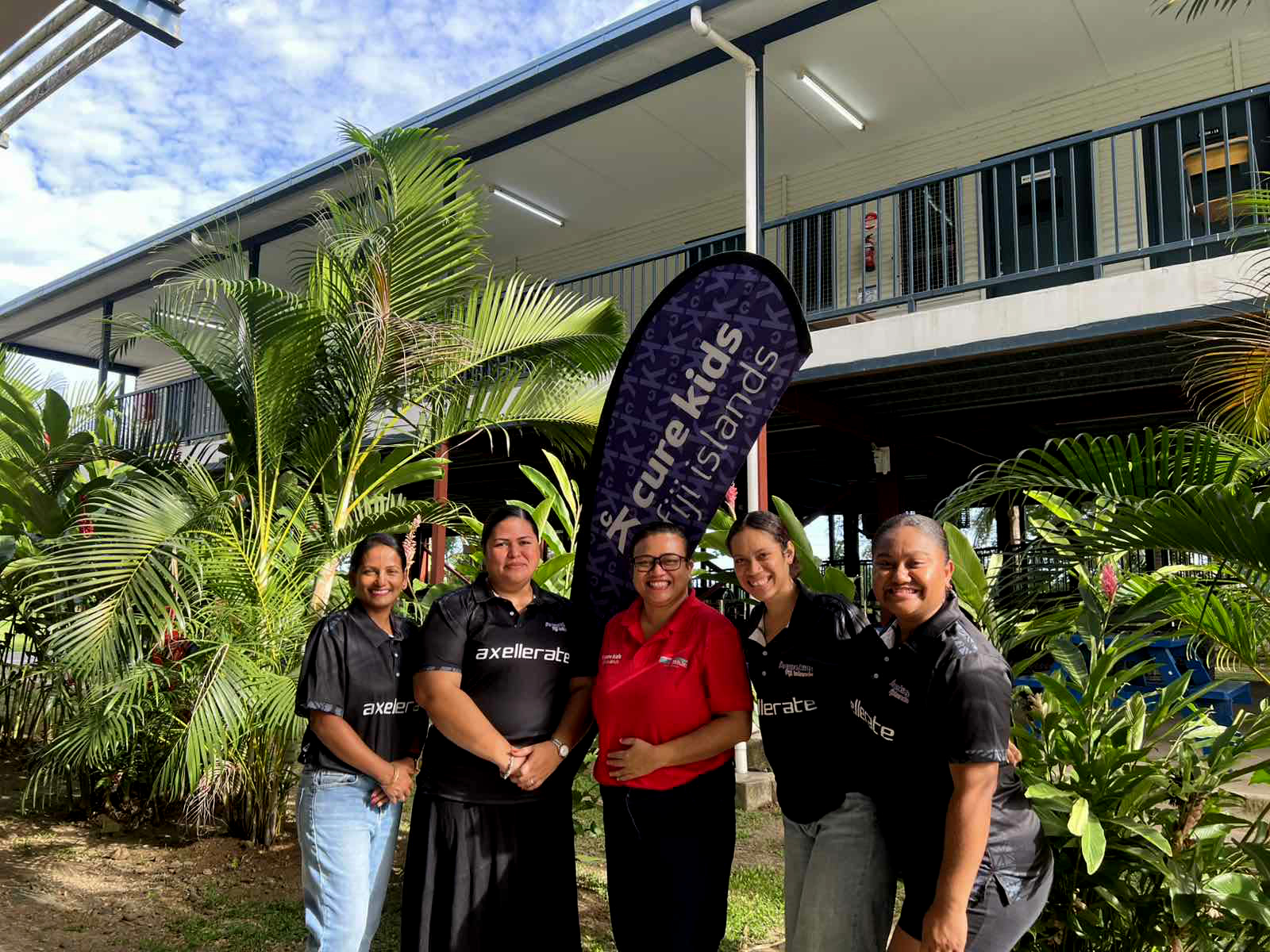
NATIONAL airline Fiji Airways is helping Cure Kids Fiji extend healthcare programs, specialist training and research to communities nationwide, including remote maritime areas.
Managing director and chief executive officer Paul Scurrah said the partnership reflected the airline’s commitment to supporting communities.
“In a country of scattered islands, air travel is a lifeline, not a luxury,” Mr Scurrah said.
“Through our partnership with Cure Kids Fiji, we’re using that lifeline to help bring life-saving care closer to the children who need it.”
Since the partnership began, Fiji Airways has supported 41 flight sectors — 30 domestic and 11 international — enabling healthcare professionals, program staff, specialists and researchers to reach communities in need.
The initiatives have reached 819 people, including 716 pregnant women through antenatal programs and 103 children through rheumatic heart disease (RHD) screening.
Fiji Airways said the impact was evident at a community health screening during the Accor Hotels Sports Day in Nadi.
“Cure Kids Fiji and the Ministry of Health and Medical Services Western Division screening team offered free heart screening to families attending the event.
“Fiji Airways-supported travel enabled a paediatric registrar from Labasa Hospital to travel to Nadi to support the outreach. A total of 103 children were screened, with several identified as having early-stage RHD.
“Children with early-stage RHD often show no symptoms and may appear healthy. Early detection allows families to receive counselling and referrals for ongoing care before the disease progresses.”
Cure Kids Fiji country manager Dr Jimaima Kailawadoko-Matanaicake said the partnership was making a real difference.
“Something as simple as providing transport can completely change a child’s future,” she said.
With Fiji Airways support, Cure Kids Fiji is strengthening national programs including RHD prevention and screening, the Fiji Antenatal Study, Strep Vaccine Global Consortium research, the Fiji Oxygen Program, and climate and respiratory health initiatives.
Travel support has also helped teams reach remote areas such as Vanuabalavu, with improvements at Lomaloma Subdivisional Hospital supporting better service delivery.
The partnership will continue to support RHD screening, specialist training and research aimed at improving health outcomes for children.

