
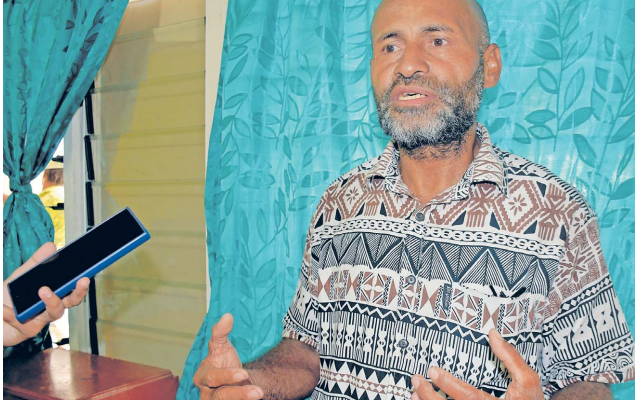
A Kava farmer is urging Government to safeguard local growers before formalising the industry under a new national framework.
Timoci Nacola said this is the first time the kava industry is being structured into a formal system, and farmer input is critical.
“This (Kava) Bill is not to control the farmers, it is to safeguard them,” Mr Nacola said during consultations on the Kava Bill.
He said the Ministry of Agriculture operated on a project-based approach, with no national policy fully addressing farmers’ long-term needs.
“If another policy is designed now, it must help farmers and speed up the process.”
He raised concerns about middlemen profiting while farmers carry production risks.
Mr Nacola warned against allowing large foreign or local corporations to dominate the kava industry.
He proposed a small deduction from kava sales to create a common fund for farmers, similar to systems used in the sugar industry.
“That fund can be like insurance for us, when farmers need help, it is there.”
He said empowering the proposed kava council to support farmers directly would allow production to increase and ensure the industry benefits rural communities first.
“We want to increase capacity, but to do that, we need funds, machines and support.”
Kava abuse contributes to productivity loss
UNREGULATED kava bars and excessive kava consumption among young people are keeping youths out of the workforce, fuelling domestic problems and damaging national productivity, Hindu Unity leader Sandeep Narayan Singh said.
He spoke to The Fiji Times after making his submission on the proposed Kava Bill during consultation in Tailevu yesterday, where he raised concerns about what he described as widespread misuse and abuse of kava across the country.
He said many people, particularly youths, are spending long hours drinking kava instead of engaging in constructive work.
“People sit down four to five hours drinking kava and not doing any constructive work,” Mr Singh said.
He said what was often described as a labour shortage was, in reality, the result of excessive kava consumption.
“This is the kava laziness that we have in this country because of hours people drink kava.”
He said young people were increasingly absent from the workforce.
“They are sleeping and they are very lazy.”
Mr Singh said kava misuse was also contributing to domestic violence and wider social problems.
He said the situation at kava bars was largely uncontrolled, with little regulation over sales or consumption.
He called for stronger laws and enforcement to guide young people into constructive activities and protect the future of the industry.
He said heavy local consumption was also affecting Fiji’s export capacity.
“Recently, the Minister for Agriculture made a statement that we do not have kava for export because local consumption is high.”
“This is abuse of kava.”
Mr Singh said scientific research showed that excessive consumption would affect one’s health.
“We need to help our younger people into the workforce and into constructive activities, not youths sitting in (kava) bars.”
Call for State to address issues
KAVA farmers can meet production and market requirements if the Government addresses longstanding barriers to finance, land tenure, and access to machinery.
Farmer Timoci Nacola said farmers were ready to increase production but were constrained by the complexities in obtaining leases, and machinery.
“We can meet the requirements they set, but we cannot do it with our hands,” Mr Nacola said.
“Because we have no lease, we cannot get funds, FDB and other lending institutions cannot help us.”
He said fears among landowners were that leases could lead to unpaid loans, and uncertainty of outdated laws relating to land ownership and tenure.
“That thinking is from the past, we have to look at how things should be done now.”
Mr Nacola said mechanisation was crucial for increasing production.
“We need machines.”
He called on the ministries of Agriculture, Rural Development, iTaukei Affairs, and the iTaukei Land Trust Board to work together to establish revolving funds that would give farmers access to machinery without relying on conventional bank loans.
Kava industry hurdles
“WHAT about us?” Was the question raised by a kava farmer from Ra, who said poor farm roads are crippling production and leaving them far behind other agricultural sectors.
Timoci Nacola, from Bucalevu Village in Nakorotubu, Ra, spoke to The Fiji Times yesterday during the Kava Bill consultation, where he highlighted struggles shared by local kava growers.
He said sugarcane farmers had long benefited from government support, including access to machinery, drainage, fertiliser, and infrastructure — a system that kava farmers lacked.
“Even today, cane farmers sit in their homes, the digger comes, the excavator cleans the road, the drainage is done, fertiliser is supplied,” Mr Nacola said.
“But what about us?”
Mr Nacola said poorly maintained farm roads were forcing farmers to rely on horses to transport kava, especially during wet weather.
“In my village, we have eight big clusters and almost 100,000 plants of kava.
But harvesting these plants is difficult.
“When it rains, even the belly of the horse is touching the mud.
“You take the horse once to unload, and when you want to take it back, it does not want to go.”
He said inadequate infrastructure discouraged farmers and slowed production, even as they were being encouraged to plant more.
“We are always told to plant more, plant more.
“But the roads are still the same.”
Mr Nacola said farm road development needed to be prioritise

