
With elections day 2022 now history, all the pressure in the lead up to DDay has now subsided into a peculiar moment of restless calm. Over the past few days, we’ve eagerly awaited the gradual announcement of final results, which are all expected to be announced by today.
I mentioned last week, throughout my two-week travel in the north, I did not get to see the spirit of elections that existed in the past. Maybe, in the villages there were some remnants of the good old days.
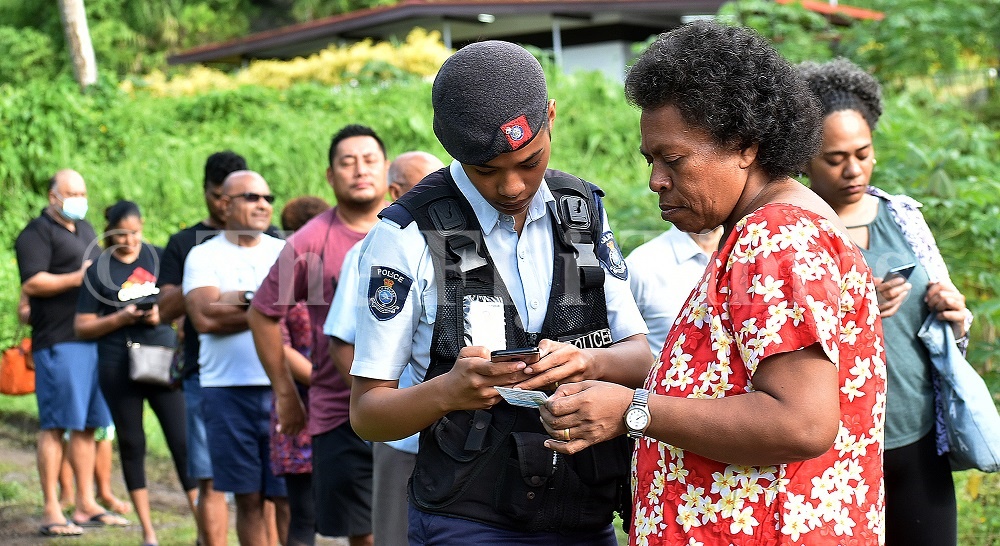
Women and men turned up at their designated polling venues garbed in jaba and sulu for women and pocket sulu and bula shirts for men. Some couples went to cast their votes in matching Christmassy outfits.
I got the opportunity to cover two elections in the 1990s and they were celebrative occasions. The election atmosphere was bubbly and featured laughter, jokes, feasting and heaps of merry-making. Political party sheds next to each other and served palao and curries.
These past few elections have been different. The major feeling has been one of seriousness. By today, according to Fijian Elections Office forecast, all final results are expected to be announced.
While the election dust settles and competing politicians carry on with their lives, what do we Fijians do? Do we continue to participate or does everything end at elections? The answer is, our civic duty continues throughout the electoral cycle.
As citizens, we are each bestowed with a huge responsibility – to hold our leaders accountable. We don’t just vote them in and forget about them. We vote them in because we want them to represent our interest and support our aspirations.
Once we give them the mandate to rule and represent us in the legislature, we must hold them accountable too, so that they work within that mandate and look after our interests like they promised.
By carrying out our civic duties we ensure that democracy and society function well. Civic participation takes up many forms. It includes voting for representatives in municipal elections, taking part in a public debate, joining an association paying taxes, taking part in a peaceful protest or fighting for just wages as a union member and making a difference to society’s wellbeing through volunteer activities.
Among others, corruption thrives in an environment where the corrupt feels bold, normally because of a lack of oversight mechanisms in place. This is why holding politicians accountable is crucial in stopping them from engaging in corruptive practices.
When politicians see and feel that citizens are sleeping on the job, they will fill their pockets and feel invincible. They will engage in below the table dealings and unsustainable development that often makes the poor ever poorer and degrades the natural environment.
According to Fiji’s political history, all political turmoil that led to the past illegal takeover of democratically elected governments happened within one year after citizens went to the polls. In 1987, the coup took place one month after the elections.
In 2000, the Mahendra Chaudhry-led coalition government was overthrown one year following the polls and in 2006, seven-months after the elections. This indicates that the 12-month period after an election has always been a volatile period for us.
And while the political campaign period prior to the polls may seem like an aggressive time, based on our coup history, the period after elections may be worse, brewing feelings of discord, suspicion and antagonism resulting from losers’ inability to accept the results of elections.
Sometimes it may result from voters’ lack of trust and confidence in the electoral laws, systems, processes and management bodies.
I pointed out before that this politically volatile period, should feature a robust civic education and civic awareness campaign, same as the series of media publicity done prior to polling day. The peaceful transition of power is a central tenet of democracy.
It is very visible in the United States, where even in times of deep political strife, the sitting president usually accepts the election of a new leader and steps down without protest. No leader is re-elected forever.
But when he or she gets voted out of office, things don’t always turn out well. Therefore, civic education and media campaigns should portray positive key messages that encourage tolerance, respect for the rule of law, peaceful coexistence and democratic living.
They should be aimed at instilling in every citizen the notion that while we may have voted for different parties on polling day, after the polls we can and must work together and get on with the mammoth task of nation- building and moving forward.
The post-voting period, calls for calm and patience from members of the public, political supporters and competing parties. While we welcome any change of political leadership from the outgoing to the incoming team and expect politicians to implement their election promises expeditiously, we must also give them space and time to settle in before bringing about the changes they had promised during their campaigns.
We must consider the fact that change involves processes and takes time to implement, but we must not condone passivity and tolerate lethargy from politicians. We cannot be too cosy and friendly with them either, might we lose the ability to effectively hold them accountable.
We must accept the results of the elections as the true reflection of the people’s choice, the nation’s political conscience and the country’s aspirations. An active and responsible citizenry will not stop at elections, but accept that his or her role transcends the conduct of elections.
Before elections, our job is to participate in the formation of our government by going to the polls and after the elections our job is to hold those we have elected accountable for the decisions they make and the manner in which they implement these decisions.
Without being too arrogant, we must encourage each other to participate in events and processes that keep politicians on their toes. We can mobilise people with whom we share common interests with a view to help influence government decisions, as long as they are legal, peaceful and follow democratic principles.
These are the challenges and burdens we have as citizens. It is not easy and often demands foresight and diligence. It also demands a level of political maturity.
But it is possible and can be done. Until we meet on this same page same time next week, stay blessed, stay healthy and stay safe!

