
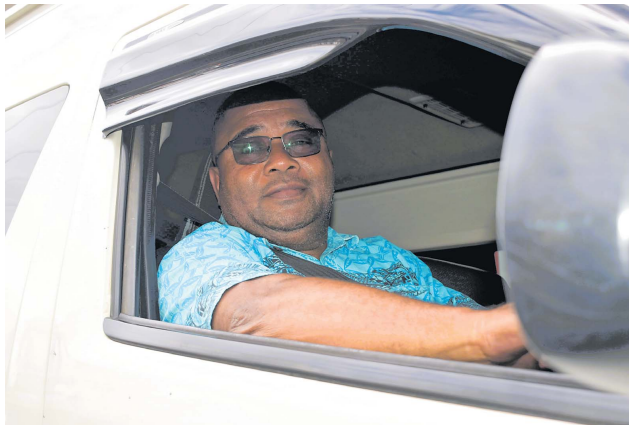
FOR more than three decades, Joseva Vakalutulawa has spent his days behind the wheel, transporting passengers across Fiji and witnessing firsthand the changes that have shaped the country’s public transport industry.
Originally from Burerua, Sawakasa the veteran minibus driver has dedicated over 30 years to serving commuters, becoming one of the many unsung heroes who keep Fiji moving every day.
Reflecting on the early days of the industry, Mr Vakalutulawa recalls a time before LM licence plates were introduced by the Land Transport Authority.
He said the minibus industry began humbly in the heart of Suva, particularly around Robertson Rd where drivers operated with limited resources but a strong commitment to serving the public.
“The same vans that travelled to Lautoka were often providing transport services within the Suva-Nausori corridor,” he said.
Today, however, the industry faces mounting challenges, with rising fuel prices placing significant pressure on drivers and operators alike.
According to Mr Vakalutulawa, fuel costs have increased dramatically over the years.
He noted that 20 litres of fuel, which now costs approximately $91, could once be bought for around $40.
The sharp increase has made it increasingly difficult for public service vehicle (PSV) operators to maintain profitability while continuing to provide affordable transport services.
“The arithmetic simply doesn’t add up anymore.”
The veteran driver explained that while minibus operators would welcome a fare increase of up to 15 per cent, they remain committed to serving the public and must await approval from the Fiji Competition and
Consumer Commission (FCCC).
Even if approved, any fare adjustment would reportedly only apply after 9pm.
For many operators, the combination of rising operational costs and stagnant income has created uncertainty about the future sustainability of the industry.
Despite these challenges, Mr Vakalutulawa said drivers continue to prioritise the needs of ordinary Fijians.
“When we are driving, we always have something on our minds. We are here to serve the ordinary people of Fiji, especially those who cannot afford to own a vehicle.”
He acknowledged that many families across the country are experiencing financial hardship and encouraged the public to remain patient and resilient during these difficult times.
“We are not the only country facing a fuel crisis. People need to take things slowly and support one another.”
Mr Vakalutulawa also issued a message to the Government, urging leaders to remain connected to the realities faced by working class Fijians. He called on elected representatives to engage directly with
transport workers and other frontline service providers who interact daily with the public.
“We put them there, and we want them to walk the talk, many people feel that politicians make promises, but they do not always come down and listen to the struggles of the people.”
He added that while many ordinary citizens may not pay income tax directly, they contribute to government revenue through Value-Added Taxes (VAT) and other charges incurred through everyday purchases.
After more than 30 years on the road, Mr Vakalutulawa remains committed to serving the travelling public.
His story highlights the growing pressures faced by Fiji’s transport sector and the urgent need for solutions that balance affordability for passengers with sustainability for operators.

