
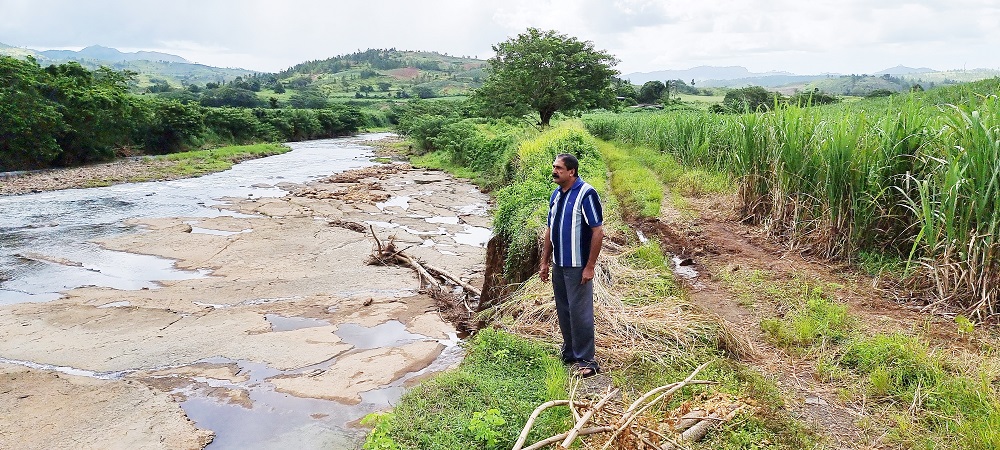
When Vinod Kumar’s neighbour’s farmland along the riverbank began to wash away in huge chunks, he knew he would have to step in and help.
Like most sugarcane growers whose farms backed onto the banks of the Moto River in Ba, increased rainfall over the past few decades had slowly claimed prime fertile soil, inch by inch.
Over the past three decades, more than two acres of his neighbour’s land had been washed away.
And all indications were that the worst was yet to come.
“At one time the riverbanks were about 10 meters away from each other and you could throw things across,” Mr Kumar said.
“Today, it’s about 40m and its still being eaten away.
“We have heard about climate change and we have experienced increased rainfall and tropical cyclones but we still don’t understand how we can protect our farms from the weather.”
His dilemma is shared by many farmers in Ba.
Renowned grower and spokesperson for farmers in the Naloto and Moto area, Arun Sharma said it was difficult to get the climate change message across because farmers were focused on trying to make ends meet and survive in an industry that was plagued with milling inefficiencies and escalating costs.
“When you are trying to keep your family fed, kids educated and your family in good health – it’s hard to engage in discussion about climate change,” Mr Sharma said.
“Even though they all know it is happening, they don’t understand the what, why and how.
“What we need is a climate change awareness and discussion conducted in language they understand and in a context that’s familiar to them.”
This story was made possible through support from the Australian Broadcasting Corporation and Australia Pacific Climate Partnership.

