
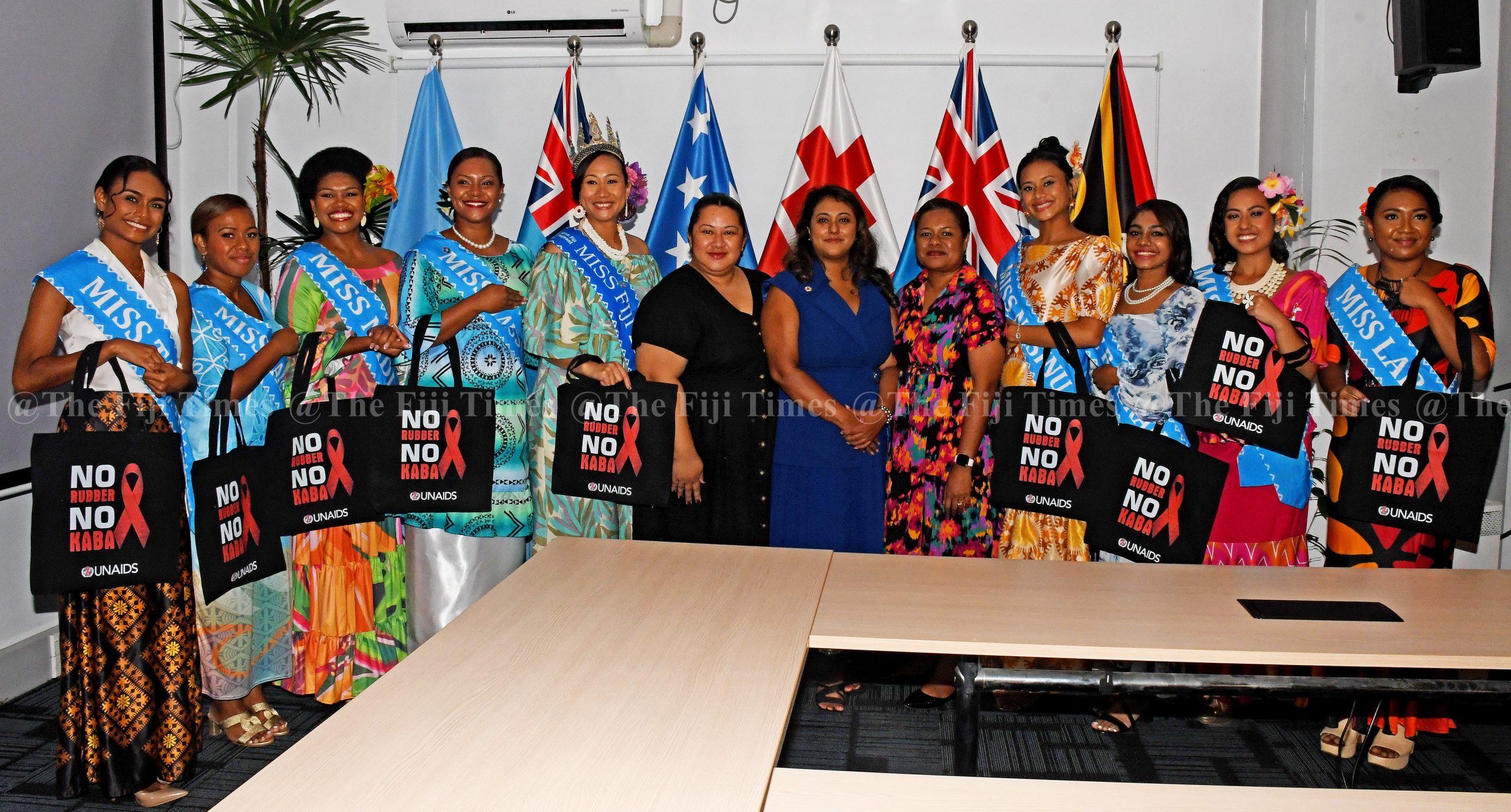
THE Miss Fiji Pageant shifted into one of its most defining stages yesterday as the contestants gathered at the Suva City Council chambers for the official start of the research topic presentation program that tested not beauty, but intellect, courage, and national awareness.
While the pageant itself will run from December 10–13 at the SCC chambers, yesterday’s session marked a crucial milestone.
The presentations reflected the spirit of the national theme, Promoting Online Safety – Think Before You Click.
Opening the program, Information Minister Lynda Tabuya delivered a deeply personal address — not as a politician, she said, but as a woman who had “bled publicly, been shamed publicly, and cried privately”.
She spoke openly about surviving online abuse, including doctored messages, the circulation of a private image, her dismissal from Cabinet, and the eight months she spent rebuilding her life.
Her message to the contestants was one of resilience, discipline, and purpose.
“Titles can be taken,” she said. “Impact cannot.”
Her address grounded the day’s discussions in lived experiences, reminding the young women that their research was not theoretical — it was tied to real people, real harm and real change.
Miss Nadi, Alumeci Davu, presented the strong case for community-based tourism, arguing that Fiji’s economic future must lift rural communities.
Her research showed how locally-owned tourism protected the environment, preserved heritage, and ensured profits return to families.
From sports fields to boardrooms, Miss Nausori Bernadeta Waqavanua called for fairer treatment for women in sports.
She pushed for a 50–50 corporate funding principle, urging companies to match their support for women’s teams with that of men’s.
She said the time had come for Fiji’s female athletes to be visible, valued and equally celebrated.
Leadership, inclusion and the vanua
Miss Labasa Peggy Ravusiro drew attention to women’s political leadership, placing her argument within the Fijian concept of vanua.
She said many Fijian homes already practiced shared leadership, and this should be reflected nationally.
Her solution relied on mentorship, talanoa and building trust within political parties to elevate women.
Disability rights took centre stage with Miss Lautoka, Lebaiwasa WakaWaka, who challenged Fiji to shift from sympathy to empowerment.
She described disability inclusion as both a moral responsibility and an untapped economic opportunity.
She also highlighted the need for universal design, accessible mainstream schooling, and stronger roles for disabled persons’ organisations in policy-making.
Digital risks, drug harm and mental health
Four of the contestants focused on the vulnerability of Fiji’s youth — particularly in digital spaces.
Miss Rakiraki Shrdha Mala, a registered nurse, spoke passionately about Fiji’s escalating drug crisis, describing how online content was fuelling curiosity and addiction among young people.
Her solution combined the talanoa approach, online awareness programs, and mobile mental-health teams deployed to rural communities.
Cyber safety was the central theme for Miss Nasinu Ailava Samuels, who proposed community-based cyber safety watch teams and youths trained as digital first responders.
She called for the Bula Spirit — kindness, respect, and empathy — to become a national digital ethic.
Directly confronting the rising trauma of image-based abuse, Miss Suva Rhyelle Aisea urged Fiji to stop blaming victims and start condemning the violation of consent.
She called for urgent legal clarity, faster reporting and removal systems, and a national promise to never share intimate content.
Miss Tavua Sera Kiawe tied it all together by pointing to the root of many online risks: low digital literacy.
She recommended school-based digital empowerment classes, privacy training, and campaigns to help young women combat unrealistic beauty standards and the constant pressure of comparison.
Ideas rooted in culture, solutions grounded in reality
The presentations revealed a generation that is digitally aware, socially conscious, and unafraid to confront uncomfortable truths.
Each contestant blended research with personal conviction, offering policy-focused solutions grounded in Fijian values — trust, respect, service, and community.
The program did more than select a winner.
It signalled the kind of leaders young Fijian women were becoming — researchers, advocates, storytellers and, above all, nation builders.
As the Miss Fiji Pageant continues into its final events this week, the research presentations have made one thing clear: the crown may go to one, but the ideas shared today belong to every Fijian home.

