
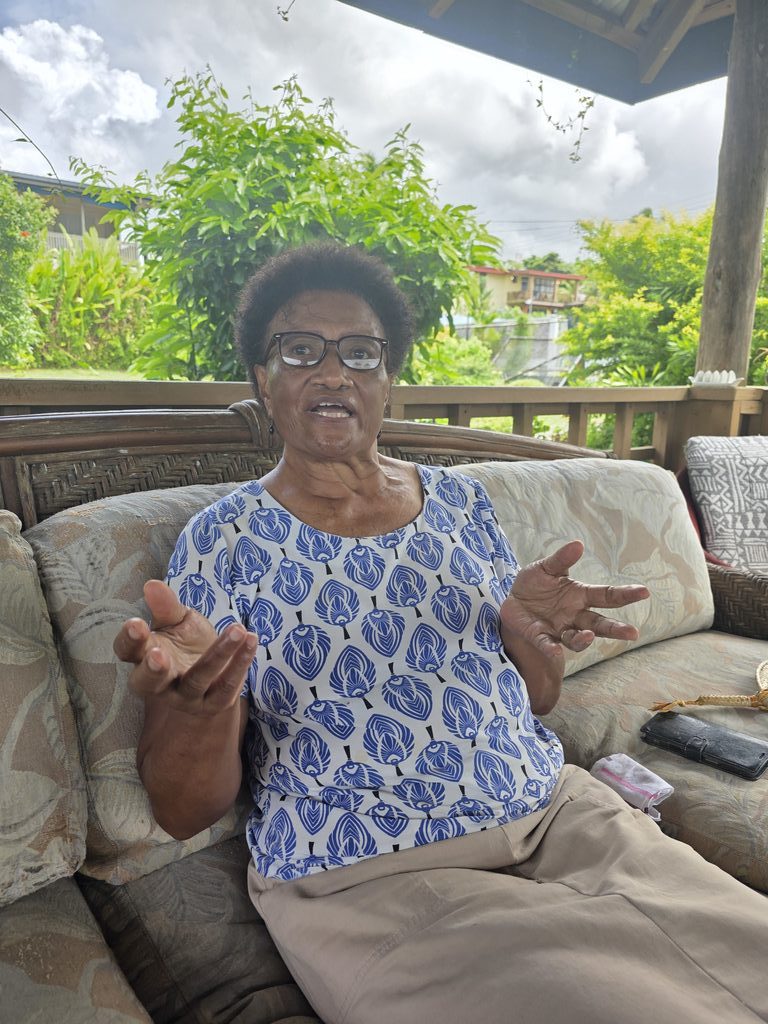
At 76, Mere Tora still greets each day with renewed purpose. From her Amputch Rd home in Upper Ragg, Tamavua, she often reflects on a life that began in the quiet village of Cuku in Wainiika, Tawake in Cakaudrove.
It was there that the ebbing sea and fertile land shaped her earliest memories about responsibility.
“I grew up in a big family where there were nine siblings,” she says softly.
“And I was the second.”`
That position in the family, she recalls, came with expectations.
“As a young girl, I had to look after my younger siblings. That was just part of life, especially in the village.”
But childhood and domestic chores was not without joy. In fact, she remembers it as a fun adventure, but one grounded in real purpose.
“We would go out to collect firewood in the bush or go prawning. It was fun, but it meant something,” she says.
“When we came back with a noke (basket) of prawns or vivili (edible seashells), we were proud. We knew we were helping put food on the table.”
Their home sat close to the sea, and the shoreline became their childhood playground.
“We climbed trees, climbed rocks, and jumped into the water. Life was simple but it was full and real.”
Behind that simplicity, however, stood a father who was disciplinarian, a man who returned to Cuku at the end of the Second World War to find an empty ancestral village, one ravaged by disease and tragedy.
“He had to start again from scratch,” she says.
“So he believed in hard work. There was no sitting around, idle.”
A trained carpenter, he carried discipline into every part of family life. Her mother, Ms Toras adds, was quieter, but no less influential.
“Mum supported him in everything.”
Education was non-negotiable.
Ms Tora’s dad would remind his children often with the vernacular phrase:”Vuli vakaukauwa mo tamata yaga mai muri (study hard so you can be useful later in life).”
“He used to tell us, ‘I only have 80 acres of land. It’s not enough for all of you. Some of you must find your own way.’”
It was a message that stayed with her, and influenced her journey.
From the village school, she moved to Niusawa Methodist School in Taveuni, then on to Lelean Memorial School. In the 1960s, opportunities for young women were limited but she saw an opening after school.
“At that time, you either became a teacher, a nurse, a doctor or a secretary,” she says.
“I chose teaching but I also wanted to go to university.”
Encouraged by her teachers and supported by her parents, she enrolled at the newly established University of the South Pacific which opened its doors in 1968.
“We were a very small group,” she recalls.
“In my class, there were less than ten women.”
The first USP graduation in 1971
When she graduated in 1971, at a ceremony held in a hangar and officiated by the late King Taufa’ahau Tupou IV of Tonga, it did not feel extraordinary.
“I didn’t think it was a big achievement,” she says.
“I was just doing what my father told me – work hard. So it was no big deal.”
Her teaching career began at All Saints Junior Secondary School, where she taught social science, geography and English. Like many teachers of her time, she adapted as needed.
“At one point, I was told to teach vosa vakaviti, even though I wasn’t trained for it,” she says.
“You just stepped in and did the work.”
Later, she returned to university to complete her Bachelor of Education and went on to become one of the pioneer teachers at Nasinu Secondary School, created to expand access to higher education for students from rural maritime areas.
Her journey would eventually take her beyond the classroom.
In 1990, she joined the Ministry of Education headquarters as an Education Officer (Secondary) before moving to the Ministry of Foreign Affairs in 2000. She served two tours in Wellington before retiring in 2017.
Retirement in 2017
But even in retirement, her concern for education remains.
Now that she has more time for her grandchildren, she tries to pass on one habit she believes is fast disappearing.
“I’d make them sit and read,” she says.
“But young people today don’t read like we used to.”
She worries about the impact.
“Reading helped us express ourselves. It shaped how we thought and understood the world,” she says.
“Now, I see the difference, especially in writing.”
Beyond academics, she has also observed a shift in values.
“Respect is not the same.”
“Respect for elders, for authority, even for each other.”
While she stops short of blaming any single cause, she believes the foundation somehow lies in the home.
“Children know their rights,” she says.
“But they don’t always understand their responsibilities. That balance is missing and the home is where it must be first emphasised.”
She points, too, to broader social challenges, rising concerns around youth behaviour, substance abuse and early pregnancies, among others.
“It comes back to leadership,” she says.
“Leadership in the home, in the village, in the church. People must know their role—not just for themselves, but for the community, for humanity.”
Walking in faith
For Mere, those reflections are deeply tied to her faith.
In retirement, she believes her spiritual life has become central to her daily journey.
“I’ve gone through things that I could not have handled on my own,” she says. “Without my faith, I wouldn’t have made it.”
Seven months ago, she lost her only son, a grief that still lingers.
“I asked, ‘Why?’” she admits quietly.
“Why did you take my only son?”
But in that moment of questioning, she says she felt a quiet conviction – “Even in grief, you glorify God.”
It is a belief she now holds onto.
“I know I will see him ( son) again,” she says.
“That gives me hope.”
Her husband, whom she first knew at university, passed away decades earlier, in 1988. Those losses, she says, deepened her understanding of faith.
“In everything, good or bad, I’ve learned to ask ‘What is your purpose for me Lord?’”
Life after retirement
Today, Ms Tora’s days are far from idle.
After more than 40 years in the workforce, she thought retirement might bring rest. Instead, it opened new doors and its own version of ‘busy’.
Since 2018, she has been volunteering with Homes of Hope in Tamavua, supporting young mothers in difficult circumstances.
“They do tremendous work,” she says, “and I’m grateful to be part of it.”
When at home, she finds joy in the simple things – planting vegetables, tending to her space, embracing quiet moments reading the Bible and enjoying the company of her daughter and two grandchildren.
“There is always something to do,” she says.
And in that quiet, purposeful rhythm, the lessons of Cuku, the discipline, the faith, the service continue to guide her still.
“I want to women to be success. My message to young women and girls, especially those in the rural areas, is the fact that your background doesn’t have to determine what you become.”
“The world is out there, you go and get it, it’s up to you.”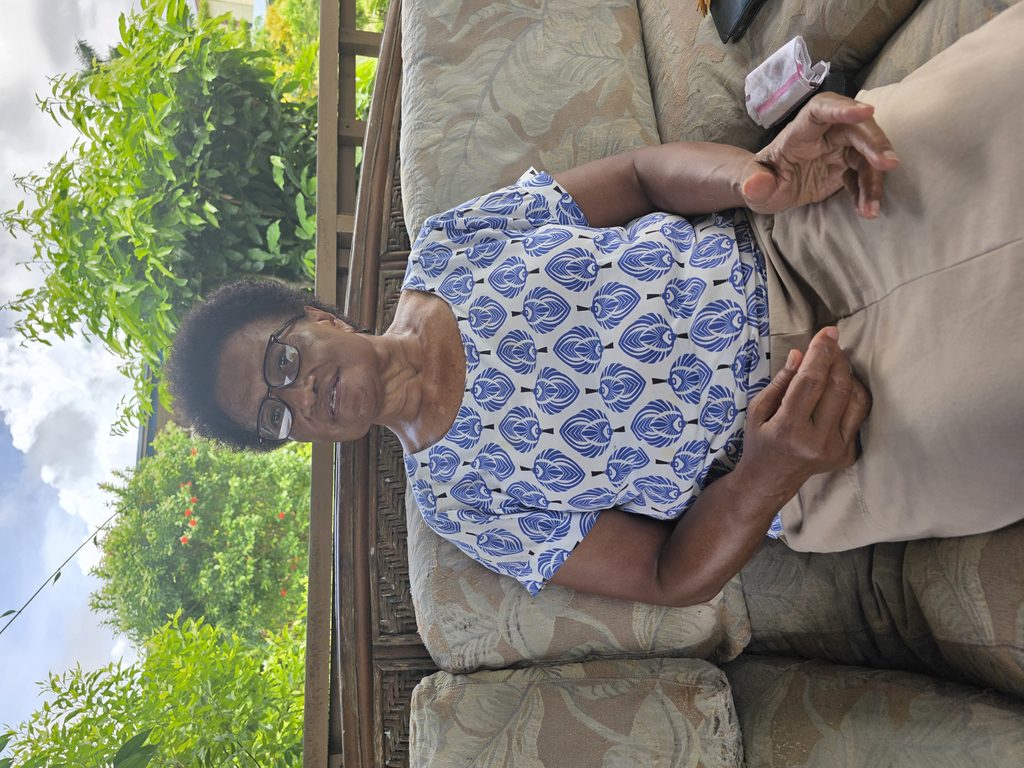
Mere Tora shares her thoughts with The Sunday Times at her Ragg Avenue home.
Picture: JOHN KAMEA
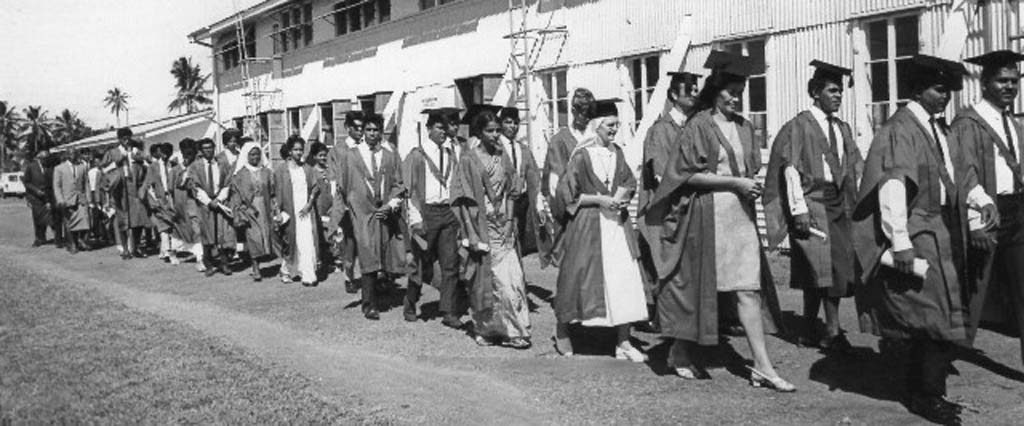
The first cohort of USP graduates in 1971, which Mere Sau Tora was part of. Picture: FIJI MUSEUM

