
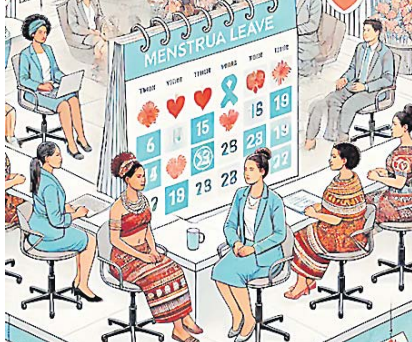
The concept of menstrual leave has been a topic of debate in various countries with some governments implementing policies to address the unique health needs of menstruating individuals. Recently, rumours and trade union discussions about the possible introduction of menstrual leave in Fiji have sparked public interest. While this proposal has not been officially confirmed, the debate around it raises important questions about its potential benefits and challenges in a country with a population under one million.
Case for menstrual leave in Fiji
1. Acknowledging health needs
MENSTRUAL leave recognises that menstruation can cause severe discomfort for some individuals, including symptoms such as cramps, fatigue, and headaches. According to medical research, up to 20 per cent of women experience dysmenorrhea — painful periods that can significantly impact daily activities. Providing leave for those who experience debilitating menstrual pain could promote workplace inclusivity and support employees’ health and well-being.
In a country like Fiji, where traditional gender roles often dominate, recognising menstruation as a legitimate health issue could help break down barriers and empower women to address their needs openly. This could also encourage more women to participate in the workforce, knowing their health concerns are taken seriously.
2. Encouraging gender equality
Introducing menstrual leave could be seen as a step toward gender-sensitive workplace policies, aligning Fiji with progressive global practices. Countries like Japan, South Korea, and Indonesia already offer menstrual leave, setting an example for smaller nations. By following suit, Fiji would demonstrate its commitment to gender equality and women’s rights.
In addition, menstrual leave policies could help reduce the stigma surrounding menstruation. Openly addressing this natural biological process would normalise conversations about women’s health and contribute to a more equitable society. Such a policy could also pave the way for broader initiatives to address gender disparities in education and healthcare.
3. Boosting productivity
While some may view menstrual leave as a loss of productivity, others argue that accommodating employees during their most uncomfortable days could lead to higher overall productivity. Employees may return to work feeling better and more focused after taking the time to rest and recover.
Moreover, a supportive work environment that acknowledges the needs of its employees can foster loyalty and morale. Companies that prioritise employee well-being are likely to experience lower turnover rates and higher job satisfaction, which can offset any short-term losses in productivity.
4. Trade union advocacy
Trade unions in Fiji often advocate for worker-friendly policies, and menstrual leave aligns with their broader goals of improving working conditions. Union leaders have emphasised the importance of addressing workplace challenges unique to women, including access to maternity leave and safe working environments. Supporting menstrual leave could strengthen unions’ advocacy efforts and highlight their commitment to gender equality.
Challenges and
concerns
1. Potential for discrimination
One major concern is the risk of workplace discrimination. Employers may hesitate to hire or promote women, fearing increased absenteeism due to menstrual leave policies. This could inadvertently harm gender equality in the workplace, undermining the very goals the policy seeks to achieve.
To mitigate this risk, Fiji could look to countries with established menstrual leave policies for guidance. Clear regulations and anti-discrimination measures would be essential to ensure that women are not penalized for using menstrual leave.
2. Financial impact on employers
Small businesses, which form a significant part of Fiji’s economy, may struggle to absorb the costs associated with additional leave. This could be especially challenging in sectors like tourism and agriculture, where staffing levels are often tightly managed. Employers might need to hire temporary workers or redistribute workloads, potentially increasing operational costs.
In response to these concerns, the government could consider providing financial incentives or subsidies to small businesses that implement menstrual leave policies. Alternatively, businesses could explore flexible work arrangements, such as allowing employees to work from home during their menstrual leave.
3. Cultural sensitivity
Menstruation remains a taboo topic in many parts of Fiji. Introducing menstrual leave could face resistance from communities that view open discussions about menstruation as culturally inappropriate. Traditional norms and beliefs may hinder the acceptance of such a policy, particularly in rural areas where gender roles are more rigidly defined.
Addressing these cultural sensitivities would require comprehensive awareness campaigns. Education initiatives could focus on destigmatising menstruation and highlighting the health benefits of menstrual leave. Engaging community leaders and religious organisations in these efforts could help build support for the policy.
4. Implementation
challenges
Ensuring that such a policy is not abused would require clear guidelines. Employers might demand medical certificates, which could burden healthcare providers and employees alike. Additionally, the administrative costs of monitoring and enforcing the policy could strain resources, particularly in smaller organisations.
To address these challenges, Fiji could adopt a phased approach to implementation. For example, a pilot program could be launched in specific sectors to assess the feasibility and impact of menstrual leave. Lessons learned from this initiative could inform the development of a nationwide policy.
A balanced approach for Fiji
Given Fiji’s small population and unique economic and cultural landscape, any move toward menstrual leave should involve broad consultations with stakeholders, including trade unions, employers, healthcare professionals, and community leaders. Policymakers must carefully weigh the potential benefits and challenges to ensure that the policy is both effective and sustainable.
One option could be to introduce menstrual leave as part of a broader package of gender-sensitive workplace policies. This might include initiatives such as flexible working hours, improved access to healthcare, and educational programs on women’s health. By taking a holistic approach, Fiji could address multiple issues affecting women in the workforce and create a more inclusive environment.
Global examples and lessons for Fiji
Several countries have implemented menstrual leave policies, offering
valuable lessons for Fiji. For instance, Spain introduced a law in 2023 allowing individuals with painful periods to take up to three days of menstrual leave per month. This policy is government-funded, reducing the financial burden on employers. Similarly, in South Korea, employees are entitled to one day of unpaid menstrual leave each month, while in Japan, the law mandates menstrual leave, but leaves it to employers to decide whether it is paid or unpaid.
These examples highlight the importance of tailoring policies to the specific needs and resources of each country. Fiji could draw inspiration from these models while adapting them to its own cultural and economic context. For instance, a government-funded approach might be more feasible in Fiji, given the financial constraints faced by small businesses.
Conclusion
While the idea of menstrual leave has sparked interest in Fiji, it remains a topic of consultation and speculation. The potential benefits, such as improved workplace inclusivity and acknowledgment of health needs, must be weighed against challenges like discrimination and financial implications for employers. A carefully crafted policy, informed by dialogue and cultural sensitivity, could pave the way for Fiji to join the global conversation on gender-sensitive workplace policies.
By prioritising health, equality, and productivity, Fiji has the opportunity to become a regional leader in progressive labour practices. However, achieving this vision will require a balanced approach that takes into account the unique needs and challenges of the nation. With thoughtful planning and collaboration, menstrual leave could become a reality that benefits both employees and employers in Fiji.
DINESH PRASAD is a school teacher. The views expressed herein are his and not of this newspaper.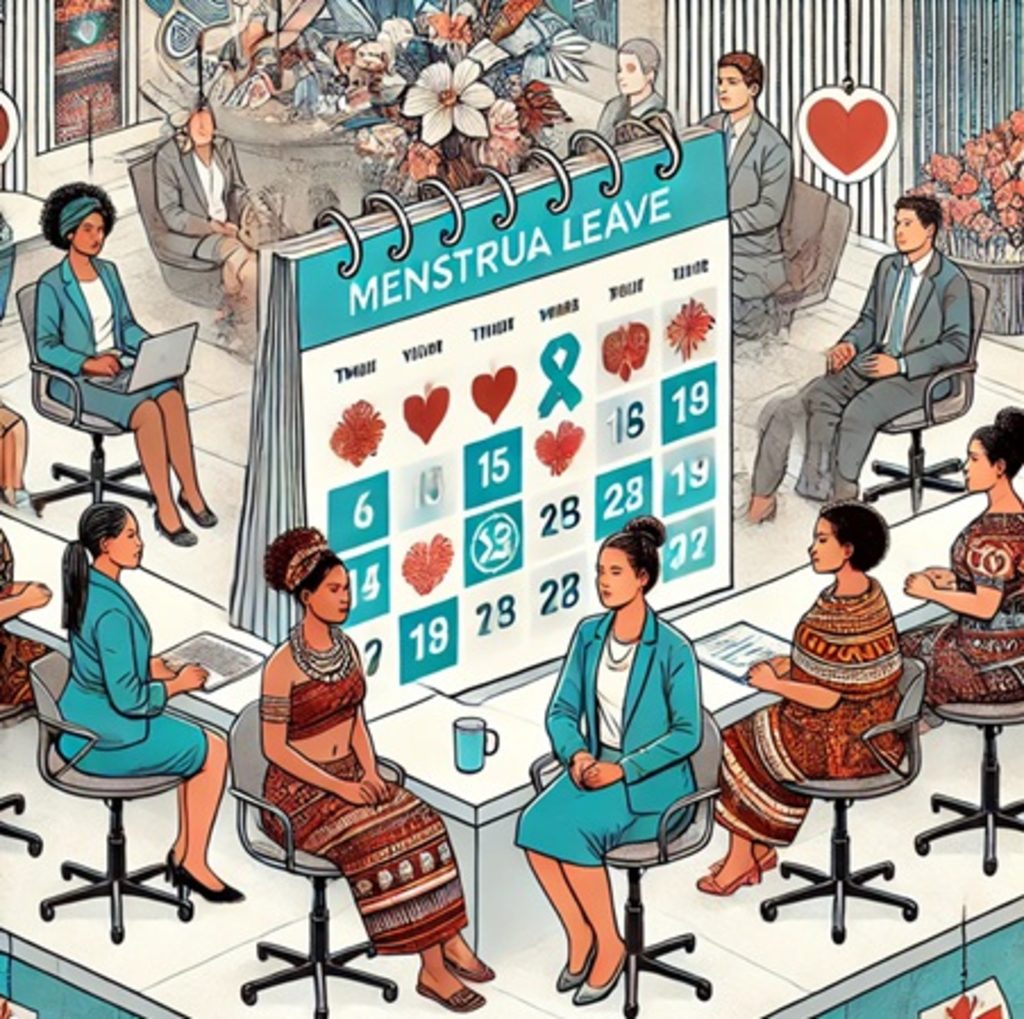
The author says introducing menstrual leave can be seen as a step toward gender-sensitive workplace policies, aligning Fiji with progressive global practices. Image Source: AI-generated conceptual illustration by OpenAI’s DALL·E tool

