
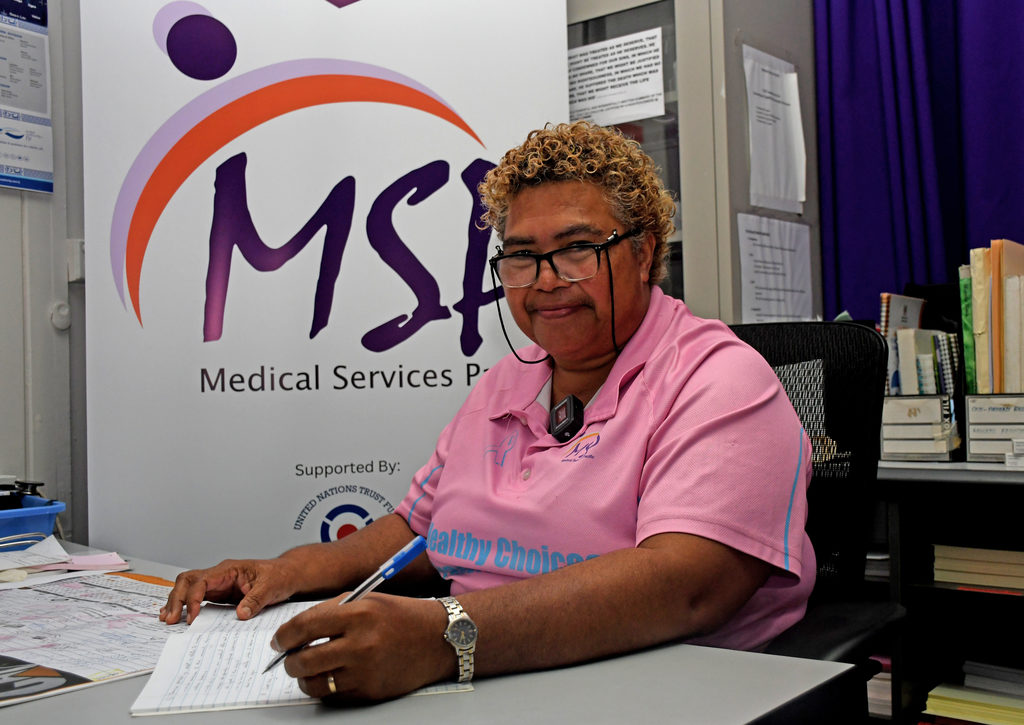
With 30 years of experience as a nurse, Vilisi Uluinaceva now works with Medical Services Pacific to deliver life-changing outreach across Fiji. In this Q&A with The Fiji Times, she shares how her team is helping women in rural communities understand menopause, manage symptoms, and break the silence around a topic still shrouded in stigma.
FT: How often do you have women or people coming in to talk or ask about menopause?
VU: Normally in the clinic, we don’t have many, but when we go out to the community and do outreach and awareness, then most of them come up asking questions.
FT: Is menopause highlighted during your outreach efforts?
VU: We do that often in our outreach program, but mainly on sexual reproductive health, breast cancer for women and men, cervical screening, cervical cancer, prostate cancer as well. Among the top two is menopause and family planning. We are also getting HIV into the conversation.
FT: What kind of questions are raised during these outreach events?
VU: When we talk to them about menopause, most of them say it’s the first time they’re hearing it. We talk about some of the symptoms like forgetfulness, itchiness and dryness of the female genitals, so most of them realise and say: “No wonder when their spouse comes, most of them turn the other way.” And because of dryness (of genitals), they are reluctant to be intimate with their husbands. So when we do the awareness, they come up with those kinds of questions, and we try to solve them. When we go out, we not only provide awareness, but we also give out some lubricants. We tell them this is something you do not have to be scared of or feel that “I’m the only one that’s facing this.” So we always try to reassure them.
FT: Who is the target audience for the outreach activity by MSP?
VU: The outreach program is for all — the childbearing age and also after menopause. Even if we have children who come, we also see them in a clinical setting. For outreach, there are mainly two things that we do. First is awareness, and the second is the clinic. So after the awareness, then we go into the clinical.
FT: Do you go back to follow up with your audiences — where you’ve done those outreach programs — to get feedback and see how they’ve done in terms of the support provided?
VU: Sometimes we do go back to them, but sometimes we’ll refer them to the health centre — to the nurse looking after the area — for those needing follow-up.
FT: What kind of feedback do the audiences usually provide at that point (of following up)?
VU: (They are relieved) to know that there is a solution – that there are ways to help them – given the circumstances they may be going through. Most of them are very grateful when we do the awareness. One of the ladies, after the awareness program, said she was very happy that her husband was able to be at the same meeting as well. Because sometimes, when the husband approaches her and she’s reluctant, then the husband thinks, ‘well, this one may be seeing someone else.’ Because of what we go through — the symptoms. And for that lady, she said she was very happy because her husband was also there. Most of the time, when we go out to the communities, we do awareness for both men and women, so the husband also knows what is taking place in a woman’s body. Without that, he won’t know much — he won’t know what is happening in a woman’s life.
FT: What advice would you give about the importance of men and women understanding how changes in the body affect emotions, behaviour, and how we relate to each other?
VU: We know that male partners (only cease) to be intimate when they put their hands on their chest and things are no longer active. For women, however, when we reach a certain age — especially menopause — our body just feels like we don’t want to be intimate with our husbands. What we normally advise them is that during this time, we can also reach out to the health centre nearby — tell others — to have group discussions. But most of them, think it’s a taboo, and they feel they cannot express themselves. I think the best thing is for both men and women to come together for awareness programs.
FT: In terms of statistics, would MSP have any data on the number of women who have asked about menopause or the support provided to women in relation to menopause?
VU: I’m sorry, we don’t have that right now.
FT: Is andropause also on MSP’s radar or are there plans to include it in the conversation so that men also understand this affects them too?
VU: For andropause, it’s the first time for me (to hear of it)… when I saw your questionnaire. And yes, I think it is a good thing that we can accommodate this in our outreach program as well so men are not left behind when we talk about menopause — we can also address andropause. I would say we need to create more awareness on this subject so that both men and women know what is happening in the body.

