
THE documentary Mana over meth is a deep dive into drug addiction in Pacific communities and dissects the root causes of substance abuse and the reliance on it.
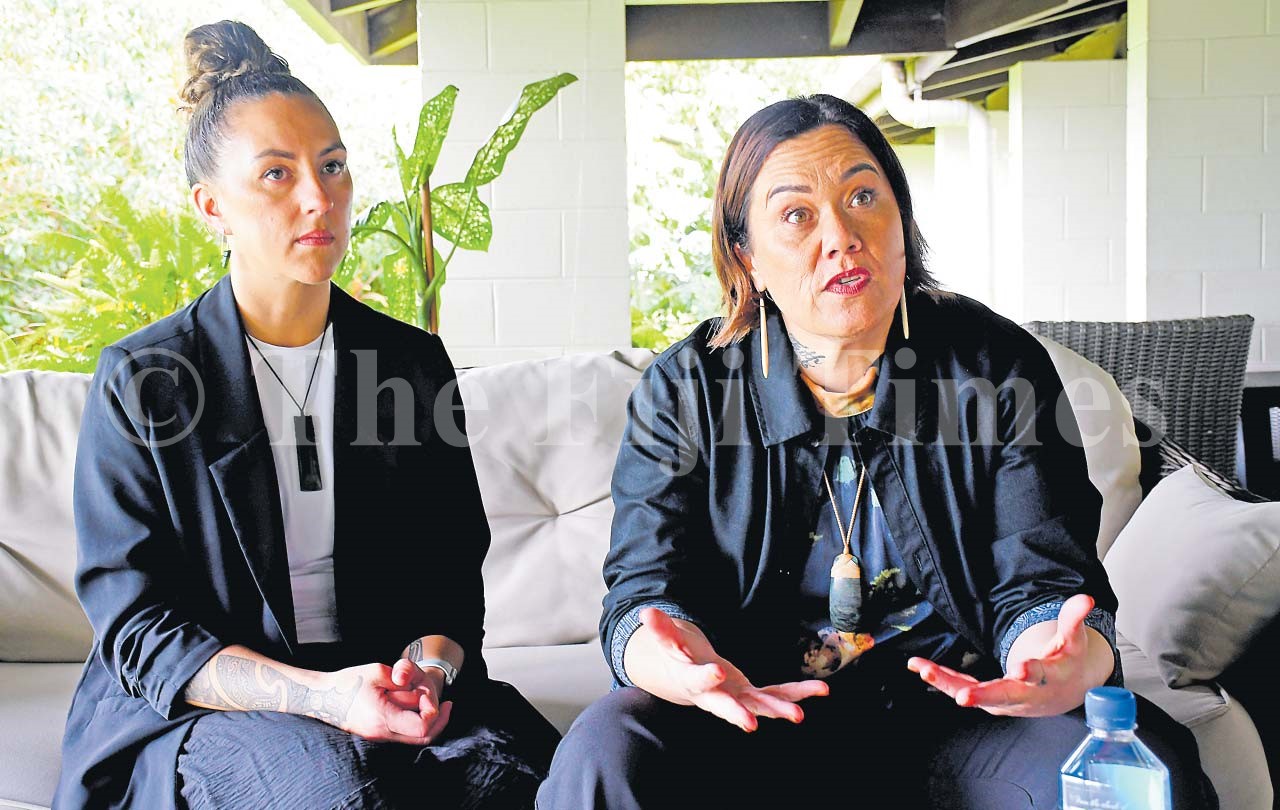
New Zealand-based Jessica Apanui and Holly Bekham share their lived experiences of addiction and their journey to recovery while also offering solutions.
The 10-minute documentary was screened during the 4th UN Human Rights Film Festival at the Japan ICT Centre at the University of the South Pacific’s Laucala Campus in Suva this week.
Ms Apanui said she hoped the documentary uplifted, inspired and instilled hope that change and recovery were possible.
“If you look at some of the scenes like being in the hotel, you could see the sex worker’s life being in hotels and understanding what some of those environments are like, what goes on in those environments, that part on its own would have been relatable to so many people in our community,” Ms Apanui said.
“I think the criminal aspects of drug addiction also reflect back to the community as well because with drugs comes crime, and so I think those are two real key points that make the film itself relatable for communities and understanding.
“Cooking methamphetamine, that’s very well known in New Zealand and it’s happened a lot in homes, so much so that insurance policies change.
“A lot of houses get deemed inhabitable and have to be knocked down. Landlords get dumped with the bill and things like that, so that’s very well publicised and made public in New Zealand.
“So, I think that’s had a huge effect on communities, the manufacture of methamphetamine inside homes, inside buildings, has had a huge effect.”
Ms Apanui said the documentary had received both positive and negative feedback.
“Some of that came from our own people and that’s okay, freedom of speech, freedom of opinion, if that’s how you feel, that’s fine.
“But we won’t stop doing the work. We continue to do what we know is the right thing to do and so there was a little bit of negativity, but nothing we couldn’t handle.
“It describes the mess, some real key powerful parts of when I was using methamphetamine and then it shows what the solutions look like and that’s that reconnection back to land, back to the Whenua, we have a connection back to the land, back to mountains, back to rivers, and I think that’s really important to instil hope for the people of Fiji that watch Mana over meth.”
Five and a half years into her recovery journey, Ms Apanui said her biggest challenge was learning how to be a mother.
“My children had only ever known me using and when you get clean, you change your behaviour, you change the ways in which you act, our values and your morals change in school.
“All of those things change in your life for the better, and so the transition for the kids became quite challenging because now they had a mother that loves, a mother that cares, a mother that wants to be involved and that’s a hard transition for the kids sometimes because they still want to have a bit of freedom. In drug addiction, I gave them that freedom.”
Ms Apanui said addressing the trauma stemming from drug use at 12 years old while also trying to discover her identity was important for her.
“Once I got clean, I delved down that pathway of actually finding out who I am. Who is Jessica Apanui? Who are her leaders? Who is her tupuna? Where does she come from? Who are her ancestors?
“And so Mana over meth took me on that journey. And so when I returned back to my land and where I come from, on the east coast of New Zealand, I’ve never been back for 29 years.
“I went there when I was 11 for a family reunion and I was still quite naughty then as well and so to go back and be reconnected back to my Whenua, my land, where I come from, was really special for me, it was about filling a void
“For so long I didn’t know who I was, and then to go back and have the energy that comes with it, the feelings, the emotions, that sense of peace, gratitude, that this is where I come from, filled a void, it was a really beautiful thing for me”
Ms Apanui said her family played a pivotal role in her journey to recovery.
“They just wanted me to get well, they wanted Jess back, so they were really supportive of me going to treatment.
“So, I went to rehab, and I went to detox and got some time up there.
“I was engaged in a community that lived and breathed recovery and they were really supportive of that. My kids just wanted their mother back, they were really supportive of that, it took time to build trust because it’s easy to say, ‘I’m not going to do that anymore, I’m going to get clean’, and then you’re not because they’d been through that with me before.
“When I made the decision to get clean, it took about six months to a year before I was trusted to be on my own without my children by my side, for them to believe that I said, ‘I’m going to do this’, that’s actually what I’m doing.
“It did take time, you have to rebuild the trust with your family because they’re the ones that you’ve hurt the most.”
Ms Apanui said she faced a relapse in the initial stages of her recovery.
“My intention when I got clean was just to stay out of jail. I was really fearful around that but I kept practising my recovery. I’d show up and be involved, engage with services and the recovery community, and I was still doing things that I knew I shouldn’t be doing because a big driver is the crime, because it brings in money and when I got clean, I had no money.
“So, to kind of steer away from that was really challenging.
“It put me in a position where I relapsed. I went back out there for 24 hours, I did what I had to do. I came back and the guilt and shame that I felt was immense, I just knew that recovery was the pathway for me.
“So, I put two feet into my recovery, owned my relapse for four days clean, and now I’ve got five and a half years up.
“I was in the back of a bus where they were manufacturing methamphetamine and I was just like, ‘This is not, okay, I don’t actually want that now, this is scary to me’.
“I didn’t realise how much recovery had an influence on me.”
Ms Apanui said there were deeper issues that led to her substance abuse.
“I didn’t wake up one day saying I’m going to be a drug addict. I was born into that lifestyle. When I was born, my father was a heroin addict, he overdosed four times.
“They were into heavy drug use, drug dealing and gang affiliation, and so I came straight into the midst of it all. Things slowed down over the years as I grew older in terms of how they stopped using the hard drugs, but there were drunken parties and the violence that comes from that.
“This is one thing that needs to be considered as well, some people don’t get a choice, they don’t come from a happy family with the mum and the dad, they come straight from poverty and hardship, and with that comes desperation.
“So, are we going to eat tonight or not? It might be stealing milk from the shop down the road to feed the family or running past the shop with the apples and the bananas. Those things are real, they happen and I think we’ve got to be really mindful about all of what brings us here.”
Holly Bekham said drug addiction was non-discriminatory with its impacts seeping into communities and families.
“I guess just one thing with recovery and addiction, it’s not just stopping the drugs. You’ve got to look at the underlying factors, and usually there are reasons for some trauma. So, it’s not easy just stopping drugs, you’ve actually got to do the work on yourself as to why you picked it up,” she said.

