
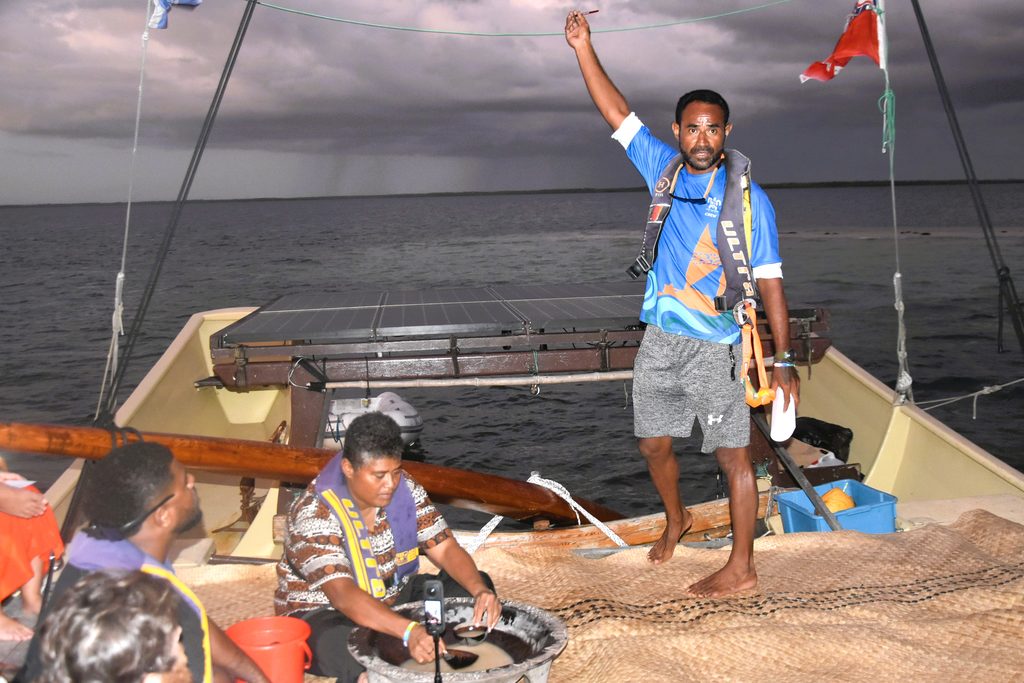
FOR the past 15 years, the Uto Ni Yalo has stood as a powerful symbol of Fiji’s living maritime heritage, reconnecting people to ancestral knowledge, traditional navigation, and a deep respect for the ocean.
More than just a voyaging canoe, the Uto Ni Yalo represents a movement to revive and sustain cultural practices that once defined Pacific Island life, guided by the stars, winds, and waves.
It was established with a clear purpose, which is to preserve and promote traditional seafaring knowledge while fostering environmental stewardship and cultural education.
Operated under a trust structure, the vessel is guided by trustees who ensure that its operations remain aligned with cultural values rather than commercial interests.
This trustee ownership model allows the Uto Ni Yalo to remain a shared cultural asset, accessible to the wider community and protected for future generations.
At the heart of the Uto Ni Yalo’s journey are the people who crew her, many of whom volunteer their time, skills, and passion.
Over the past 15 years more than 300 volunteers from all walks of life have been involved, each contributing to the canoe’s upkeep, voyages, and educational programs.
This also reflects the inclusive spirit of the Uto Ni Yalo, where age, profession, and background matter less than a shared respect for culture and the ocean.
One of the longest-serving crew members is traditional navigator Kaiafa Ledua, who has been part of the Uto Ni Yalo since its early days.
Kaiafa says the canoe is more than a vessel, it is an extension of his identity.
He shares that being part of the Uto Ni Yalo allows him to travel to foreign countries, an experience he describes as life-changing.
Whenever the Uto Ni Yalo sails overseas, Kaiafa says, a total of 16 crew members are on board.
“Each person plays a vital role in navigation, sailing, safety, and cultural practice, working together as a team to ensure the success of the voyage and the wellbeing of both vessel and crew,” he said.
Through these voyages, he gains new perspectives, shares Fijian culture abroad, and strengthens his pride in traditional navigation and ocean voyaging.
Hailing from Nayau Village in Lau, Kaiafa carries a lineage deeply rooted in traditional craftsmanship and seafaring.
He proudly shares that his father was among the last generation of master canoe carvers, men who shaped vaka by hand using knowledge passed down through generations.
Kaiafa explains that joining the Uto Ni Yalo crew felt like something that had always been part of him.
“From a young age, I was drawn to the ocean, learning to read its moods and rhythms through observation and experience.”
“Becoming a navigator allows me to reconnect with teachings I grew up hearing, but rarely saw practiced in modern times.”
Through the Uto Ni Yalo, Kaiafa says he has been able to bring those teachings to life, guiding voyages using stars, ocean swells, cloud formations, and wind patterns rather than modern instruments.
He believes that his 15-year commitment reflects a deep sense of responsibility, not just to the canoe, but to ensuring that traditional navigation knowledge does not disappear.
He says that sharing this wisdom with younger generations is vital, particularly in a time when technology often replaces lived experience.
“On board the Uto Ni Yalo, learning is hands-on, experiential, and rooted in respect for nature.”
Kaiafa highlights that when the Uto Ni Yalo is in-country, the trust also supports local business initiatives and community-based activities that help sustain operations while engaging the public.
One such initiative is the Star Gazing Sail, a unique cultural experience that blends traditional navigation with education and storytelling.
These sails offer participants the rare opportunity to experience the ocean at night, guided by the same stars that once led Pacific voyagers across vast distances.
The most recent star-gazing sail, held on Sunday night, drew strong interest from locals eager to reconnect with the night sky.
As the canoe glided quietly over the water near the Sand Bank, crew members shared knowledge about constellations, star paths, and their significance in traditional navigation.
Participants learned how navigators like Kaiafa identify directional stars and understand seasonal changes through the sky.
“With minimal artificial light, the stars appeared brighter and closer, reminding many of a time when the night sky was a primary guide rather than a forgotten backdrop.”
“The gentle rhythm of the ocean, combined with cultural storytelling, created a powerful connection between past and present.”
Kaiafa shares that these local sails also serve as a practical way of generating income to help maintain the canoe.
“This way, the Uto Ni Yalo remains both culturally grounded and economically sustainable, demonstrating how tradition and modern community needs can coexist.
“Uto Ni Yalo has made a meaningful contribution to environmental protection by promoting a deep respect for the ocean and natural world through traditional knowledge.”
Kaiafa says at the core of its mission is the belief that caring for the environment begins with understanding it.
He says by reviving traditional navigation and voyaging practices, the Uto Ni Yalo teaches communities to observe ocean currents, winds, stars, and marine life, knowledge that encourages harmony rather than exploitation.
Through its voyages and educational programs, it also raises awareness about ocean conservation, climate change, and the impacts of pollution on fragile marine ecosystems.
“Crew members and volunteers actively promote sustainable practices such as reducing plastic use, protecting reefs, and respecting fishing grounds.”
“The canoe itself is a symbol of low-impact travel, relying on wind and human power rather than fuel.”
Kaiafa shares that the Uto Ni Yalo continues to attract tourists and visitors who are eager to learn about traditional voyaging.
He encourages more locals to show interest in joining the voyages, saying it is a valuable opportunity to reconnect with ancestral knowledge.
“Through these experiences, participants learn how their forefathers used the stars and the ocean to navigate the seas long before modern technology.”
Kaiafa says that by blending cultural heritage with environmental advocacy, the Uto Ni Yalo continues to inspire stewardship, reminding people that protecting the environment is not a modern concept, but a responsibility deeply rooted in Pacific traditions.
From his 15 years experience, the Uto Ni Yalo continues to sail not just across waters, but across generations.
Through the guidance of its trustees, the dedication of volunteers, and the leadership of navigators like himself, the canoe remains a living classroom — one that teaches resilience, respect for nature, and pride in cultural identity.
Kaiafa says as long as the stars continue to shine above the Pacific, the Uto Ni Yalo’s journey carries on, guided by the spirit of the ocean and the people who call it home.
Kaiafa now has his two teenage children serving as crew members working alongside him.
He says that through hands-on learning, they observe and practice traditional skills, gaining knowledge passed down by their father and other experienced crew members.
Australian national Georgia Kane who has been living in Fiji for two years, describes her experience on the Uto Ni Yalo as terrific, marking her second time on board.
She says she learned so much from last year’s sail that she was inspired to return this year to deepen her understanding and experience.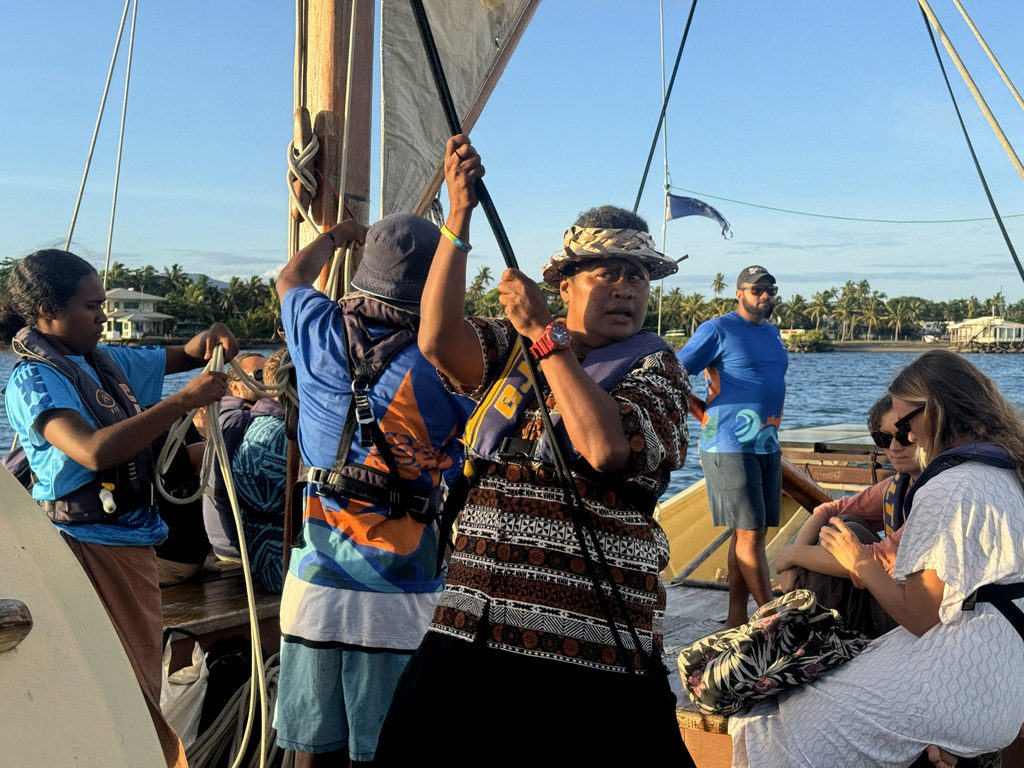
1.Senior crew member of the Uto Ni Yalo, Iva Nancy (closer to camera) on board the traditional vaka on Sunday. Picture: KATA KOLI
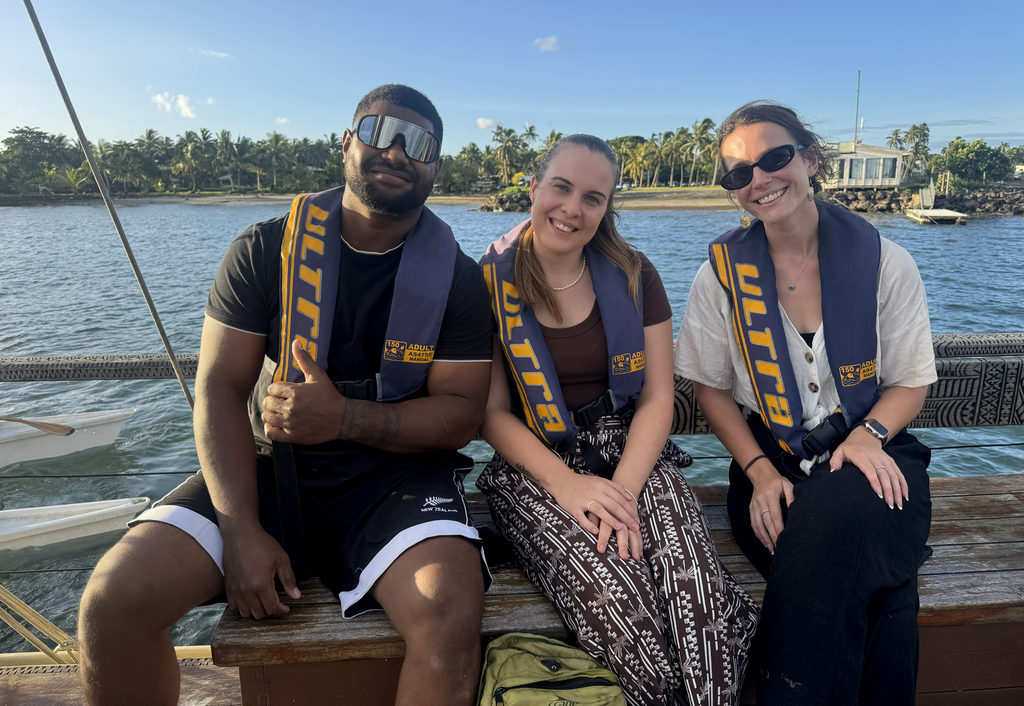
2. Paula Madigibuli, left, and his partner Isla Gainfort (middle) with friend Georgia Kane during the sail on Sunday. Picture: KATA KOLI
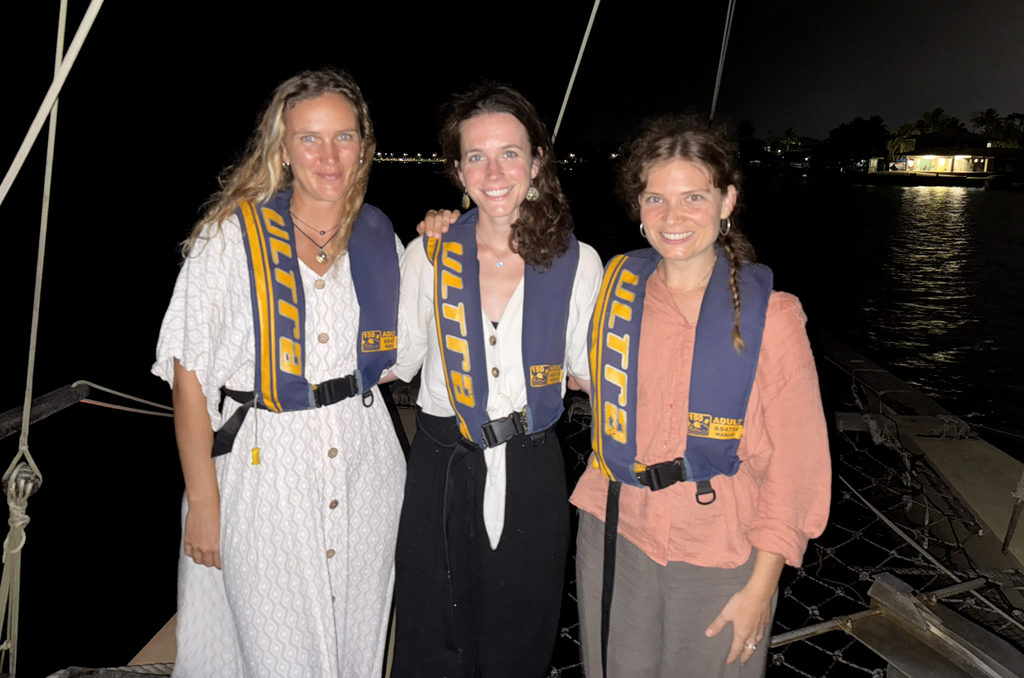
(L-R) Claudia Fry, Georgia Kane and Aquila Van Keuk during the Uto Ni Yalo stargazing sail on Sunday night. Picture: KATA KOLI
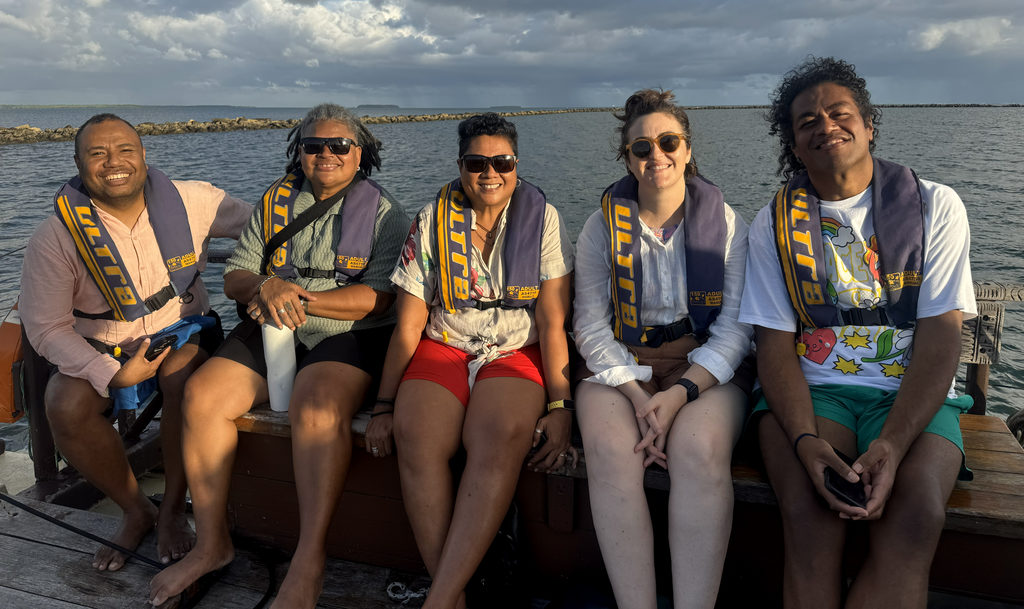
3. Guests on board the Uto Ni Yalo during its stargazing sail to the sandbank on Sunday. Picture: KATA KOLI
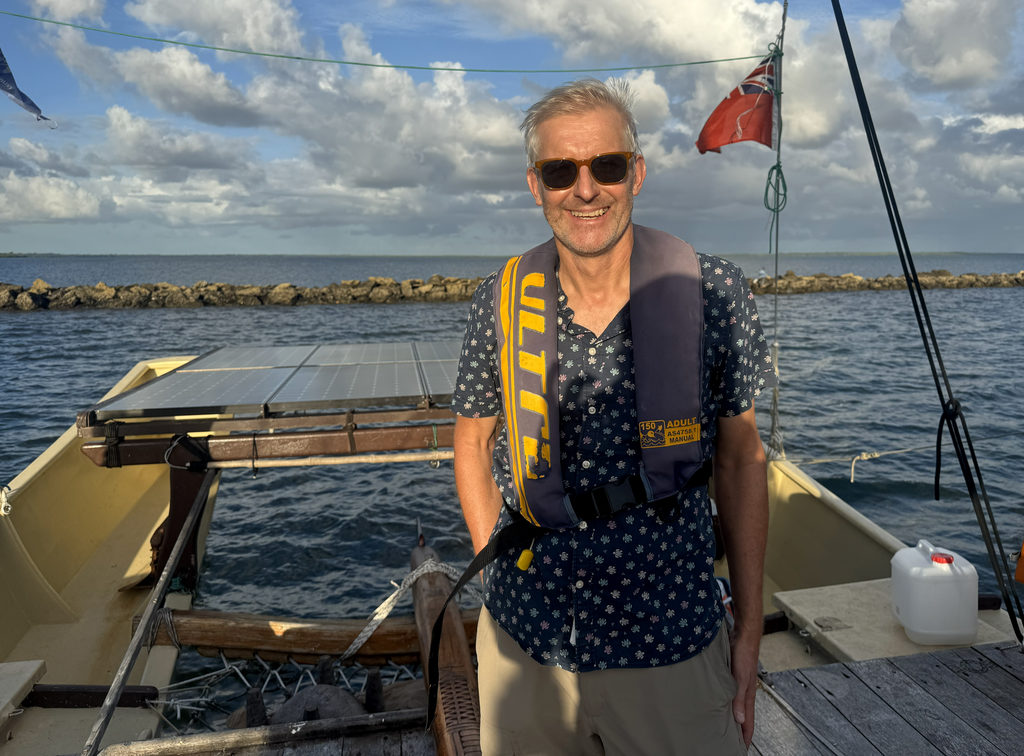
German national Klaus Schilder on board the Uto Ni Yalo during its stargazing sail on Sunday. Picture: KATA KOLI
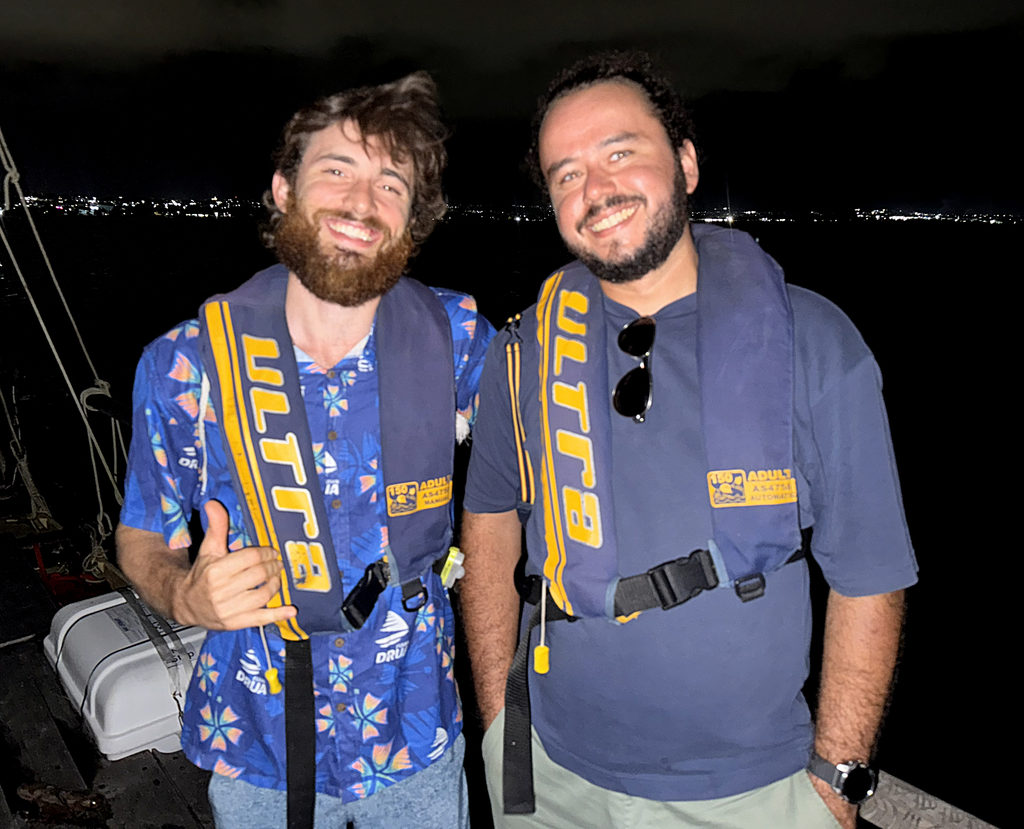
Dexter Cohen Bohn. left, with Quentin Etcheverry on board the Uto Ni Yalo. Picture: KATA KOLI
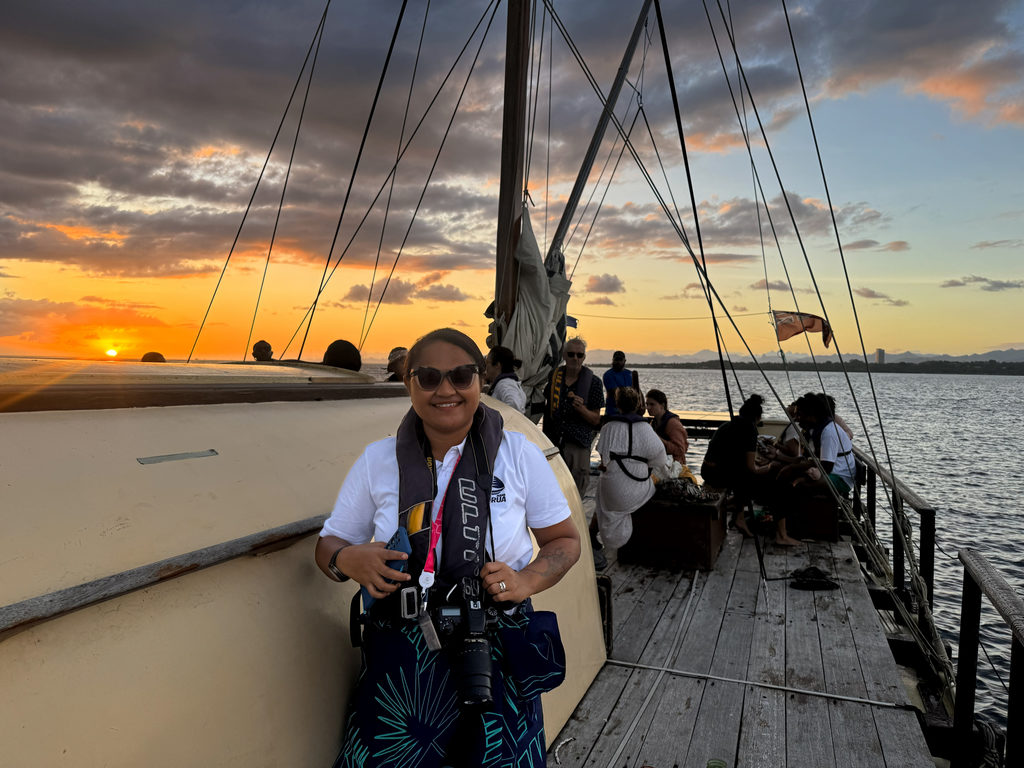
The sunset from the Suva harbour attracted tourists and locals on board the Uto Ni Yalo during its sail to the sand bank for star-gazing Sunday night. Pictured is Fiji Times features journalist Anaseini Dimate. Picture: KATA KOLI

