
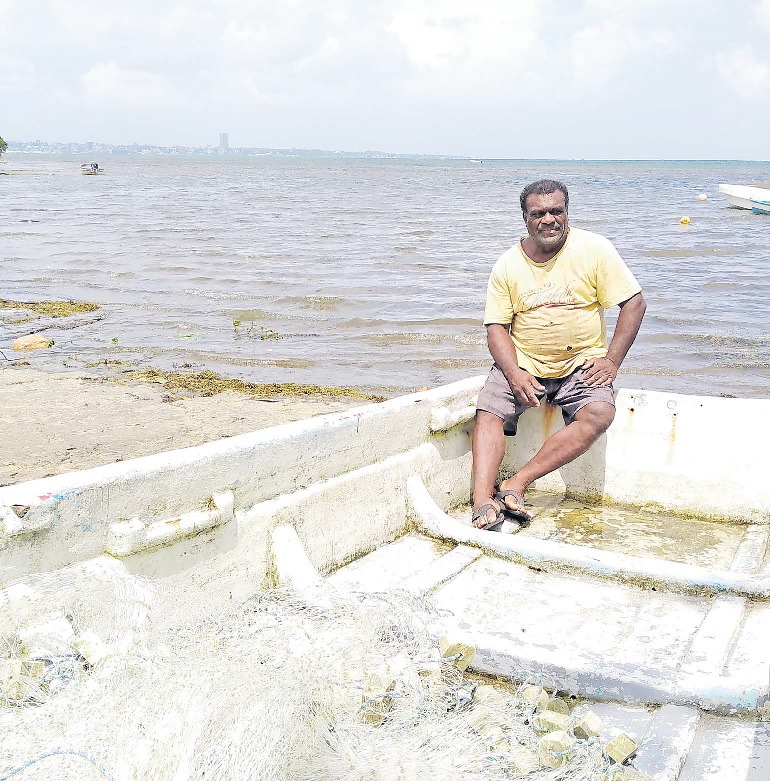
Semi Suveinakama grew up in Waiqanake Village, Suvavou, just outside the Capital City, Suva, home to people who make a living fishing at the Suva Harbour and traditional fishing spots further away.
He is turaga ni mataqali and a turaganikoro in Waiqanake.
This newspaper caught up with the 57-year-old, who fondly recalls his school days and his hardworking parents, who always reminded him to work hard in school.
He recalled helping his mum and dad fish for their meals when he was old enough and fondly remembers old friends who used to run the clean Suva shoreline and his days of frolicking by the sea.
“This is my home, I’ve been here all my life and this is where I belong now,” he says.
Mr Suveinakama attended Waiqanake District School before he moved to Suva Sangam High School a little further away from the village.
He said his parents were always hard working and wanted him to get a better future for himself.
“They always told me to work hard in school which I did, but at times I got distracted too fast particularly being indoor all the time.”
He said high school was tough and eventually he found himself always trying to catch up in his lessons. Even though he missed the sea, school was where he was supposed to be.
“I am from a family of four and I’m the eldest in the family of three boys. I left school after completing form five (Year 11) and moved back to the village.
“My heart wasn’t into to school, but today I sometimes think back and wished I had done well in school.
“It was tough back then because there were no proper roads and we had to travel by boat to the city then jump onto a bus or sometimes I’d walk to school.”
Mr Suveinakama said he had never forgotten the words of his elders who told him that when young people didn’t complete school, they should return to the village to carry out their traditional roles which was what he did.
Mr Suveinakama was true to his elders and returned to the Waiqanake Village.
“I came back to the village and helped my parents plant our own food and fish for our daily meals. Our source of income was selling fish and sasalu (seafood) and if you were lazy you won’t eat.
“Living in the village we always look after each other, but this time everything had changed.
“I was working at a company that exported coral and live fish to overseas for aquarium. After four years of working I met my wife and we had four children.”
While he continued fishing at those spots reserved for his village people only, he also attended village meetings and learnt more about the sustainable practices on land and at sea.
And eventually his turn would come to be in-charge to administer those rules to the youngsters in the village.
“I always go out to the sea to catch fish and take it to Suva market. We only plant dalo and cassava for our meals because most of the land in our area is muddy and covered by salt water when it’s high tide.
“In Waiqanake villagers sometimes go out to the sea using spearguns and also fishing net if they have to catch a lot of fish for an occasion.
“Today, I continue to advise my children to do better than me. There are excuses this time because parents nowadays don’t have to pay for the bus fares, and school fees.
“My time was different. My parents had to sweat so that they could send us to school. As I’m the leader of our sub clan, I have to encourage our children and parents about education because it would develop our village and individuals too.
“My advice to the parents today is to make use of the government assistance to our children so that they can be educated well and do well for themselves.”

