Passion, pride, fighting spirit!
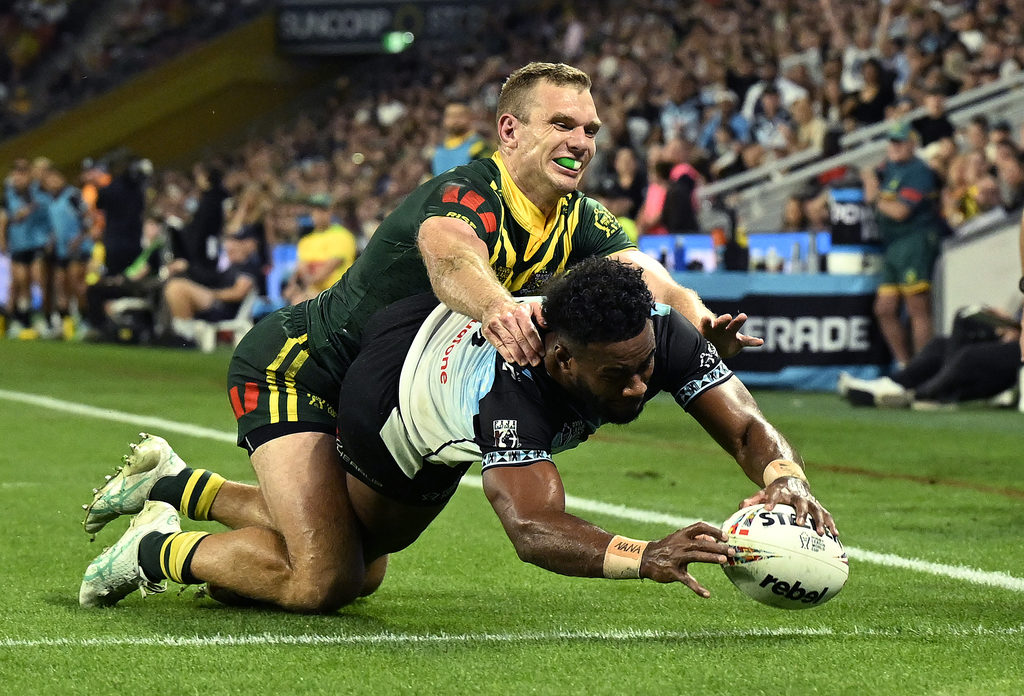
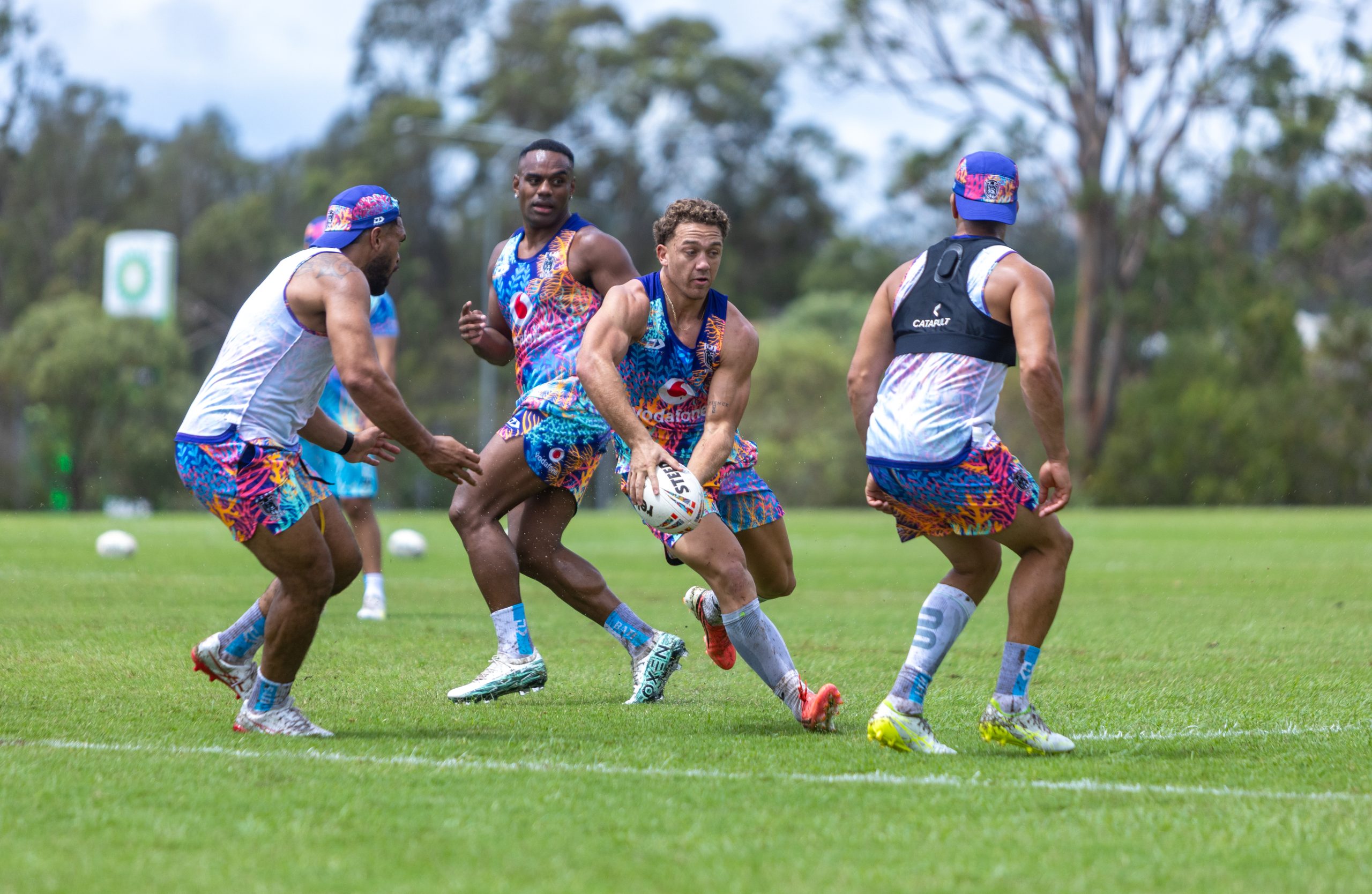
Dear Fred Wesley, thumbs up for the crisp and beautiful editorial titled ‘Passion, pride, fighting spirit’ (FT: 27/10) to describe the courageous performance by the Fiji Bati! I salute you for a fitting tribute to the boys who played with pride and gave everything that they had to counter a resilient and mighty Kangaroos outfit. Despite the 36-22 loss, the closest the Fiji Bati came to, fans were happy with the performance. The editor-in-chief summed up the flamboyant performance quite well with these lines, “What a game! What a moment in time! And what an impact that game has had on the minds of die-hard fans. We reflect on courage, commitment, belief and the willingness to stand together against overwhelming odds. Our players have given us something special. They have stirred national pride and inspired dreams. Now, let us believe in them, support them and celebrate their journey. When our warriors rise to the challenge, they carry the hopes and aspirations of a nation!” The passion, pride and fighting spirit displayed by the Bati were a joy to watch! Just goes out to show that we can tackle the giants. We need guts and courage! On the other hand, as rightfully pointed out by Waisale Koroiwasa (FT: 27/10), refereeing decisions against the Bati sparked questions and heavy criticism. Gerard Sutton and Chris Butler, the referee and bunker, came under scrutiny for some controversial decisions that were made against the Fiji Bati on Sunday night! The Bati will play another heavyweight (New Zealand) for a place in the semis. A tough one for the boys!
Rajnesh Ishwar Lingam
Nadawa, Nasinu
It belongs to
the people
IF the third reading of the draft 2026 Constitution is defeated in Parliament, the financial and democratic cost to Fiji will be catastrophic. Consider the millions of taxpayer dollars spent conducting consultations across Fiji’s 14 provinces and maritime islands, drafting papers, and paying administrative costs. If politicians reject this draft, all those millions along with thousands of valuable ideas submitted by ordinary Fijians — will be thrown straight into the bin. Even worse, the government could use the resulting financial short fall as an excuse to delay upcoming elections. When it comes to the supreme law of our nation, public consultation must go hand in hand with a direct vote by the people. The future of our country should never depend on parliamentary mind games, political manipulation, or any single party acting as king maker. In the 2022 election, political parties played kingmaker and made decisions for the nation. We cannot afford a repeat of that game today. Fiji can only move forward when the majority of its citizens have the final say. Let the nation decide through a direct public vote — not political parties in Parliament.
PAULA KALOUKOCEI
Levuka, Ovalau
A compelling
point
I WRITE in support of Paula Kaloukocei’s thoughtful argument on the proposed inclusion of the Great Council of Chiefs (GCC) in Fiji’s Constitution. It is refreshing to hear a voice that places the national interest above ethnic advantage. Kaloukocei makes a compelling point: the Constitution is the supreme law of the land and must belong equally to every Fijian, regardless of ethnicity. The GCC’s traditional role in protecting iTaukei culture, heritage and land deserves respect. However, if it is to be granted constitutional status and exercise national authority, it must represent all communities, including Indo Fijians and other ethnic minorities. If its hereditary structure cannot accommo date such representation, its appropriate place is as an advisory body under the Ministry of iTaukei Affairs, rather than as a constitutional institution. This is not a rejection of indigenous traditions or leadership. It is a call to distinguish their important cultural role from national governance, which must uphold equal rights and serve every citizen. I commend Kaloukocei for expressing this position with fairness and a clear commitment to our shared future. Fiji’s strength lies in respecting its diverse traditions while ensuring that no community has a lesser claim to the Constitution.
SURESH CHAND
Nadi
Faith,
not force
I SHED a tear or two reading Sue Cauty’s thoughtful letter, A Christian State? Her recollections (FT28/10/26) of the Sunday restrictions imposed after the 1987 coup remind us how easily good intentions can become unreasonable impositions. Many who advocate Sunday shutdowns overlook a simple reality: countless iTaukei, Indo Fijians and other Fijians work on Sundays in tourism, hospitality, retail, transport and essential services. Their Sunday wages help feed families, pay school fees and meet daily expenses. Restricting economic activity would harm many of the very people such measures claim to protect. If individuals or groups wish to rest, worship and refrain from leisure activities on Sundays, that is their right and should be respected. However, in a democracy, no one should impose their personal beliefs, religious practices or moral values on others. Fiji is a multicultural and multifaith nation. The role of government is not to enforce religious observance but to protect the freedoms of all citizens equally. Faith is most meaningful when it is freely chosen, not imposed through rules and prohibitions. That is the important lesson in Sue Cauty’s timely contribution.
DR SUSHIL K SHARMA
Lautoka
New
A-G
I APPLAUD Sevuloni Valen itabua’s appointment as Fiji’s new acting Attorney-General. Mr Valenitabua taught at RKS in the early 80s and those who came across the man would vouch that he was a strict disciplinarian. Discipline has been the hall mark of his distinguished career, and he is fully aware that the chief law office needs a lot of it right now. Congratulations sir.
SAMU RAILOA
Nadi
Spirit
of Fiji
YESTERDAY’S copy of The Fiji Times on Page 6 talked about how Fiji topped favourably over many countries on promoting tourism overseas, winning the Green Globe Award at the 28th International Festival of Tourism Films and Video Programs in 1995. I would appreciate if this film could air on our local TV stations for all to appreciate if Fiji is still the way the world should be as described by his holiness the late Pope John Paul II after his State visit in 1978.
SAM YOUNG
Norma’s Pl., Nadi
GCC impact
Of the people, by the people, for the people. The phrase “government of the people, by the people, for the people” is a classic definition of democracy, famously popularized by US President Abraham Lincoln in his Gettysburg Address on November 19, 1863. So, enshrining an ethnic institution (GCC) in the Fijian constitution cannot be democratic. In fact, this proposal is just as undemocratic as the reviled colonial British “government”. One ethnic group in control. It’s ridiculous to suggest these changes are democratic.
TIM BEAUMONT
Battery Point, Hobart, TAS.,
Australia
Firecrackers issue
IN these difficult times it is a great burden for the parents to afford these. They are so expensive. It is just like burning money. It has no significance with Deepawali. The business people are filling their pockets. The Government is blind. They should stop the sale of firecrackers. The Indian parliamentarians should voice this.
PARAS NAIDU
Lautoka
The review
2013 Constitution did not reflect people’s voice – Seruiratu (The Fiji Times Online 28/10). Kaboom, no fuss, Mr Bainimarama and Mr Sayed-Khaiyum it is what honesty is all about when truth reveals itself in politics. Anyway, Mr Seruiratu just raise your hands and cross the floor. I believe the PM will acknowledge you and it should be all good. The honourable Mr Usamate and honourable Mr Koroilavesau can also do the honour able thing and join you later.
AREKI DAWAI
Suva
Fiji, our Fiji
FIFTY-SIX challenging years after ceding these shores to our colonial masters, Great Britain at Independence, Fiji experienced many ups-and-downs; good times and bad, happy and sad times. Our forefathers and true statesmen have since moved on to their heavenly realm; at eternal peace. We experienced several natural calamities. We were subjected to man-made disasters at the hands of our coup makers in their greed for power. I have often wondered Fiji without coups. We could be “Hawaii of the South Pacific”, today. (Some of us incurred 40% pay cuts immediately after the 1987 coup. Ouch! It still hurts. Just built first home). As Fiji surely and steadily approaches another general election, our population will be a million. Politically, I believe Fiji remains an extremely divided nation. There are no less than 12 political parties contesting the next general election. Some minorities suffer in silence. There is little room for any compromise. If politicians can’t accept their differences, swallow their pride and work together, for our common good; I believe Fiji will remain as divided as ever. Our communities are very diverse — extremely divided. Unity escapes us. (and everything else) Aiyaz Saiyed Khaiyum and the Fiji National Provident Fund for all this festering cruelty; heartbreak, pain and suffering. It was all about political grandstanding, power and unproven insolvency. To you all, remember, you will reap what you sowed. Karma will rear its ugly head, in God’s perfect time. This is guaranteed. Pride always comes before a fall.
“Do unto others ………” We will win in the very bitter end. Enjoy your spoils, for now.
RONNIE CHANG
Nadi
Political
outlook
UNIVERSITY of Canterbury distinguished professor and political sociologist Steven Ratuva couldn’t have been more succinct in stating “Fiji’s history showed electoral change did not always translate into meaningful policy transformation “(FT 27/10). I believe that is primarily because there has been no real paradigm shift in our political culture since the first military coup of 1987 and no visionary political leadership. The kind that genuinely believes in the “Power of the people! “ (see The Fiji Times editorial 27/10). If the proposal of enshrining “lawful and moderate chastisement“on children in the planned new constitution and the talk of declaring Fiji a Christian state is anything to go by with all that it entails, then I would contend Fiji has hardly moved forward from the dark days of the Rabuka military coup of 1987. Is it coincidental that Rabuka is still the leader of the country in 2026 despite the political, economic and social disaster he inflicted on Fiji and its people?
RAJEND NAIDU
Calgary, Canada