Wairuku’s impact on Ratu Sukuna!
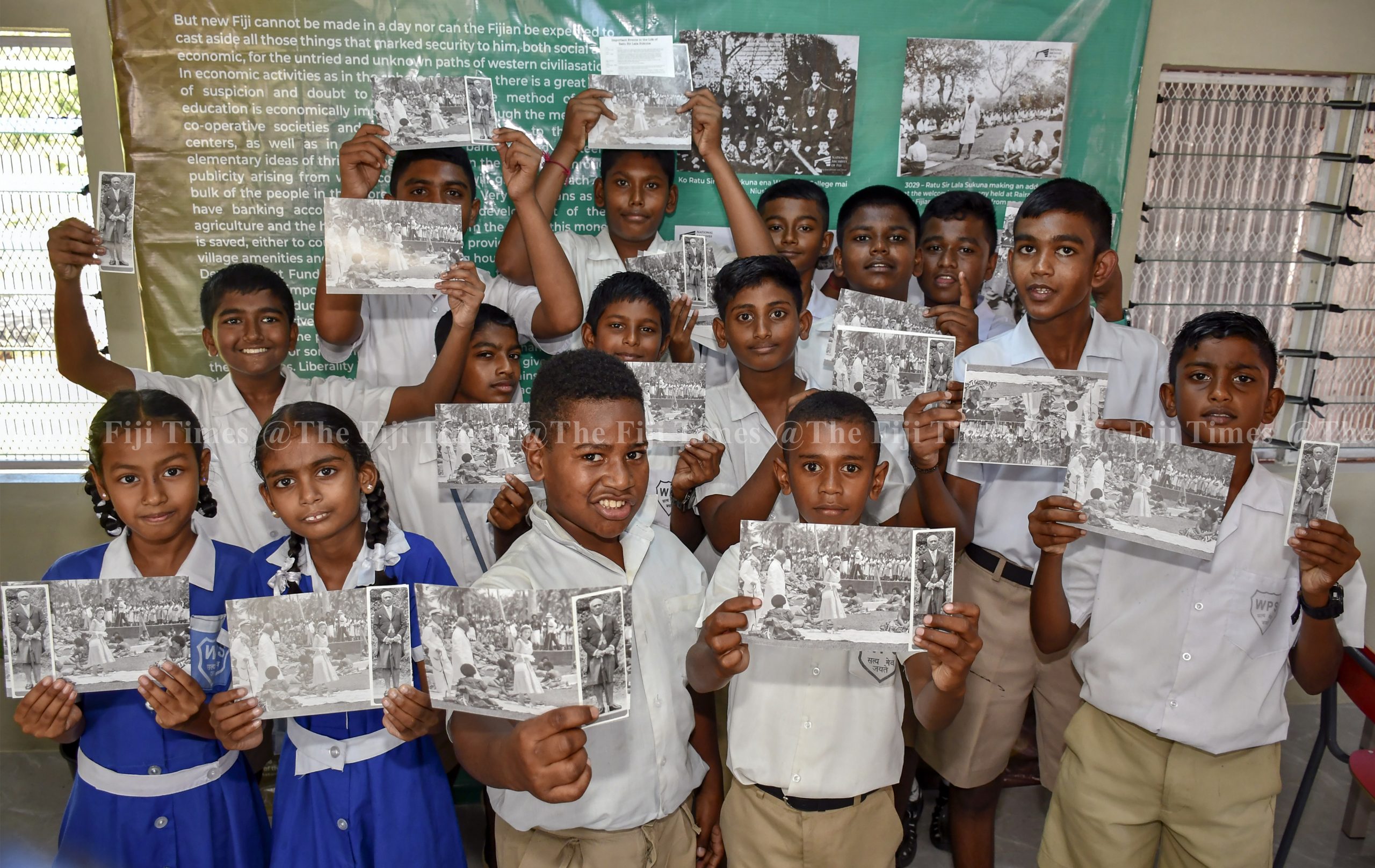
Award winning writer John Kamea never runs short of captivating and interesting stories. Via The Sunday Times (31/05), he shared the impact of Wairuku Primary School on Statesman Ratu Sir Josefa Lalabalavu Vanayaliyali Sukuna whose legacy, leadership, wisdom, and dedication shaped Fiji’s foundation. The journey of the girmitiya and the life of Ratu Sukuna go hand in hand as they contributed immensely towards making Fiji better and bigger. From a humble thatched bure built by the indentured labourers in the 1890s, Wairuku Primary School stands as the cornerstone that shaped the life and destiny of the great statesman whose vision of unity among all Fijians will always be remembered. Ratu Sukuna’s simplicity, wisdom and humility made him a great leader. The architect of modern Fiji walked into the school and was accepted with open arms. The rich values that were taught to him inside the walls of Wairuku Primary School made him find a balance between succeeding in the classroom as an academic and succeeding on the sports field as a boxer, cricketer and rugby player. Kamea shed light on the developments that transpired in the school and how it progressed. I salute the founder Pandit Badri Maharaj for his vision! Rajnesh Ishwar Lingam Nadawa, Nasinu
Education Act
So we have a Denarau Declaration, a new Education Act and an Education Commission. What is missing, and will be for a long time is a sufficient numbers of educators, men and women, who will implement these words. Two vital areas are the administration and the classrooms. Lack of continuity within ministry postings has resulted in a culture of constant “catch up”, inadequate briefing and short-term appointments. Officers lack a deep knowledge and experience of particular school situations, and principals have to explain again and again to the newcomers. This area of need is more easily and more quickly addressed than the next. However, there also is the matter of a lack of ministry posts to cover the needs of early childhood and special education. The second vital need for change is more obvious, but it needs a long-term solution: the lack of teachers, particularly in the more specialised fields of secondary school, early childhood centres (where a diploma is not really adequate training for the most crucial period of a child’s learning) and special needs schools (where there is also a great lack of diagnostic skills and specialised learning programs and materials). We need a budget that takes into account the above needs. Fergus Garrett Marist Brothers, Vatuwaqa, Suva
Budget allowance
All larger nations render their support to smaller countries. Start from Fiji ever since supporting Rotuma, through education, employment and agriculture to name a few. Fiji also supports other Pacific Island countries by providing urgent supplies in the aftermath of natural disasters, and also, tertiary education to students at the Fiji National University. On the same note, Fiji receives aid from Australia and New Zealand who are also dependent on European Union for aid. When Britain exited from European Union (Brexit), Australia suffered a massive loss in billions of dollars. Furthermore, many Fijian soldiers cleared thousands of hectors of trees and hundreds of dead animals few years ago from massive bush fires in NSW Australia. SARITA LAL Malolo St, Lautoka
Reapi hits 100 for Fiji!
Hearty congratulations to our hardworking and brave Fijiana, Reapi Ulunisau, as she carved her name into Fijian rugby history by becoming the first Fijian 7s player to score 100 tries for the national women’s 7s team. Reapi’s dedication and determination culminated in this milestone. She has been scoring some sensational tries and at 32, she created history when she scored her 100th try against South Africa to record a hard grinding 17-12 win. Reapi is passionate about 7s and is a disciplined player. She works as a team. She makes tackles and is committed to improving the status of the women’s team on the HSBC SVNS WRSS. Her distinguished career is a story to be shared with upcoming rugby players. Reapi has represented Fiji at the 2020 and 2024 Tokyo and Paris Olympic Games and the 2022 Commonwealth Games. Her journey is one of resilience and promise. Reapi is reaching her pinnacle, and I hope she is rewarded for her fine efforts. She has been a great ambassador of the 7s game — an inspiring role model! Rajnesh Ishwar Lingam Nadawa, Nasinu
Civic duty
To all those newbies wishing to stand in the general election, have you ever done anything for your community? Sobo! Wise Muavono Balawa, Lautoka
Fuel price
First day of every month, there is an increase in fuel price. Also, as of today, there is a considerable increase in LP cooking gas. Cooking gas is imported from Australia so there should not be any price increase. Also, fuel from existing stock should remain within the normal cost unless new world price comes into effect. The issue has been long overdue to be addressed by FCCC. DAVID SUSHIL LAL Malolo St, Lautoka
Congrats in order
Ten missed tackles by Fiji to one against Australia. We missed important ball retention to shorter Longbottom. At one stage Fiji had ten missed tackles to Australia’s one. We failed to collect one final pass with try line wide open. Unless Fiji addresses these extremely important basic requirements, victory will keep evading us. Our mental toughness, sustained focus is lacking. This was a very hard game to watch. I am not impressed at all. Fiji can do much better than this. We must, without fail. Fiji has seven days to make amendments. Congratulations Australia. Ronnie Chang Martintar, Nadi
Price hike
Prices of fuel, gas etc., rise up every month, but increasing pay to $8 an hour, Government not making any positive move. If hourly rate is not in force immediately, Government should consider giving monthly allowances just as during COVID for all. Wonder where is Lynda Tabuya’s word print the money during COVID. Can she do the same thing at this stage. Jaheed Buksh Korolevu
TNG waste proposal
Allow me to write my comments on the Vuda TNG proposal. A lot has been said in the paper and hope Government heeds the many views of what the waste proposal will bring to Vuda and its surrounding areas. The proposed TNG waste project in Vuda promises jobs for our people. Work is needed, but we must weigh it against the long-term cost to our coastal vanua. Vuda’s shoreline is not just sand and sea. It is mangroves that shelter fish, reefs that protect villages from storms, and waters that feed families from Viseiseu to Saweni. Waste facilities bring real risk of toxic leachate and airborne pollutants. One heavy rain or cyclone, common on our west coast, could wash contaminants into the sea. Once our qoliqoli is poisoned, it does not recover. The health risk to Vuda and surrounding communities is serious. Waste sites release heavy metals and fine particles linked to respiratory disease, skin problems, and waterborne illness. Our children who swim along these shores and our elders who rely on coastal fishing will be first exposed. Local clinics are not equipped for chemical-related sickness. This will be a nightmare if this proposal goes through. The project will off course employ people during construction and operation. But what happens after? When the site closes or if pollution takes hold, the jobs end while the damage remains. Tourism, fishing, and farming all depend on a clean Vuda coastline. If that reputation is lost, more livelihoods will suffer than any waste plant can replace. We ask authorities and TNG to release the full Environmental Impact Assessment. Hold a talanoa again in Vuda before approval. Our shoreline is not just for today. It must shelter our children’s children too. Kua ni vakacacana na baravi. Do not destroy the Vuda shoreline for economic gain against the people’s health and wellbeing and prosperity. Mikaele Leawere Galoa Village, Batiwai, Serua
An idea
Have you ever had an idea sneak up on you when you least expected it? I do. Every now and then, something gently nudges its way into my head and whispers, “Write about this.” It’s not something I consciously go looking for. In fact, some of the things I’ve written about were never on my radar in the first place. Yet somehow the thought arrives, parks itself comfortably in my mind, and refuses to leave until I’ve put pen to paper. The funny thing is, once I’ve finished writing, I often sit back and think, “Now where did that come from?” Certainly not from any grand master plan. Before anyone starts imagining mysterious voices or strange happenings, there’s nothing spooky about it. No flashing lights, no heavenly trumpets, and thankfully no little green men. Just a gentle nudge. Over the years I’ve learned not to analyse and overthink stuff. Some ideas seem to arrive with their own passport and visa, determined to enter my brain whether I invited them or not. So I’ve stopped asking questions and simply let them in. Perhaps it’s part of being a writer. Perhaps it’s part of life’s purpose. Or perhaps my “imagination” occasionally makes a run for it, escapes its paddock and goes wandering into the freedom of the ether. Either way, I’ve learned to “listen”. Tell me, do you get these little nudges too? You know the kind. And before you know it, you’re doing something you never planned to do five minutes earlier. Colin Deoki Australia