
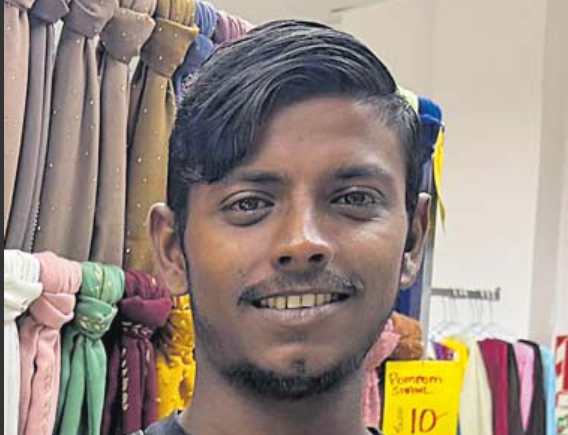
The enablers JUKI FONG CHEW NADAWA, NASINU OUR common enemy we should all be fighting against is drugs. Drugs breed various types of issues that go against the laws of the land. The surge of drug interception within the Pacific region has recently increased within the past few years and this is attributed to the enablers who facilitated these movements. Some enablers have been caught and are now undergoing the relevant court processes but the question still remains whether we still have some more enablers among our various agencies and communities. If only these enablers think of the future of their family, children and do away with greed for money, I think we will not be dealing with this common enemy at this scale.
Guns or no guns? NOLEEN BILLINGS SAVUSAVU THE growing drug problem in our country is no longer just about narcotics. Increasingly, it is being linked to the presence of firearms, raising serious concerns about public safety and the ability of our institutions to respond effectively and responsibly. Naturally, this has led to public discussion about whether our police force should be allowed to carry guns. On the surface, this may seem like a logical response to armed criminals. However, the situation is far more complex and deserves careful thought. There is widespread public concern that our police force is already highly compromised. If firearms are introduced into this environment without first addressing issues of corruption, accountability, and trust, there is a real risk that innocent people could be harmed. The possibility that weapons could be used to silence witnesses, cover up wrongdoing, or escalate routine encounters into deadly ones cannot be ignored. At the same time, it would be unrealistic to expect unarmed officers to confront heavily armed drug networks. This puts police lives at risk and leaves communities vulnerable. One possible solution worth serious consideration is the involvement of the military in clearly defined high-risk operations. A specialised army unit could accompany police during raids where intelligence suggests firearms may be present. This would allow law enforcement to access the necessary firepower while maintaining a system of checks and balances, reducing the risk of abuse. Ultimately, this is not just a policing issue — it is a national one. The question is not simply whether police should carry guns, but whether our systems are strong enough to ensure those guns are used lawfully, ethically, and only when absolutely necessary. I believe this issue deserves open public dialogue, transparency from our leaders, and careful policy decisions grounded in the protection of innocent lives. Silence or rushed decisions could cost us far more than we realise.
A balanced fight against drugs INDAR DEO BISUN SAKOCA HEIGHTS, TAMAVUA THE recent statements by a Rewa chief and the Commander of the Republic of Fiji Military Forces highlight both the urgency and complexity of Fiji’s growing drug crisis. The chief’s call to “fight drugs at home first” reflects genuine grassroots concern. Drugs are already deeply rooted in some communities, threatening families, youth and social order. His emphasis on community vigilance and national coordination is a strength that should not be ignored. On the other hand, the military commander’s assurance that the fight against drugs will be non-violent and law-compliant is equally important. A militarised, armed response could escalate fear, abuse of power and public mistrust. Support through intelligence sharing, logistics and planning respects democratic boundaries and civilian law enforcement. However, the challenge is that drugs networks are organised, well-funded and resilient. A purely “friendly” or soft approach may not deter hardened traffickers. Community action alone can also expose villagers to intimidation and retaliation. Fiji, therefore, needs a balanced strategy: strong communitybased prevention, a central coordinating body, tougher laws and sentencing for traffickers, well-resourced police, intelligence-led operations, rehabilitation programs, and sustained political will. Compassion without firmness will fail, but force without trust will also backfire.
New service MOHAMMED IMRAZ JANIF NATABUA, LAUTOKA WHILE excessive heat can be detrimental, heat provides significant health and practical every day benefits. I have heard that in some Western areas over the past couple of days, the heat has doubled up. It has been behaving like a steam iron near the clothes lines.
Commendable initiative DONALD SINGH NAUSORI PACIFIC Polytech and the Fiji Corrections Service (FCS) have reportedly begun discussions that could soon see inmates gain vocational certification through Polytech’s training programs, the initiative aiming to empower inmates with practical, skills-based education to support their rehabilitation and reintegration into society upon release. A great initiative, in fact a real and genuine move towards rehabilitation. Walking the talk.
Traffic jam, cameras PITA SOROAQALI TAVUA THE amount of traffic jams in the Suva-Nausori corridor is just enough to pull out speed cameras. And to reduce accidents on our roads, I’d recommend more road humps rather than putting money-making portable cameras along the way. Last but not the least, can the Government control the importation of second-hand cars into the country? Maybe it will solve the current problem of traffic jams.
Lethal potholes DINESH KUMAR BA AS one crosses the Ba bridge and exits the Kings Highway into the street leading towards Ba Town, motorists are greeted by a series of potholes of such depth and severity that they appear capable of dismantling vehicles with impressive efficiency. The risk of road accidents is significantly heightened as drivers are forced into hazardous manoeuvres in an attempt to navigate around these craters. The relevant authorities are therefore, kindly urged to address this matter, preferably before these potholes achieve official landmark status or become more lethal.
Moral composition AREKI DAWAI SUVA LOOKING at the moral composition between the locked-up butter thief (misdemeanor) and the current business-class seat affair (abuse of public office), I wonder which of the two will the FICAC and ODPP find as favourable privilege.
United front PITA SOROAQALI TAVUA THERE are calls from certain individuals in the west to unite in the upcoming elections and fight under a united banner. They claim that they have the resources which the whole country depends on. While their claims maybe true to some extent, my question is who financed those projects and resources? Was the project and resources financed by the entire Western province or was it an idle resource sitting in front of them? I just want to remind those who pushed for a provincial party that running a government is a national mandate. It’s not as easy as condemning a running government. Talk is cheap and is much easier.
Give them closure SURESH CHAND NADI THE family of any murder victim would naturally struggle to find peace until they have clarity about the circumstances surrounding their loved one’s death and the identity of the perpetrator. Understanding the motives behind such crimes is not only vital for the investigators striving to make an arrest but also essential for the victims’ families and the public at large. While I acknowledge that the authorities are doing everything possible within their limited resources and expertise to solve these cases, not all investigations reach a conclusive resolution or provide closure. In light of this, I believe it is imperative to take further steps to improve law enforcement’s capacity for delivering justice effectively. The families impacted deserve transparent and definitive answers from law enforcement; without them, they may bear the weight of uncertainty for the rest of their lives.
Executive power DINESH KUMAR BA AMID the High Court’s ruling that Barbara Malimali’s suspension was unlawful, Distinguished Professor Steven Ratuva urged all State institutions to remain within their constitutional boundaries and underscored the importance of competent legal advisers whose guidance can withstand legal scrutiny (FT 06/02). The episode serves as a timely reminder of a lesson drawn not from law textbooks, but from popular culture, “With great power comes great responsibility.” It appears that Uncle Ben’s advice to Peter Parker remains remarkably relevant for good governance, particularly for those entrusted with authority who might otherwise mistake power for permission.
Disciplining students EDWARD KUMAR LAUTOKA WHY inflict pain to discipline children? Some of these students come from homes where violence is dished out on a daily basis. My plea to the Government, on the proposed Bill for corporal punishment, to please scrap this and introduce an innovative teaching curriculum which rewards students for good effort put in, rather than to punish students for their wrongs. After all, they are only children. Learning is supposed to be enjoyable. Teachers, make your classrooms an escape or go-to place for these students. There are many forms of discipline without causing physical harm. I feel teachers need to make their classrooms a place where our children would run to and not run away from.
Government and stakeholders JAHEED BUKSH KOROLEVU, SIGATOKA WE have relevant authorities, stakeholders who are working with government, but the question is who is cooperating and who is not? So many issues to highlight but the main thing is, are the assistance from stakeholders being delivered to the public fairly and in a transparent manner? Is the Government able to deliver what they have promised? Or can the Government deliver something better which is not outlined in the plan? These are the questions that need be asked.
Hazardous advertising structure SATISH NAKCHED SUVA IT is noted with great safety concern the recent construction of a concrete-based advertising structure at the Nadera playground that falls within the goal area of the public playing field. I believe this placement poses a serious hazard to the safety of children and players who use the facility for recreation purposes. This safety hazard is on the Ratu Dovi end of the playing ground. The goal area, which is behind the goal posts, is specifically designed for active play, including football and other sports that involve high-speed movement and physical contact. The presence of a rigid concrete base in this zone creates a foreseeable risk of injury, including fractures, head trauma, and other serious accidents. Such a structure is incompatible with the intended recreational use of the playground and contravenes basic principles of public safety and duty of care. The concrete hazard measures about 10 feet squared and is about three feet in height with sharp and pointed corners. Playgrounds are meant to be safe spaces for recreation, not spaces for recreation, not for commercial installations that endanger lives. I urge the municipality to act promptly to prevent potential injuries and uphold its responsibility to protect public welfare under the municipality’s statutory duty of care and public safety obligations. I believe this installation is inconsistent with the Public Health Act (Cap. 111) and the municipality’s obligations under the Local Government Act, which require councils to ensure that public spaces are maintained in a manner that does not endanger users. Further, the construction contravenes internationallyrecognised safety standards for recreational facilities, including the ISO 24665:2010 – Sports and recreational facilities safety requirements, which emphasise that advertising structures must not be placed within active play zones. Failure to act promptly may expose the municipality to liability under negligence principles as the venue is also given out on hire. I urge the municipality to uphold its statutory responsibilities and take immediate corrective action to safeguard the welfare of the community.
Nipah virus FLOYD ROBINSON MICRONESIA FINGERS crossed that the Nipah virus does not reach our shores. Let’s read about it online and seek more information from health authorities. Let’s not take any persistent flu-like symptoms lightly especially if we have travelled or interreacted with persons who have travelled to countries which are known to have recorded positive cases of the Nipah virus. A blessed and safe weekend all.
Musa returns DINESH KUMAR BA OVER the past two weeks, viral messages circulated widely across social media platforms appealing for assistance in locating 25-year-old Mohammed Muzamil, better known as Musa of Korowiri, Labasa. He was eventually found and safely reunited with his mother, much to the relief of the public. However, his story has now taken an unexpected turn. Social media is once again abuzz, this time with Musa achieving an unusual form of fame. Several business houses have begun using his name and photograph in their advertisements. Jacks of Fiji announced its intention to gift Musa a watch, presumably so that, should he travel to Bua again, time itself will not lose track of him. Another company, Tech Hub, has expressed its willingness to present him with a smart watch, while social media users have humorously speculated about when Vodafone might step in to offer him a mobile phone. At this rate, Musa may not need to go missing again, his endorsements might simply find him first.
Investigating the investigators JUKI FONG CHEW NADAWA, NASINU IT is encouraging to see ongoing investigations into the recent drug burst with more suspects being rounded up, charged and produced in court. The other side of the coin, it is sad to note the allegations of theft that have surfaced when suspects are produced in court. These types of allegations will and always undermine the good work done by the investigating team. Now another team will be set up to investigate the investigators which will be a waste of time, money and energy. The defence team is reading between the lines and will surely attack the prosecution team to create more doubt which may not end in the prosecution’s favour.
Banking service SURESH CHAND NADI THE ATM service provided by HFC Bank is currently unavailable in Nadi Town as the bank has yet to install a machine there. Meanwhile, customers can opt to use ATMs provided by Westpac or BSP as alternatives, especially if accessing the branch at RB Jetpoint in Martintar or the ATM at Motorex Complex proves to be inconvenient. Personally, I believe the only drawback here is the additional fee users have to pay for accessing another bank’s ATM services. Looking forward, we hope that our locally-owned bank will establish its own ATM in Nadi Town soon, ensuring greater accessibility for its customers. The introduction of electronic devices like ATMs and EFTPOS machines has undoubtedly simplified banking, making our financial activities more convenient. For an ATM to serve people effectively, it should ideally be situated in areas with high foot traffic. I might be mistaken, but it seems logical that towns generally attract large crowds daily, making them ideal places for ATM placement. Ultimately, we hope banks continue expanding their services while keeping the needs and expectations of their customers at the forefront. I hope HFC takes the writer’s suggestion into consideration positively.

