
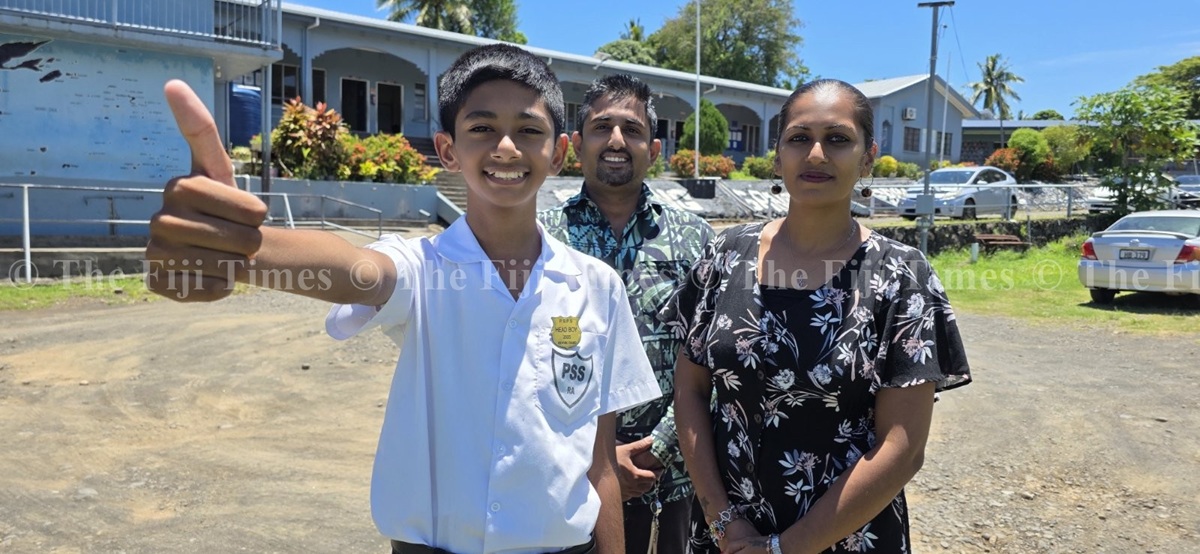
Student who inspires the nation
I am truly moved by the exceptional achievement and inspiring words of Year 8 student Ridhvik Chand of Penang Sangam Primary School, who scored the highest provisional marks nationwide in the 2025 examination with an outstanding 491 out of 500. As a former primary school teacher for more than 25 years and having taught Year 8 students in my early years of service, I can confidently say that students like Ridhvik are rare and remarkable. His results speak for themselves, near-perfect marks in all subjects: English 96, Mathematics 100, Basic Science 100, Healthy Living 95, Social Science 96, and Hindi 99. But what moved me most were not just his marks, but his maturity, confidence, and depth of thought. Listening to his documentary interview, I was impressed by how focused, organised, and articulate he was for his age. Ridhvik shared that his success came from consistency, proper planning, and preparing ahead of time. His simple study timetable, his balance between rest and study, and his disciplined approach reflect the very qualities we hope to see in today’s students. His message to others, to start revising early, seek help when needed, remain disciplined, and trust in one’s hard work, is powerful advice that every student should take seriously. His ambition to become a software engineer shows that he is already thinking ahead and setting meaningful goals. The acknowledgment by his head teacher, Richard Kumar, further highlights the strong family support and dedicated teaching that contributed to his success. Ridhvik’s achievement is not just a personal triumph, it is an inspiration for students across Fiji, reminding us of the limitless potential of every learner when dedication and support come together. Indar Deo Bisun Sakoca Heights, Tamavua, Suva
Let’s take the opportunity!
The Fiji Water Flying Fijians, who are ranked eighth in the world, proved critics wrong with their sublime performance during the Quilter Nations Series last month. Although they lost to England 38-18 and France 34-21, they stood the test of character and showed that they can match the giants who have tasted victory in the competitive Six Nations competition. The pool draws for the 2027 Rugby World Cup were done and Fiji is seeded second in pool C behind Argentina and with Spain and Canada. Fiji last played Argentina in 2003, losing 49-30 at the Stadio Olimpico. The Los Pumas have a robust and experienced forward pack and an exciting backline just like Fiji. The Pumas take massive pride in their game. This year, they beat the All Blacks 15s 29-23 at the Jose Amalfitani Stadium in Buenos Aires and the Wallabies 28-26 at the Sydney Football Stadium. Last year, they outclassed the Springboks at the Estadio Unico Madre de Ciudades 29-28. Hence, the Los Pumas 15s will be a tough nut to crack. Fiji has beaten our other two pool opponents- Spain 41-33 and Canada 68-10. The pool draws favour the Six Nations teams as the All Blacks 15s and the Springboks are poised to meet in the quarterfinals. This is hilarious. Where do you see the first and second ranked teams play each other in the quarters? Normally, they meet each other in the final. The Flying Fijians must take things seriously. A thorough analysis must be done to prepare us well for the RWC 15s in Australia where a huge crowd is expected to back the Flying Fijians. Nothing is impossible. Toso Viti! Rajnesh Ishwar Lingam Nadawa, Nasinu
FNPF saga
Fiji National Provident Fund (FNPF) local entities portfolio grew to $2.9billion in the 2025 financial year, an increase from $2.6bn recorded in the last financial year (FT 6/12). So the FNPF pie has grown sizeably. But FNPF is not willing to share it with the pensioners whose pension money was stolen from them by the post-coup Bainimarama regime. What a shame! Rajend Naidu Sydney, Australia
Homelessness
It’s increasing with poverty and jobless population. No one is happy to see people sleeping on the streets and begging. This can also affect tourism to some extent. I feel the best would be to move them away, but where to? A suburb anywhere in the countryside or increase the prison population. Life is what we make it with holistic and humanistic approaches. Tahir Ali Hamilton, New Zealand
Abolition of the TRC
I call on the President of Fiji, his excellency Ratu Naiqama Lalabalavu to stop wasting peoples’ time, money, expectations, and trust, but to immediately abolish the current Truth and Reconciliation Commission (TRC). The main reason is the refusal of the Head of Government, and Prime Minister of Fiji, honourable Sitiveni Rabuka to truthfully, correctly, fully, and honestly disclose the names of all those who were involved with him in the military coup he carried out on May 14, 1987. Fiji’s first coup. This very act to truthfully, fully, correctly, and honestly name those who supported, recommended, or instructed him to carry out his coup is the very essence of this Commission without which renders the Commission an exercise in futility. If the first coup perpetrator, and the very Head of Government in Fiji refuses to be truthful, and honest in providing important information, it is inconceivable to expect all other Fijians to be truthful, and honest in providing information to this Commission, in its proceedings, now, and in the future. Why be truthful, and honest when our Head of Government, and Prime Minister himself, refuses to do so! Saverio Baleikanacea Delainavesi, Lami
Men’s ministry and hemp
Men’s ministry isn’t a threat to women!
Whenever discussions arise about creating a Men’s Ministry, emotions in some quarters tend to spike. OK, gender inequality is an issue and must be addressed. I get that. But it’s a separate issue. Insisting there’s no need for a dedicated department for men is puzzling. This reaction, though rooted in genuine concern for women’s welfare, raises an important question: Should women’s issues be prioritised over men’s issues? And if not, then we must also ask: Should men’s issues be prioritised over women’s issues? The truth is simple: neither gender’s struggles should be placed above the other. Human suffering does not discriminate. Mental distress, trauma, relationship breakdowns, identity crises, financial pressures and emotional instability affect both men and women. They in turn have a negative impact upon the children. So both deserve equal recognition, attention, compassion and structured support and counselling. To suggest that men are coping just fine, or that their issues are already being addressed is simply dismissive and a denial of their needs. Men across Fiji are struggling with deep, unaddressed wounds that manifest in dangerous ways: domestic violence, substance abuse, broken communication, emotional shutdown, mental illness and predatory sexual behaviour. These behaviours don’t appear out of thin air. They often stem from unresolved childhood trauma, poor male role modelling and cultural pressures. Ignoring these issues doesn’t protect women. It hurts women, children, families and the entire community. A dedicated Men’s Ministry isn’t a threat to women. It can help complement the great work already being done for women. And it can also address many of the root causes and societal problems men are experiencing and facing that’s spilling over into the family home. I speak from experience. Having faced my own childhood trauma, I’m aware of the transformation that’s possible when men finally confront the emotional, psychological and relational burdens they’ve been carrying quietly and alone for decades. I’ve experienced the support mechanisms that can help transform lives. And this transformation, can positively impact the entire family unit. Men need structured support, just like women do. Men need counselling, just like women do. Men need education, healing and guidance, just like women do. We cannot keep playing tug-of-war over whose gender “deserves” more recognition. This debate only deepens division and blinds us to the reality that everyone’s mental and emotional health needs are different, complex and equally important. Creating a Men’s Ministry is not about shifting resources away from women. It’s about strengthening families by strengthening everyone inside of them. Instead of reacting defensively, let’s take a step back and reflect: Why do we feel threatened by supporting both genders equally? If we want safer homes, healthier relationships and a more compassionate and socially stable Fiji, then supporting men isn’t optional. It’s essential. A nation cannot thrive when half its population is told their struggles don’t warrant dedicated support, care and attention. Empowering women has transformed countless lives. And for that we should be proud and extremely grateful. Empowering men will do the same. A rising tide lifts all ships. It’s time to stop seeing gender support as a competition. It’s time to build a balanced, holistic system and one that lifts everyone, equally so that more relationships are strengthened and can remain together in an atmosphere of peace and harmony without having to navigate the chaos and fallout of a family breakdown. Colin Deoki Australia
Beyond remittances and the professor’s mirror
What an irony that an internationally recognised development economist of the calibre of Dr Naren Prasad has been denied the opportunity to serve in the country of his birth (FT 6/12/) and his home country Fiji continues experience serious bottlenecks in its development trajectory and yet the same person has been called upon by governments in Latin America, Africa and Asia to assist in their development effort. But we seem to have no problem getting white expatriates to come to guide us on our many challenges. Is that a reflection of our colonial hangover? Rajend Naidu Sydney, Australia
Hemcrete issue
I write in response to the recent parliamentary discussions on the use of chemical treatment as the primary solution to protect timber from termite damage for which the ministry believes is essential to prevent insect attacks and fungal decay on timber. While this approach has been the norm for decades, it should not limit our thinking about safer, more sustainable alternatives. The call made by Opposition MP, honourable Semi Koroilavesau, rightly emphasized the need to invest in research and innovation —particularly eco-friendly alternatives such as biological controls and resistant timber species. However, a solution that already exists and has been proven worldwide is hempcrete. To top it off, we have passed a law to enable the farming of industrial hemp, yet we are not utilising it as a solution. We can grow it, process it, and build with it right here at home. Hempcrete is a natural building material made from the inner woody core of the hemp plant mixed with lime and water. It is non-toxic, mould-resistant, fire-resistant, and — critically — naturally termite-resistant due to its high mineral and lime content. Unlike timber, it contains no cellulose that termites consume, and its alkaline composition repels insects and fungi. For a country battling an escalating termite crisis, hempcrete presents an opportunity that is both environmental and economic. Fiji is fortunate to have vast idle and underutilised cane fields, particularly in the Western Division, that could be used to cultivate industrial hemp under controlled licensing. These areas already have farming infrastructure and communities familiar with crop production. Regions such as Ba, Lautoka, Rakiraki, and parts of Nadroga/Navosa could become pilot sites for hemp cultivation. Processing facilities to produce hemp hurds (the core material for hempcrete) can be developed adjacent to existing agri-processing hubs, minimizing cost and transportation needs. Hemp farming and hempcrete production are generally considered low-impact compared to conventional construction materials while the farming and production processes are straightforward. Hemp grows quickly—3 to 4 months per cycle and can be rotated with other crops. Once harvested, the stalks are mechanically separated into fibre and hurds. The hurds are then mixed with lime to produce hempcrete. Because hempcrete is lightweight, it is easier and cheaper to transport than many traditional building materials, reducing logistical costs for remote areas and maritime islands. Hempcrete is also environmentally superior with responsible management. When properly regulated, hemp cultivation and hempcrete production can restore soil health, reduce chemical pesticide use, create green jobs, replace termite-prone timber and lower Fiji’s construction carbon footprint. Preliminary international data suggests the cost of producing hempcrete blocks or cast-in-place hempcrete is competitive with conventional materials, especially when factoring in long-term durability and the reduction in chemical treatments, maintenance, and termite-related repairs. As local supply chains grow and processing scales up, costs will continue to decrease—creating jobs for farmers, processors, builders, and researchers along the way. Hempcrete can replace many common materials used in Fiji today, including wall infill for timber or steel frame houses, internal and external wall panels, insulating layers in roofs and floors, non-load-bearing blocks for low-rise construction and renovation and retrofit insulation for termite-affected homes. The material is breathable, regulates humidity, and keeps homes cooler—meaning reduced electricity use in hot conditions. It aligns perfectly with Fiji’s climate, environmental commitments, and the urgent need for termite-resilient housing. If we are serious about protecting our people from the devastation caused by the West Indian Drywood Termite, then we must invest in solutions that are not only effective, but safe, sustainable, and economically empowering. Hempcrete offers Fiji exactly that. Hempcrete is one of the few building materials that gets stronger over time and absorbs carbon, making it a highly sustainable alternative. I really don’t see the use of passing a law enabling industrial hemp farming and not making use of it! Noleen Billings Savusavu

