
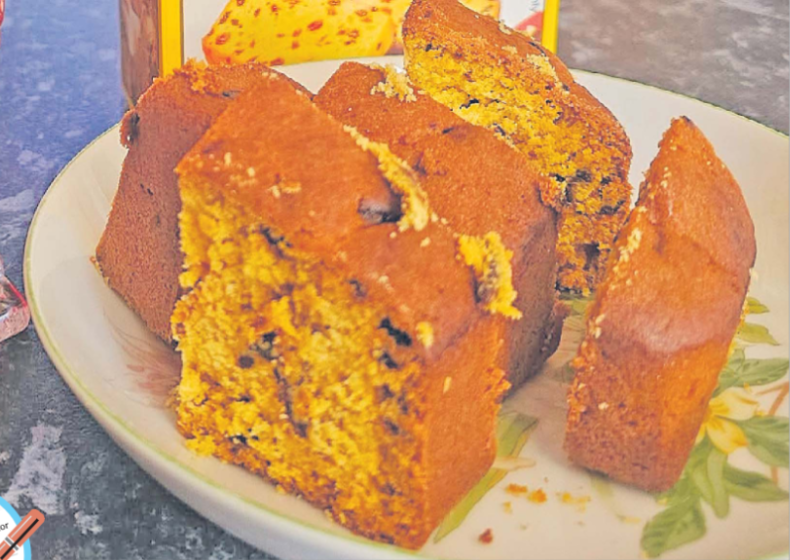
Fruit cake for Christmas ASHNEEL JAYNESH PRASAD SHINAGAWA-KU, TOKYO, JAPAN GROWING up in the hillside suburb of Kashmir, in the heart of Lautoka, Fiji, Christmas was never defined by the cold or snow, nor was it about the tearing of wrapping paper or the size of the box beneath a plastic tree. For me, Christmas was the humidity clinging to your skin, the smell of damp earth after a sudden tropical downpour, and the buzzing anticipation that hung in the air of the Sugar City. Back then, my “mama” worked for a company called “Mean Products.” It feels like a lifetime ago now, a different era. Every December, a ritual would unfold that I looked forward to more than anything else. He would purchase what seemed to my young eyes like an exuberant, endless mountain of Lees Fruit Cakes and crates of Pops sodas—specifically the bright, neon red flavour. Or, as my childhood self dubbed it with serious reverence: “lal meetha paani” (red sweet water). I can still see us now. I’d hop into his car, the windows rolled down to catch the breeze, feeling like his most important assistant. We would drive through the dusty, heat-shimmering roads of Lautoka, visiting his clients one by one. To each, he offered a simple, heavy pack of that dark, dense fruit cake and a bottle of the red drink. It was a humble offering, but in those days, it was a gesture of immense respect and community. While other kids might talk about lovo being unearthed or big picnics by the sea, my core memory, the one that anchors me to who I am, is simpler. It is the memory of sitting there, usually in the passenger seat or on a porch, tearing into a slice of that Lees cake. It was dark, rich, and studded with preserved fruits, perfectly washed down with a gulp of that fizzy lal meetha paani. The clash of the heavy spice of the cake and the sugary, sparkling rush of the red Pops is a flavour profile that, to me, tastes exactly like childhood. It tastes like home. When my family eventually migrated to New Zealand, leaving the islands behind, I carried a quiet worry in my heart. I was terrified that this specific magic would fade, lost in the transition to a new country. But thanks to the bustling streets of South Auckland, specifically Otahuhu and Papatoetoe, the connection remained unbroken. The shelves there were stocked with the comforts of home, and we could still find our Fiji imported goods. The tradition survived the Tasman Sea. But this year was different. Early in November, the realisation hit me. I was sitting in my apartment in Tokyo, thousands of miles away from the humidity of Fiji or the familiarity of Auckland, talking to Mum. I realised this would be the first year in my life that I wouldn’t have my Lees Fruit Cake. I had scoured the internet, looking for importers, trying to find a way to bridge the distance, but it was nowhere to be found. I resigned myself to a Christmas without that taste, thinking it was just part of growing up and moving away. But I underestimated the quiet, stubborn love of family. My lovely mother, Surita, and my sisterin-law, Monisha, didn’t say a word to me about my disappointment. Instead, they inconspicuously went out, bought the cake, and paid a frankly ridiculous amount of money for international shipping. When the package arrived here in Tokyo, it wasn’t just food. This cake has travelled thousands of kilometres across oceans. It has bypassed borders and customs to reach me. Holding it, I realised it is no longer just flour, sugar, and dried fruit. It is a physical manifestation of love. It is a Christmas miracle wrapped in nostalgia. As you grow older, the lens through which you view the world shifts. You realize that the grand, shiny things in life—the things we are told to chase— rarely bring lasting joy. It is the small things. The things that spark a familiar light in your eyes and a warmth in your chest. My Christmas in Tokyo, which I feared would be unbearable without my family physically beside me, has been saved. I have a ton of memories unlocked by this simple square of cake. I will relish it, not just devouring the sweetness, but savouring the memory of the car rides in Lautoka, the lal meetha paani, and the knowledge that I am loved from across the world. Stay safe, friends. And please, give your loved ones a hug today. Hold them tight. They do so much for us, often quietly, without ever being asked, just to see us smile. Merry Christmas.
Dietary caution RAJNESH ISHWAR LINGAM BALGOVIND RD, NADAWA, NASINU
TEN-YEAR-OLD diabetes champion Namish Chaudhary, who was diagnosed with Type 1 Diabetes when he was three years old, did not mince his words when he advised Fijians of all ages living with diabetes to be mindful of their sugar intake and make healthy dietary choices (FT 25/12). We are food lovers and during this festive season we love to indulge in festivities and celebrations, consuming sweets, cakes, fizzy drinks, alcohol, kava and food from energy and bodybuilding groups. Namish stressed on the need to be resilient and be mindful of diet. Eating healthy isn’t just about cutting out our favourite foods, but it’s about finding balance. I read an article titled ‘Easy ways to start eating healthier every day’ by Lindsey DeSoto, which was published on November 18. I’d love to share few tips that I found interesting. Firstly, it’s important to stock up on healthy staples and plan meals as it helps reduce stress, prevent last-minute takeout, and make healthier choices. It’s linked to better diet quality and a lower risk of weight gain. It’s also important to swap unhealthy snacks for healthier alternatives. People must make healthier choices at restaurants and eat healthy on a budget. Because of our workload and early morning traffic, people skip meals. Research shows that skipping meals or going too long without eating can lead to anxiety, weight gain, and metabolic syndrome. Drinking water helps us stay hydrated, which in turn prevents mood changes, brain fog, constipation, and kidney stones. Another simple strategy is regular physical activity which offers health benefits. In addition, a good night’s sleep improves brain function, mood, and overall health. Sleep deprivation has been linked to an increased risk of several chronic conditions, including obesity, heart disease, and dementia. Furthermore, it’s important to manage stress. During this jolly season, one must limit alcohol intake as alcohol adds extra calories that can lead to weight gain, and too much can raise the risk of high blood pressure, heart disease, and liver problems. Finally, eating fibre helps keep our digestive system healthy and keeps us feeling full longer. It helps manage blood sugar levels and lowers cholesterol. Let’s act now!
Pagan festival AREKI DAWAI MAHARAJ PLACE, SUVA IF you believe that Christmas was a Pagan festival, please excuse the rest of us Gentiles and non-Christians for enjoying and remembering the birth of Christ on the 25th of December with our family and friends. In celebrating Christmas, we can only wish we were perfect. May peace be upon each and every one. Happy holidays and wish you all a prospering 2026.
Bill critics RAJEND NAIDU AGRA CITY, UTTAR PRADESH, INDIA WE read in The Fiji Times that “the Government has dismissed claims the National Referendum Bill threatens free speech, saying critics are causing unnecessary alarm over provisions it insists are consistent with the constitution and international practice (FT 24/12 )”. When I look at the lineup of the critics, who include prominent Suva lawyer Richard Naidu, the NGO Coalition on Human Rights, Dialogue Fiji director Nilesh Lal among them — I do not believe them to be the type of people to cause unnecessary alarm. These critics have a track record of commitment to upholding the norms of democratic good governance in the country. Many of these selfsame critics were at the forefront in their support for the current Rabuka Government against the authoritarian rule of the previous FijiFirst government. The Government would do well to pay heed to the concerns raised by the critics to ensure we do not stray from the norms of democracy.
Tariff reaction KARTIK KRISHNEEL MAKOI, NASINU EFL has, for several years, been trying to increase electricity tariffs. However, the announcement by the FCCC chief executive officer on December 19, 2025 regarding tariff increase triggered significant backlash from households and businesses alike, which was of course met with a combustion of public discontent. The reaction was predicted. I have used the word “combustion” for two reasons. One, an average householder is already experiencing the fatigueness of acute costof-living. Electricity is not a discretionary expense anymore. It is non-negotiable. As consumers, we simply cannot choose to opt out, nor can we easily substitute it. This will compress the disposable income of an individual already trying to make ends meet and will be forced to reduce consumption elsewhere. Secondly, the implication is even more pronounced for businesses. The increased tariff will trickle down into operating cost then onto pricing decisions. So who will bear the burden of this increase? The consumer of course. And how much of this will be passed through to inflation? We don’t know yet. For EFL, things like cost recovery, fuel price volatility, capex requirements and grids stability may only look good on paper. This is not a sport. It may look economically defensible only if it is clear that inefficiencies are not being automatically passed onto the end-users and the cost is absorbed through other economic buffers. In a country like ours where households and businesses are already absorbing higher costs across multiple fronts, the tolerance for unexplained or poorly contextualised increases is understandably low.
Christmas joy and cheer BHAGWANJI BHINDI LAUCALA BEACH ESTATE, NASINU
CHRISTMAS is a time of joy and cheer
Of hope and warmth that draw us near Christmas rejoices the birth of Jesus Christ, the Son of God A holy night made pure by a guiding star abroad
Hope was born in a humble manger’s place A gift of salvation for the human race Christmas is a time to thank and celebrate our blessings with prayer
Hearts unite in humble praise, showing love and care Gratitude fills every soul for mercy we share In Christ’s light, we find true joy beyond compare
Christ suffered for our sins so that we can soul-search Through His pain, our hardened hearts He came to rework With humble hearts, we kneel and sincerely pray Seeking His light to guide us each day
His sacrifice teaches forgiveness and care To love one another, to comfort and share Businesses commercialise Christmas with glitter and gleam Turning heartfelt traditions into a marketing dream
Gifts are priced higher, wrapped in profit and cheer As commerce outshines the spirit we hold dear Advertisements echo carols both night and day Persuading hearts and wallets to spend away Amid flashing lights and seasonal design
The message of giving is lost in the sign Some focus Christmas on buying drinks, indulge in galore and partying Glasses clink through the night, spirits high and hearty Beyond the noise, a gentle call still waits to be explored
Reminding all that Christmas holds far more than drinks galore We need to become a better human at the end of the festive season Spreading love and joy, in every little reason
Lift up those who struggle, give them hope anew Let every act of goodness shine brightly through With hearts full of gratitude and spirits full of cheer Carry the magic of kindness all through the year
Plant seeds of love that blossom and bloom And light the world with joy, dispelling all gloom Christmas in Fiji is celebrated with joy and cheer
Warm ocean breezes and loved ones gathered near Hearts unite in kindness, sharing faith and food A season of love, gratitude, brotherhood and sisterhood.
Value-based leadership MAIKA TABUKOVU CUNNINGHAM I AM commenting on the message given by the RFMF Commander in their end of the year parade. Current, and future RFMF leaders should learn from such a leadership including those leading outside the military. A value-based leadership. It is that value that upholds the principles of humankind in society/nation more important than greed, selfish, and power-hungry individuals in doing what is right to society. Such leadership will produce blessings for our Fiji today and future.
Kava thieves NOLEEN BILLINGS SAVUSAVU AS if thievery of mature yaqona is not enough on Taveuni – 4-month-old grog is now on the hit list of kava thieves! Cava tale sa vo? (What is left?)
Enjoy the moment FLOYD ROBINSON MICRONESIA THE merry making and partying season has arrived, but lets not forget that there is a tomorrow and life will go on. Enjoy the family gatherings and moments with loved ones while 2025 is still around, but lets be responsible. If not, we may end the year with dramas including punch ups, black eyes and let alone a sleep over at the Police station.
Senior drivers VIJAY P MADHAVAN BORRON RD, SUVA WELL said Dewan Chand (FT 25/12) senior citizens renewal of driving licence, and to cap it off we are issued with only a year’s licence. Has LTA ever done a survey to find out how many vehicle accidents are caused by senior Citizens? LTA instead should conduct driving tests for the young drivers instead of us senior citizens.
Consult India or China RAKESH CHAND SHARMA NADI EFL chief executive officer Fatiaki Gibson says, “without modest adjustments now, Fiji risks greater outages, higher fuel dependence, and steeper costs in the years ahead”. The CEO doesn’t speak about renewal energy and government subsidising costs for installation of solar panels on rooftops of homes so that extra energy produced is sent into EFL power grid. EFL can consult India or China on renewal energy technology. To depend only on consumers to bear the cost of producing electricity is farfetched. EFL cannot use this maxim of “user pay concept”. It needs innovation.
FCOSS message MAIKA TABUKOVU CUNNINGHAM, SUVA I WANT to comment on the article by the Fiji Council of Social Services directors’ Christmas message. It is very sad to publicly make such a negative message after consulting only 40 representatives from 22 districts as a national issue. They should focus only on the 22 districts and the challenges they face and not the nation. Leadership is a strong word to use and should be used in the proper context. The article said weak family structure was mentioned in the article as the main cause of youth crime. How about the children and youth rights? This has to be one of the main causes? We should not blame weak leadership at community level. They are doing their jobs where our rural society is enjoying a better life without government interventions in most areas. The article is too biased only seeing the negative issues and no positive issues balancing the findings. The council should better inform the nation on leadership, accountability, transparency regarding the Cogea Project in Wainunu Bua. It will be interesting to hear.
Wounded to the core COLIN DEOKI AUSTRALIA TO say Australians are devastated by what unfolded on Bondi Beach would be a gross understatement. We’re wounded to the core and numb with the horrors of what happened. In a matter of minutes, innocent Australians, families and individuals gathered peacefully to celebrate Hanukkah, were hunted down and slaughtered at one of our nation’s most iconic and beloved locations. Bondi Beach, a symbol of joy, freedom and shared identity, became a crime scene soaked in grief. This is the kind of barbarity we once believed belonged to distant headlines, not to our shores. Yet here it is, raw, merciless and spine-chilling. A nation now struggles to comprehend how such hatred could erupt in broad daylight, in a place that represents who we are. We mourn the lives stolen. We pray for those fighting for survival in hospital wards. Australia is grieving. We’re angry, heartbroken and searching for answers. But grief must not blind us to the truth. Racism, when left unchecked, tolerated, excused or minimised, is the breeding ground of terrorism. It dehumanises, radicalises and ultimately kills. The Jewish community is not the “other.” They’re part of our Australian family. And yet, only weeks ago, we witnessed pro-Palestinian rallies where chants of “Gas the Jews” rang out in our streets where protesters were openly chanting genocidal comments delivered without shame. Those rallies should never have been permitted. They crossed a clear moral and legal line, fuelling hatred and normalising the unthinkable. Today, we’re witnessing the consequences of a weak-kneed and dangerously permissive approach to antisemitism. Silence and inaction do not preserve social harmony. They poison it. Embolden it. Let me be clear: there’s no justification, none, for this vicious atrocity. No grievance, no ideology, no cause excuses the murder of innocent people. Equally, there must be no reprisals against Muslim Australians, who’re also part of our national family. Hatred does not heal hatred. Justice, courage and moral leadership do. Every right-thinking Australian must condemn this act in the strongest possible terms. Anything less is complicity. If we fail to draw an unambiguous line now, we should not be surprised when that line is crossed again with even deadlier consequences. Australia must choose moral clarity over moral cowardice.
National bank FLOYD ROBINSON MICRONESIA AFTER all these years of independence and growth as a nation, why is it that we don’t have a national bank? Are we not amongst the most developed of Pacific nations? One will allow the readers to decide, but for now hoping that Father Christmas has visited the banks on his way to Fiji. A blessed new year to all and may 2026 bring forth windows of opportunities.
Value-based leadership MAIKA TABUKOVU CUNNINGHAM I AM commenting on the message given by the RFMF Commander in their end of the year parade. Current, and future RFMF leaders should learn from such a leadership including those leading outside the military. A value-based leadership. It is that value that upholds the principles of humankind in society/nation more important than greed, selfish, and power-hungry individuals in doing what is right to society. Such leadership will produce blessings for our Fiji today and future.

