
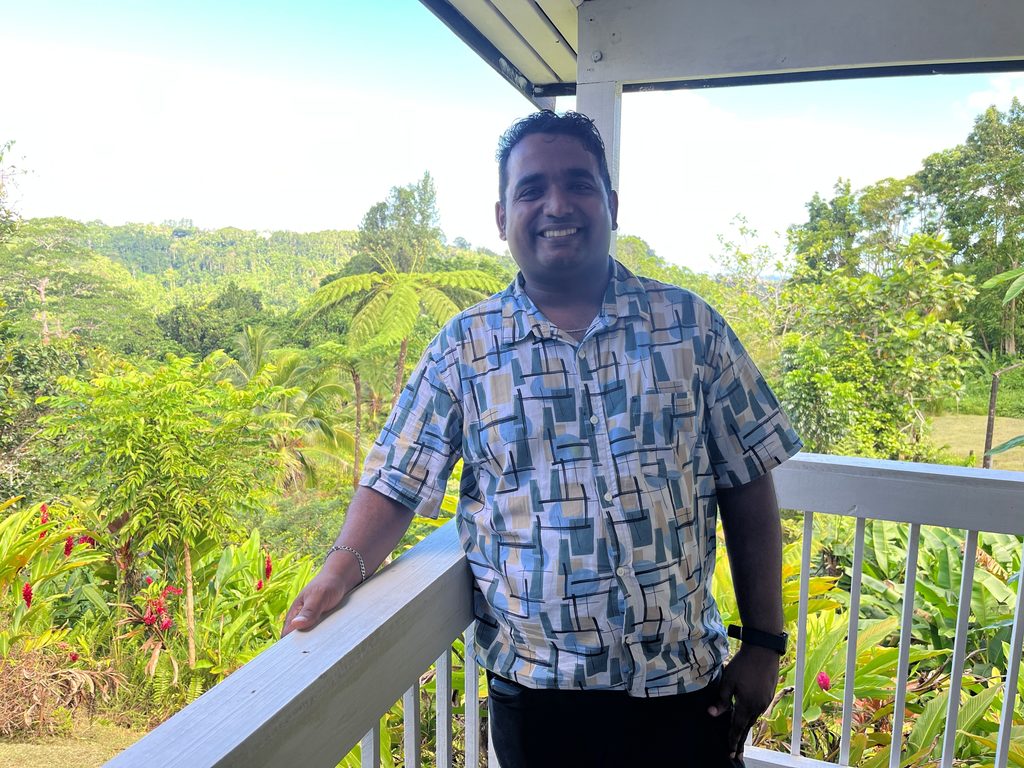
THE lessons Sunil Kumar gathered in a year of leadership training have long outlived the learning space.
Today, they shape the way he works and serves his community.
Sunil, the programs director for Homes of Hope, was part of the Leadership Fiji program in 2017.
Since joining the program he has applied his leadership training to his daily work.
Recently being promoted from team leader Training and Community Development to programs director at Homes of Hope, Sunil reflects on his leadership training and how it has guided him for over nine years.
For Sunil, Leadership Fiji principles are not spoken of as theory, but lived out in the way he balances responsibilities and approach community impact.
His journey with Homes of Hope began long before his current leadership role.
In 2010, he joined the organisation as a volunteer, gradually moving through various positions.
Each role he took added a layer of experience, preparing him for the responsibilities he now carries.
Being part of Leadership Fiji
Sunil applied for a space at Leadership Fiji after reading an article in this newspaper.
After applying, he was selected in 2017.
“They provided the opportunity for me to attend the program, that was a big thing for me.”
For Sunil, originally from Moto, Ba now living in Nakasi, the program was more than just a credential. It became a process of personal transformation.
The year 2017 was a defining period of self-development, one that challenged him to step beyond his comfort zone and re-evaluate his own potential.
“To be part of the program for a year was the biggest self-development for me,” he said.
“I was able to come out of my shell and explore the different leadership skills we have in us and how we can better use it in terms of improving the way we work, or in how we can better our service to the people we serve.”
That exposed him to new networks and ideas and went beyond personal growth.
It brought him into new spaces, surrounded by diverse voices, experiences and people from different backgrounds.
“I was meeting new people through the program, meeting different speakers, going through different topics and was part of a big network,” he said.
Today, as programs director, those lessons are no longer theory. They are applied daily and it has influenced how he engages with communities and colleagues alike.
Sunil now leads community work and collaboration, overseeing training programs for girls and running a climate-smart gardening initiative across five communities — an effort he notes has been successfully completed, with expansion already underway.
Beyond the program itself, it is his approach to leadership that reveals the deeper impact of his training.
Key takeaways from the program
Sunil speaks openly about the importance of understanding one’s limits and trusting others within a team.
His leadership style reflects what he learned years ago.
“Not everything is for me to do,” he said.
“Sometimes you need to collaborate, you need to delegate and sometimes you need to let go.”
He is equally firm on the importance of balance.
“I’ve also learned that self-care is very important. Sometimes we want to do everything that we overlook our wellbeing.”
These principles extend to how he manages his team of at least 16 staff.
“I have been teaching my colleagues about the importance of saying yes to things you’re able to do and not saying yes to things you’re not able to do because you will add pressure to your work and also to your team,” he said.
“Just take a bite of what you can digest.”
Equally important, he says, is the need to maintain personal wellbeing in the face of demanding work.
“I’ve learned that self-care is very important. Sometimes we want to do everything that we tend to overlook our well0being.”
Alongside his professional work, he has remained active in community service, including projects that began during his Leadership Fiji days.
“Our leadership group was the first to build a home in Koroipita. We fundraised for it and it was our big project under LP.
“We then did other projects like donating items to organisations.”
Behind his overall and overarching achievements is a story grounded in humble beginnings.
Being a son of a labourer (canecutter) in Ba he wanted to do better than his parents and give back to them for their hard work and sacrfices.
He knew his purpose was different.
Now, as a leader, he impacts those around him and those that he works with. He is a role model to many, and as a husband and father, Sunil carries that perspective into the advice he offers others.
“My message to the younger generation, your future is in your hand, and you decide where you go.”

