
Fiji’s economy today stands as the backbone of the tourism, a $2 billion industry that overtook sugar in the late 1980s to become the country’s leading foreign exchange earner.
Its rise from modest beginnings into a global economic force is owed not only to policy and investment, but to the vision and resilience of individuals who shaped its early course.
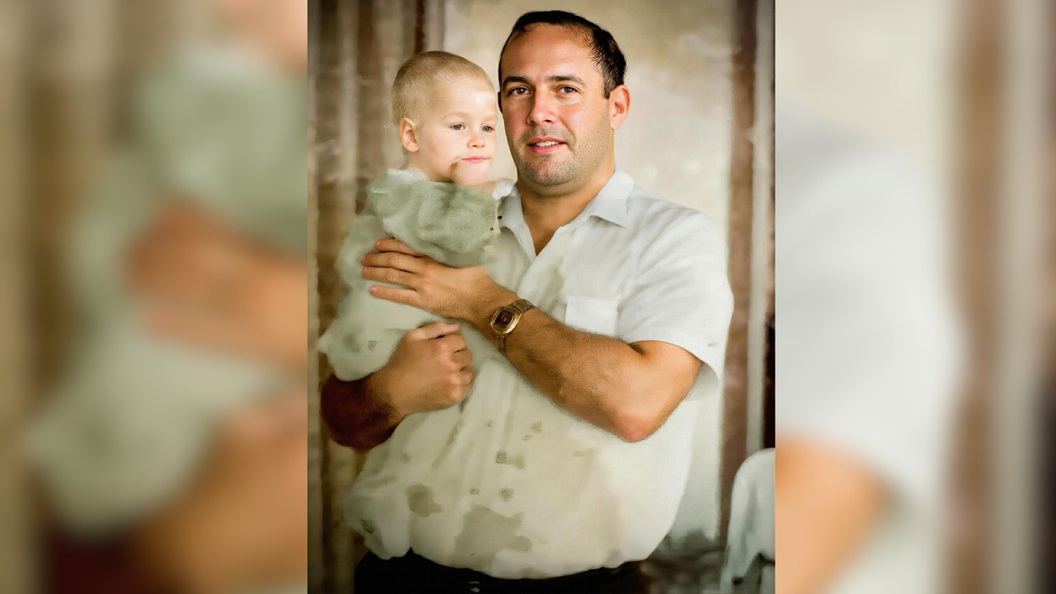
Among those figures is Robert ‘Bob’ Kennedy Snr, an aviation enthusiast, historian, hotelier and one of the quiet architects of modern Fijian tourism.
Relic on the Coral Coast
At the Kennedy family’s beachside home at Sandy Point in Korotogo, history is never far from view.
Resting on the front lawn is a weathered aircraft propeller, a relic of the Second World War, scarred and silent, yet heavy with story.
According to Mrs Coral Kennedy, the propeller once belonged to a Mitchell bomber shot down over the Pacific and later beached on Tarawa.
“It came to us through Bill Cruickshank, who was among the early figures in the Fiji Hotel Association,” she recalled.
“He gave the propellers to Bob who cleaned them up and identified the aircraft type. You can still see marks that may be from bullets.”
The artefact is more than a curiosity as it mirrors, in many ways, the life of Mr Kennedy himself, shaped by war, aviation and an enduring connection to Fiji’s evolving identity.
A childhood shaped by war
Born into a family whose land at Nadi, now known as Martintar, was requisitioned during World War II, Mr Kennedy’s early years were marked by upheaval.
In 1942, the United States military transformed the area into a communications centre, complete with runways, airstrips and ammunition dumps.
His family was evacuated to New Zealand, while his father, working with the Royal New Zealand Air Force, remained behind.
Tragedy struck in 1943 when his father was killed in a flying boat crash en route to join the family.
There were no survivors.
The war left an indelible impression on him personally.
By the time the family returned to Nadi in 1945, aviation had already taken hold of the young boy’s imagination.
Falling in love with flight
At the age of nine, he took his first flight, a DC-3 journey from Nadi to Suva.
A year later, he travelled overseas aboard a flying boat bound for Sydney, a 14-hour journey via Noumea that marked the beginning of a lifelong aviation love affair.
Those early experiences would eventually place Mr Kennedy at the centre of Fiji’s aviation and tourism sectors.
He went on to work with Air Pacific, now Fiji Airways, during its formative years, becoming part of a generation that helped establish Fiji as a regional aviation hub.
His deep knowledge of the industry would later be captured in his book, Harold Gatty’s Legacy, a historical account preserving the vision of aviation pioneer Harold Gatty. Gatty had imagined Fiji as a key crossroads for air travel in
the South Pacific — “the way the world should be” — a vision Mr Kennedy both understood and advanced.
In the book’s foreword, Gatty’s son, Ronald Gatty, described Mr Kennedy as a “walking encyclopaedia” of aviation history, whose personal archive and experience were unmatched.
Holding the line in 1987
But it was during one of Fiji’s most uncertain periods that Mr Kennedy’s influence on tourism became most apparent.
Following the 1987 coup led by Sitiveni Rabuka, the country’s tourism industry faced collapse.
Visitor numbers plummeted, and many hotel operators considered shutting down altogether.
At the time, Mr Kennedy was managing a resort and held a leadership role within the Fiji Hotel Association.
According to Mrs Kennedy, he took a decisive stand.
“He called the hoteliers together and said, ‘We don’t close. We stay open,’” she said.
“He told them to downsize if necessary — even to 10 rooms — but to keep operating. Because “if you close, it would be too hard to reopen.”
That collective decision proved pivotal.
By maintaining a presence, the industry preserved confidence and infrastructure during a period of crisis, a move that would help tourism recover and eventually flourish.
A wider legacy
Beyond tourism and aviation, Mr Kennedy’s contributions extended into sport.
He served as a national swimming coach for nearly two decades, guiding athletes to the South Pacific Games and nurturing local talent.
Today, though age and illness have slowed him, his legacy continues, not only in the institutions he helped build, but in the stories he preserved and the people he inspired.
One of his sons and namesake, Robert Kennedy Jnr, has carved out his own path as a well-known Fijian fashion designer, carrying forward the family’s creative spirit.
Back on the lawn at Korotogo, the old propeller remains, a fragment of war repurposed into a symbol of endurance.
Much like the man who safeguarded an industry at its most fragile moment, it stands as a reminder that Fiji’s success story was never inevitable, but built on courage, foresight and an unshakeable belief in the future.

