
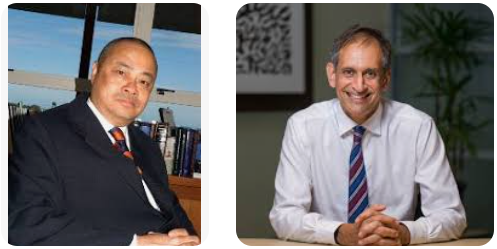
Senior lawyers Richard Naidu and Graham Leung have warned that Fiji is facing a serious constitutional moment, saying the President has no discretion to delay or bargain over advice from the Judicial Services Commission (JSC) concerning the Acting Commissioner of the Fiji Independent Commission Against Corruption.
In a joint statement, the lawyers stressed that the Constitution clearly limits the President’s role.
“He does not make choices. He does not exercise discretion. And he certainly does not bargain with constitutional bodies who require him to act as the law requires,” they said.
Mr Naidu and Mr Leung said it is now widely known that the JSC has recommended the termination of Ms Rokoika’s appointment following the High Court judgment of February 2, 2026, and that this recommendation was conveyed to the President on February 23.
They said media reports suggest the President has declined to immediately act on that advice, instead seeking compensation arrangements before revoking the appointment.
“That approach is constitutionally wrong,” the lawyers said.
“Ms Rokoika is an acting Commissioner. Her appointment is temporary and she has no entitlement to compensation when it ends.”
They pointed to section 82 of the Constitution, which they say leaves no room for negotiation or personal judgment.
“The President acts only on advice,” the statement said.
“If he is being advised otherwise, then he is being wrongly advised.”
While acknowledging that the President holds significant authority as head of state, the lawyers emphasised that those powers exist only within constitutional boundaries.
“Under section 81, the President exercises the executive power of the State,” they said. “But in a democratic republic, he does so only in the name of the people and only when and how constitutional bodies require him to act.”
They warned that failure to follow the Constitution in this instance could undermine public confidence in democratic institutions.
“As guardian of the Constitution, the President must set the standard of constitutional conduct,” they said.
“If he chooses instead to act outside that framework, it raises serious questions about future decisions.”
The lawyers also said the situation has been prolonged by Ms Rokoika’s decision to remain in office despite the High Court ruling.
“She should have stepped aside on 2 February 2026, when it became clear she could not have been lawfully appointed,” they said, adding that it was “unbecoming and undignified” for a senior public office holder to cling to office in such circumstances.

