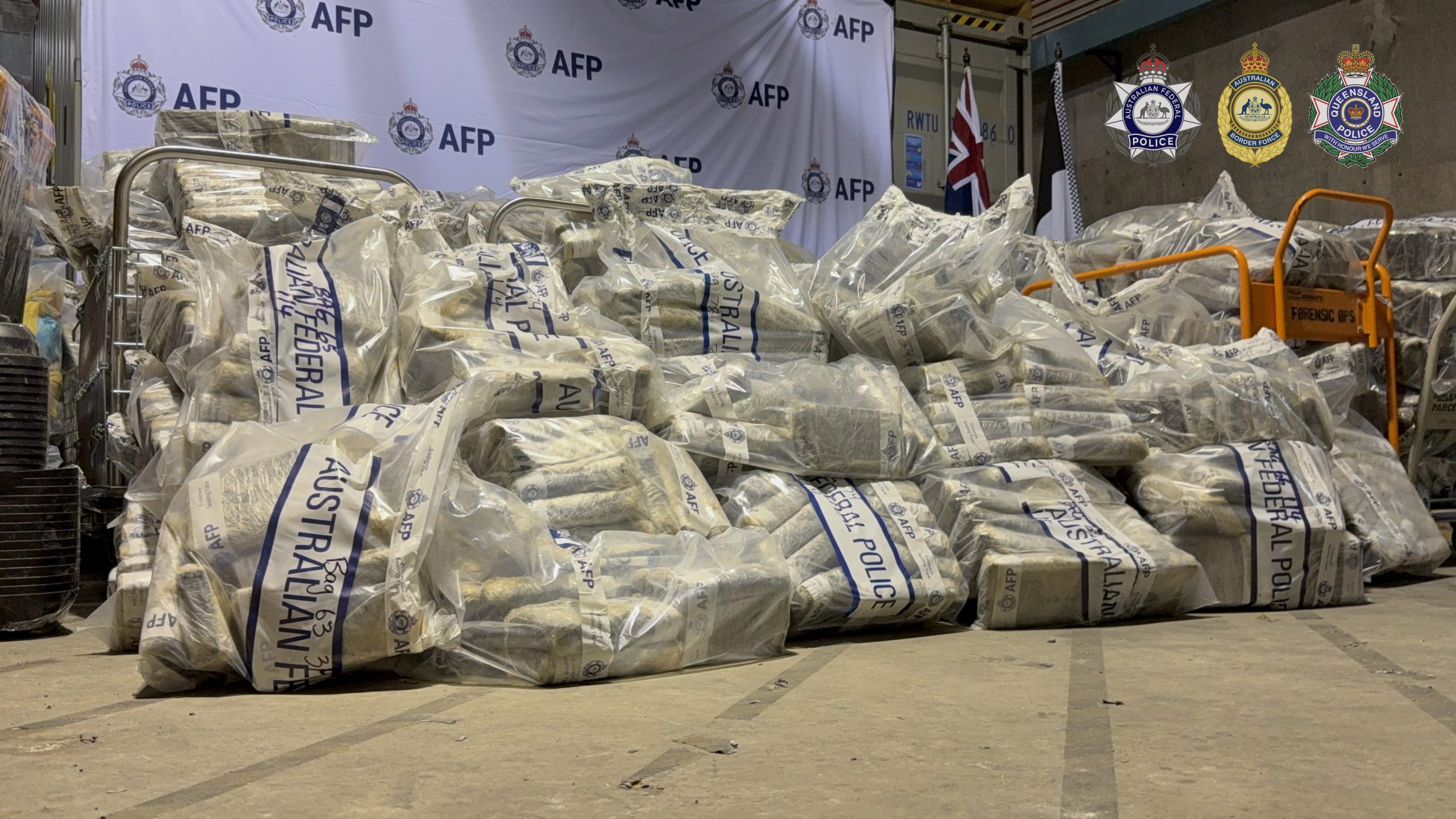
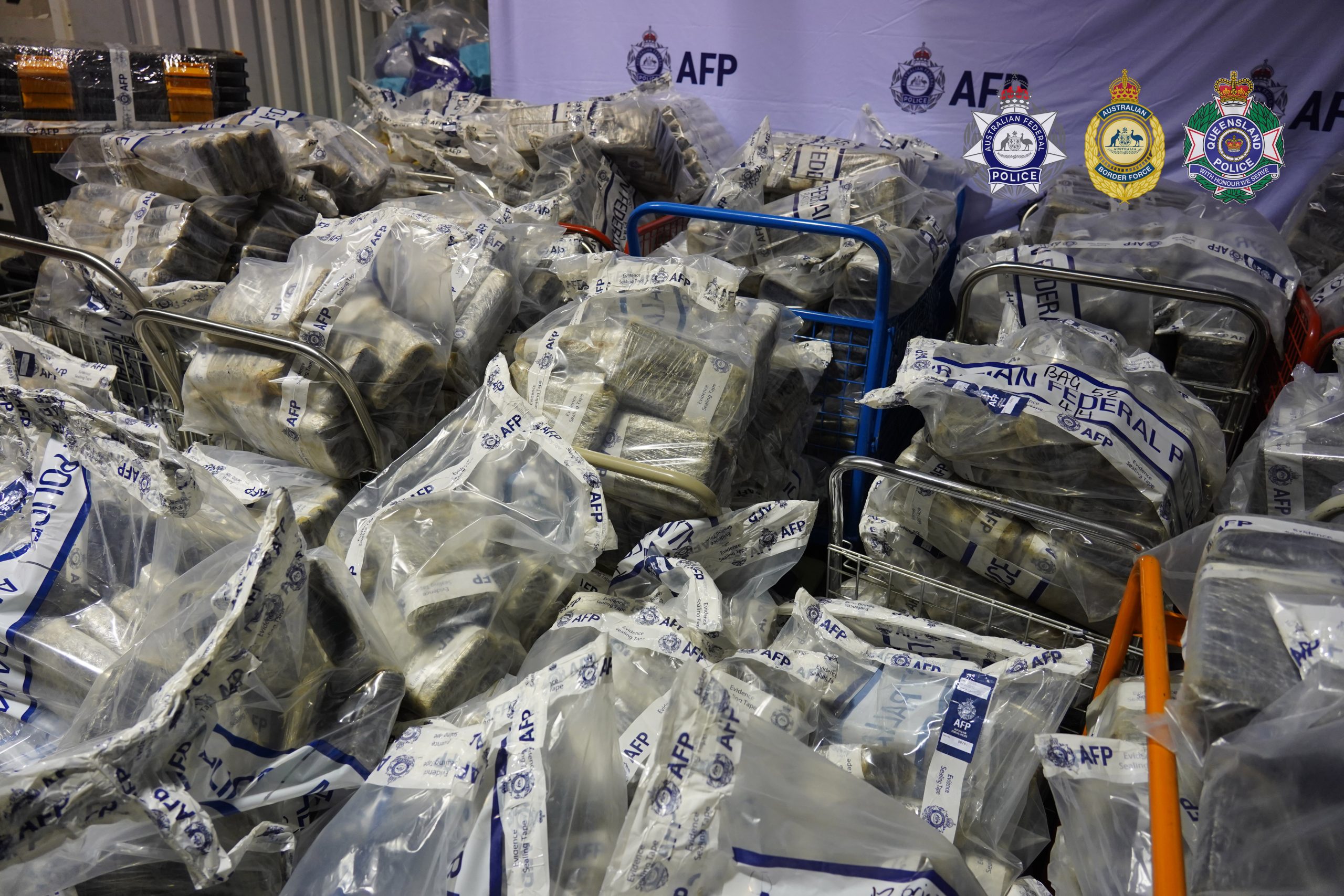
Australian authorities have seized a record 2.7 tonnes of cocaine with an estimated street value of $816 million, marking the largest cocaine seizure in the country’s history.
The seizure forms part of Operation Minjiang, a Queensland Joint Organised Crime Taskforce investigation into an alleged organised crime network accused of importing and distributing massive quantities of illicit drugs along Australia’s east coast.
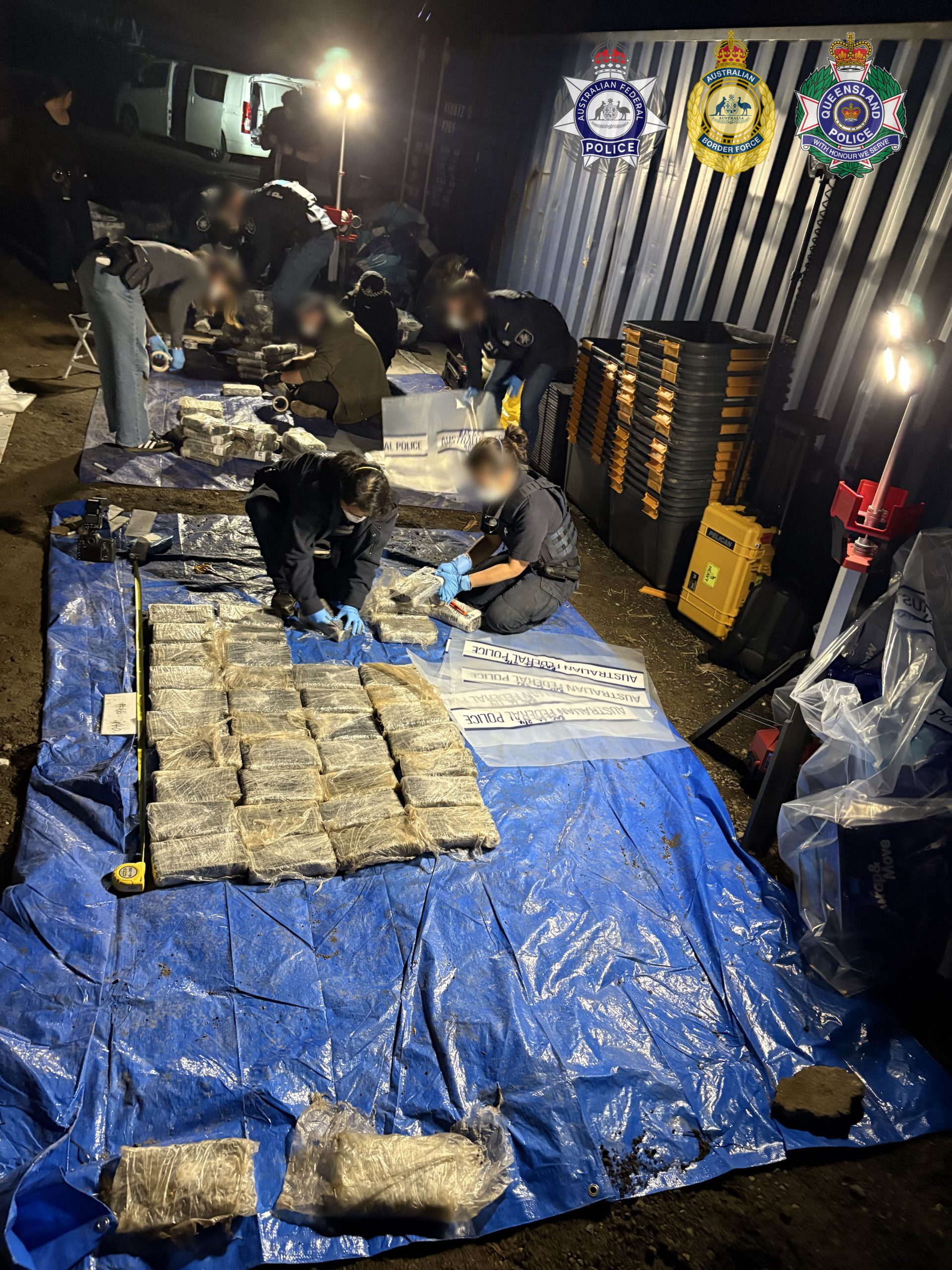
The Australian Federal Police (AFP) said investigators uncovered the drugs during a search of a semi-rural property at Londonderry in western Sydney on Friday.
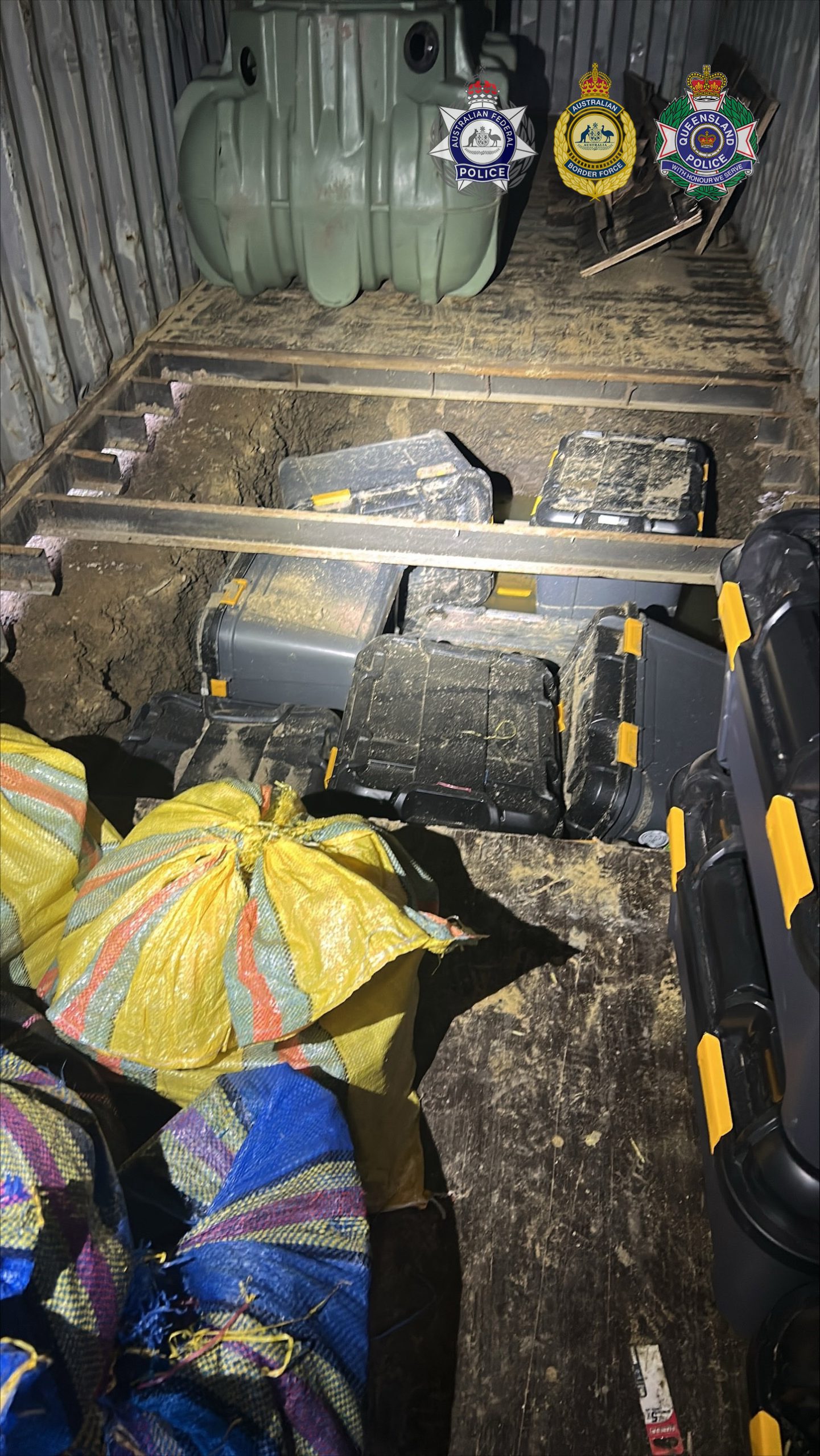
Police located the cocaine concealed in plastic tubs buried in underground bunkers hidden beneath false floors inside three shipping containers.
Authorities allege a 21-year-old man from Plumpton and a 25-year-old man from Liverpool attempted to flee on foot before being arrested.
Both men have been charged with possessing a commercial quantity of an unlawfully imported border-controlled drug, an offence carrying a maximum penalty of life imprisonment.
The AFP said the 2.7-tonne seizure, combined with earlier seizures of 178 kilograms of cocaine and 142 kilograms of methamphetamine, brings the total amount of border-controlled drugs seized during the operation to more than three tonnes.
According to investigators, the cocaine seized in Sydney was allegedly imported near Midge Point in North Queensland before being transported south at the direction of a Sydney-based organised crime group.
Operation Minjiang began in May after Queensland Police discovered 40 kilograms of cocaine floating near a boat ramp at Midge Point while responding to reports of a burnt-out flatbed truck.
The investigation subsequently expanded across Queensland and New South Wales, leading to multiple arrests and search warrants.
Authorities have charged several individuals alleged to have played roles in the drug importation and distribution network, including residents of Queensland and New South Wales.
Investigators are also examining the role of the vessel MV Wealth, which remains detained in the Solomon Islands and is suspected of being involved in the offshore drug importation operation.
AFP Commander Stephen Jay said the case highlighted the sophistication and determination of international criminal syndicates.
“This alleged plot to distribute nearly three tonnes of cocaine by arranging for an international vessel to offload the drugs in Northern Queensland before moving them into Sydney demonstrates how highly organised and determined these criminal networks are,” he said.
Commander Jay said authorities would continue working with domestic and international law enforcement partners to identify everyone involved in the operation.
Queensland Police Acting Chief Superintendent Troy Pukallus described the outcome as a major blow against organised crime.
“This outcome has removed a significant quantity of cocaine and methamphetamine from the criminal market and prevented these dangerous drugs from causing further harm in Queensland and more broadly across Australia,” he said.
Australian Border Force Commander Troy Sokoloff said organised crime groups should take notice.
“Criminal syndicates should be on notice. Law enforcement agencies are working together to detect, target and disrupt their operations, and those involved can expect to face the consequences,” he said.
Authorities say investigations remain ongoing into the source of the drugs and the wider criminal syndicate behind the attempted importation.