
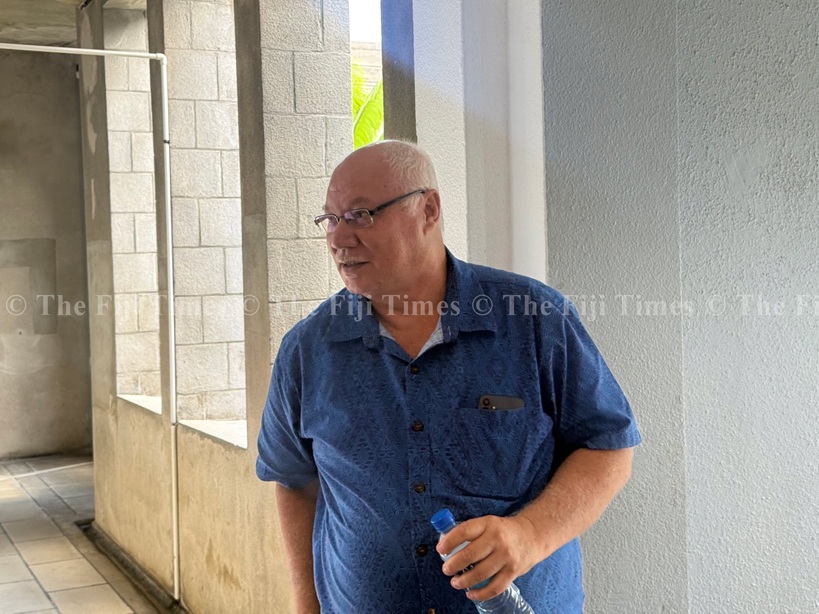
Former Fiji Independent Commission Against Corruption (FICAC) deputy commissioner George Langman has told the High Court he feared repercussions if he acted against instructions from then attorney-general Aiyaz Sayed-Khaiyum.
Mr Langman said that although the body was meant to be independent under the FICAC Act, he had to tread carefully — during his 12-year tenure as deputy FICAC commissioner — after seeing other heads of independent institutions removed overnight for non-compliance.
Mr Langman, who acted in the position from 2007 to 2019, testified yesterday that FICAC received complaints in 2012 from a whistleblower about Dr Neil Sharma, the former minister for health.
After reviewing the investigators’ reports, he believed there was sufficient evidence to proceed further.
He said in matters of “national interest”, briefings were conducted with his line minister, the former attorney-general Aiyaz Sayed-Khaiyum, and the former prime minister, Voreqe Bainimarama, because the matter involved a sitting cabinet minister.
The case centres on an alleged breach of a health tender process in which Mr Bainimarama and Mr Sayed-Khaiyum face charges of abuse of office and obstructing the course of justice by a person employed in the public service. Dr Sharma faces charges of abuse of office and breach of trust by a person employed in the public service.
Mr Langman testified that on June 15, 2012 — in the presence of the legal manager, the manager of investigations and the investigating officer — he briefed Mr Bainimarama for 40 minutes on the investigation against Dr Sharma, but he was referred to Mr Sayed-Khaiyum, who was also the government’s legal adviser at the time.
Fourteen days later, Mr Langman briefed Mr Sayed-Khaiyum for about 20 to 25 minutes on the investigation.
He said Mr Sayed-Khaiyum responded: “Hold off, I will get back to you.”
Mr Langman told the court the investigation then stalled.
From 2013 until his resignation in 2019 there were still no instructions, and he confirmed he did not write to Mr Sayed-Khaiyum.
When asked by the prosecution why he waited for Mr Sayed-Khaiyum’s direction despite being head of FICAC, Mr Lingman said ignoring the minister would have been insubordination and he feared possible repercussions if he acted against the minister’s word.
Meanwhile, Justice Usaia Ratuvili dismissed an application by Fiji Law Society president Wylie Clarke, acting for Dr Sharma, challenging the admissibility of the Tender Evaluation Committee Report.
The trial continues today.

