
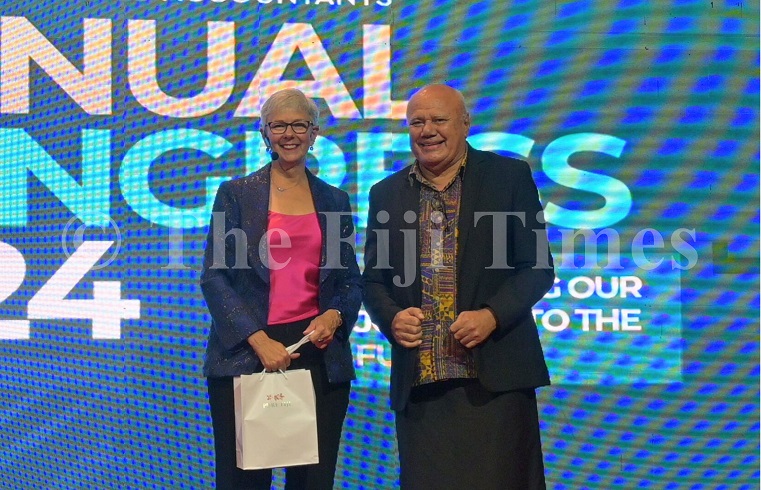
While delivering his ministerial statement during last month’s Parliament sitting, Deputy Prime Minister and Finance Minister Professor Biman Prasad said about 8 per cent, or 70,000 to 80, 000 of the Fijian population left the country in the past 18 months alone. This, according to Mr Prasad, not only results in lower consumer spending, lower economic activity and the reduction of income tax and VAT income received by the Government, it also results in a shortage of skilled workers. While speaking at the 2023 Human Capital Ministerial Conclave plenary session at the 2023 annual meeting of the World Bank and IMF in Marrakech, Morocco in October 2023, Mr Prasad said Fiji had lost 10 per cent of the formal workforce to developing neighbouring countries. This brain drain is felt across all sectors. The Water Authority of Fiji (WAF), the sole authority responsible for providing quality drinking water and wastewater services in Fiji, in their Fiji Water Sector Strategy 2050 report confirmed about 950 skilled workers were lost over the past four years. In December 2023, Health Minister Dr Atonio Lalabalavu said 417 doctors, nurses and allied health workers resigned within the last six months of 2023 alone. Early this year in January, Education Ministry permanent secretary Selina Kuruleca said about 900 teachers applied for leave for overseas visits in 2023, but only 48 per cent returned. Whether it’s construction, manufacturing, tourism, garment, or agriculture industry, everyone is feeling the brunt of the loss of skilled workers due to Fijians leaving the country for more lucrative opportunities overseas. The question most have been asking is “what could be done to increase the retention rate for our skilled workers?” Upskilling, and strategic workforce planning should help, according to Ignite Global founder and chief executive officer (CEO) Kim Seeling Smith. She was the motivational speaker at the recent Fiji Institute of Chartered Accountants (FICA) annual congress 2024, held last weekend at the Shangri-La Yanuca Island resort in Sigatoka.She is a ‘Future of Work’ expert, who helps organisations build and retain a future-fit workforce to reach their commercial goals, create thriving cultures, and overcome challenges and seize opportunities presented by the post-pandemic world. She was named in the Top 101 global influencers on employee engagement.
AI, technology,
And the workforce
Speaking on the rise of AI and the transformation of technology, she said those were disruptions in the post-pandemic world. “AI and technology are changing how we do and what we do, which is incredibly urgent from our standpoint in terms of skilling people to enter the workforce, reskilling and upskilling, now the roles change,” Ms Smith said. “What happens when technology advances to the point where tourists need to come to Fiji, (when) tourists can put on a visor and experience Fiji from the comfort of their lounge suites? That technology is not there yet, but it is coming. “There are apparently 11 VR (virtual reality) apps just on Meta alone and then of course, we’ve got these big societal resets that we’ve been hearing so much about, the shifting geopolitical landscape, climate change, supply chain disruption. “The bottom line here is that this is shifting consumer demands quickly.” She said what was to be expected now was “the rise of an empowered workforce”, which would be a combination “between a talent shortage as well as a workforce that’s become very clear on what they want, what they’re no longer willing to put up with”. She said this new workforce would be “voting with their feet because there are more jobs than people to fill them.”
Supply and demand
gap in the workforce
Ms Smith said apart from migration and underpaid salaries, there was a bigger factor in play when it came to talent or skills shortage. “There’s a bigger factor in play, one that we can’t fix until we perfect human cloning, as a matter of fact. It is a fact that the workforce is getting older, and the birth rates have been declining. There is a person gap, there is a supply and demand gap with people here in Fiji. As you’ve already seen, your birth rates have been delving since 1979 so the workforce is getting older, and the birth rates have been declining.” She said another factor that’s changing the workforce was the way Generation Z, or ‘Gen Z'(people born between 1997 and 2012) worked as their work behaviour was now being adopted by the older generation. Because of time constraints, Ms Smith did not elaborate more on how Gen Z was changing the workforce.
Solutions for Fiji’s
depleting workforce
Ms Smith spoke on a number of factors that played to Fiji’s advantage when it comes to addressing the challenges that AI and technology transformation and skills shortage. “I would like to challenge you, the apex of business leadership in Fiji, to think about what you can play, regardless of who’s in Government. “There’s debate on who’s got the cheapest data in the world, you’ve got the cheapest data prices in the world, so you’re just on the verge of being able to harness the status capacity to be able to embrace technology. “When you do, you are set up to leverage this, to raise your position on the world stage. I truly believe this because you have a lot of what the world has to offer. “And 96 per cent literacy rate. That is extraordinary. Fijians possess two of the skills, two of the traits, that the World Economic Forum says are two of the highest demand traits between now and the next generation — resilience and customer service.” She said having travelled to 40 countries, Fiji’s customer service was second to none and this needed to be “bottled and exported.” “But the thing that I think you have going for you from this standpoint is your median age … 27.9. That’s a full decade younger than Australia and New Zealand so you’ve got a generation that is not afraid of technology, let them loose, give them the skills, train them, but let them loose.
“They will lead the way. They will embrace it.” Ms Smith said recruitment now needed to be treated more like business development and strategic planning.

