
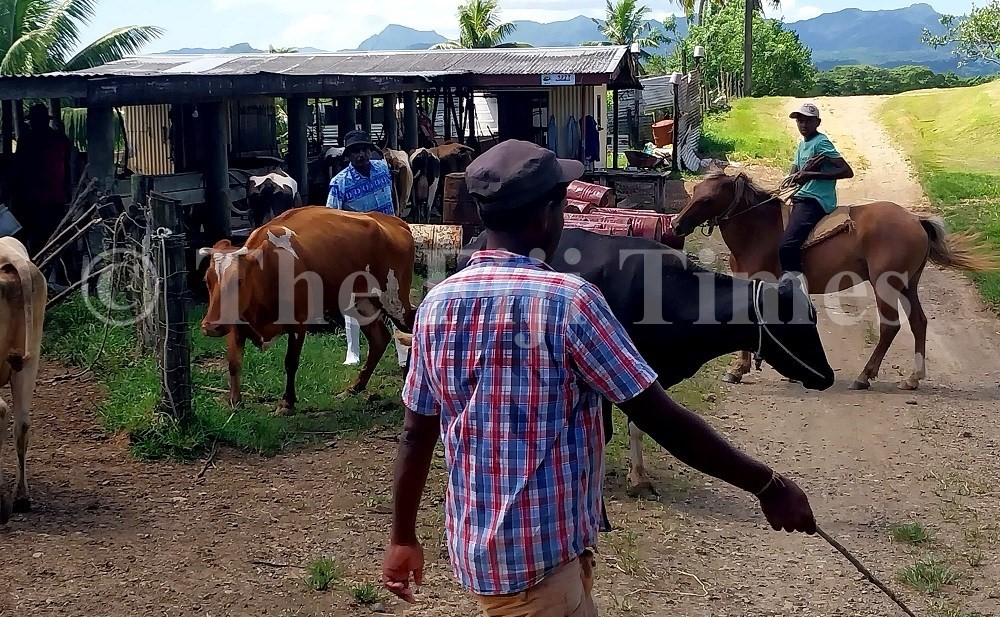
The Fiji Cooperative Dairy Company Ltd (FCDCL) is aware of labour issues plaguing dairy farms in Fiji.
However, FCDCL CEO Kushmendra Prasad said the matter was a bit more complicated as those working on dairy farms needed the appropriate skills.
Under cooperatives, Mr Prasad said, 232 farmers across the Central Division and 102 farmers in the West were being looked after by Fiji Dairy Ltd.
“You can get labour, but the labour needs to be skilled in dairy,” he said.
“So, what we have been doing is that through the Fiji National University, there have been some agriculture courses that have been developed. We sit in that forum, and we have brought some changes in the agriculture courses, where dairy plays a vital role in training students.”
Mr Prasad said one of the challenges was keeping labourers on the farms because many did not stay on if they were not able to pay them what was required.
“Now, we are in a partnership with Navuso Agricultural Technical Institute (NATI), which is a training institution, and it provides training to those who are school leavers, and those who are sons or children of farmers, or they are working on the farm.”
In this way, he said the students enrolled at the institute learned basic husbandry practices and received training certificates.
“The Navuso training centre is also assisting in getting some people to work on dairy.
“Dairy farming is a morning and afternoon shift and a seven-day business. So, it’s a challenge to some of these workers on dairy farms.
“It is very difficult to get, but if a person has specialised and been trained and skilled in a particular field, that person may be available. So, I think farmers are now being paid 18 cents extra by the Government.
“Farmers can look for better employees and pay that person a sufficient amount so that the worker is reliable and can stay on the farm. It is a matter of what you pay the workers.”

