
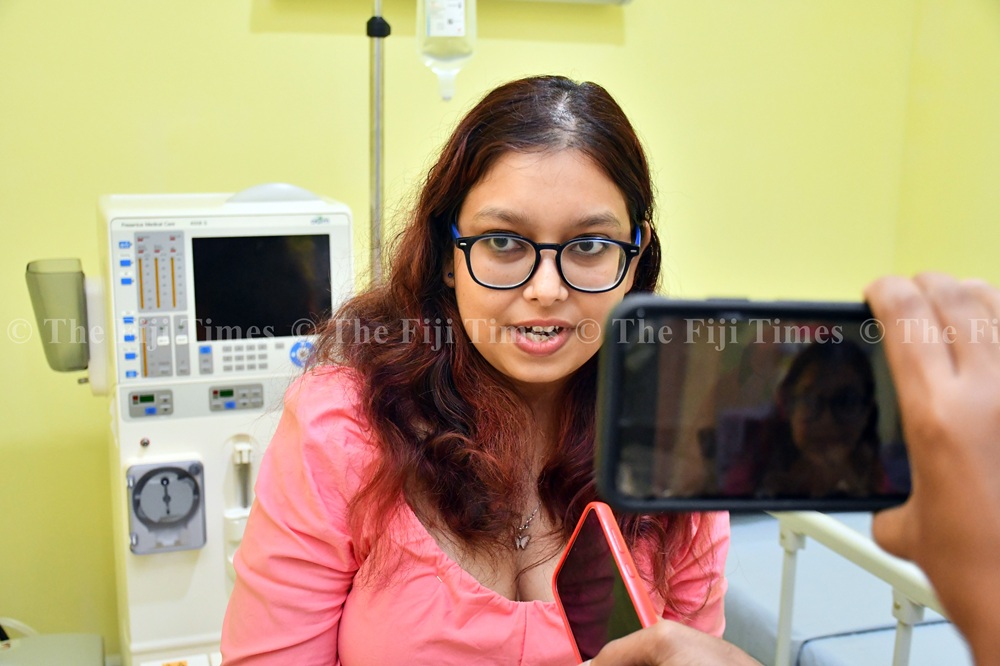
Just months after finishing high school, Angel Kernot’s life took an unexpected turn when a routine check-up revealed her kidney was failing.
Now 22, she is back at the University of the South Pacific, juggling university life as a final year economics student while adjusting to the realities of undergoing a kidney transplant, her story unfolding as Fiji expands access to life-saving dialysis care in Suva.
“They detected high blood pressure, and they sent me for tests, after bouncing around with a lot of doctors, I was sent to Kidney Hub and that’s when they diagnosed me with stage 5 kidney failure,” she said.
Within months, she was on a life-changing path.
“I had my transplant on June 7, 2023, my transplant journey has been both challenging and wonderful.”
She said one of her biggest challenges was readjusting to society after the transplant, noting that when she returned to school eight months later, she felt out of place among peers living normal lives while she remained on medication.
The need for a transplant, followed a rapid community fundraising effort.
“My mother did not hesitate to donate her kidney when the need came about.
“We were able to raise around $55,000 in just one month.”
Despite the success, the adjustment was not easy.
“I felt quite left out. I felt like I didn’t fit in,” she shared, describing her return to university life while managing medication and frequent check-ups.
Still, she remains determined to speak for others.
“To other kidney patients and to other transplant patients, I get you.
“You guys are not alone.”
She advocated more awareness and early testing.
“Early detection is key.”
Ms Kernot’s story comes as Kidney Hub, in collaboration with Nasese Private Hospital, officially opened a new dialysis centre in Suva yesterday aimed at improving access to treatment.
Director and Interventional Nephrologist Dr Amrish Krishnan said the need for such a facility had grown significantly.
“The demand for dialysis has increased because the amount of people who have kidney failure has increased over the last two decades,” he said.
“Over the course of the last 10 years, we must have treated close to 200 patients on dialysis, and nationally, there are over 300 patients on dialysis with all centres combined.”
He stressed the urgency of expanding services while focusing on prevention.
“We can’t leave them to die a miserable death; it is important for us as a community to help and support people who have kidney failure.”
For patients like Ms Kernot, the new centre represents hope that others facing similar battles can access care closer to home.

