
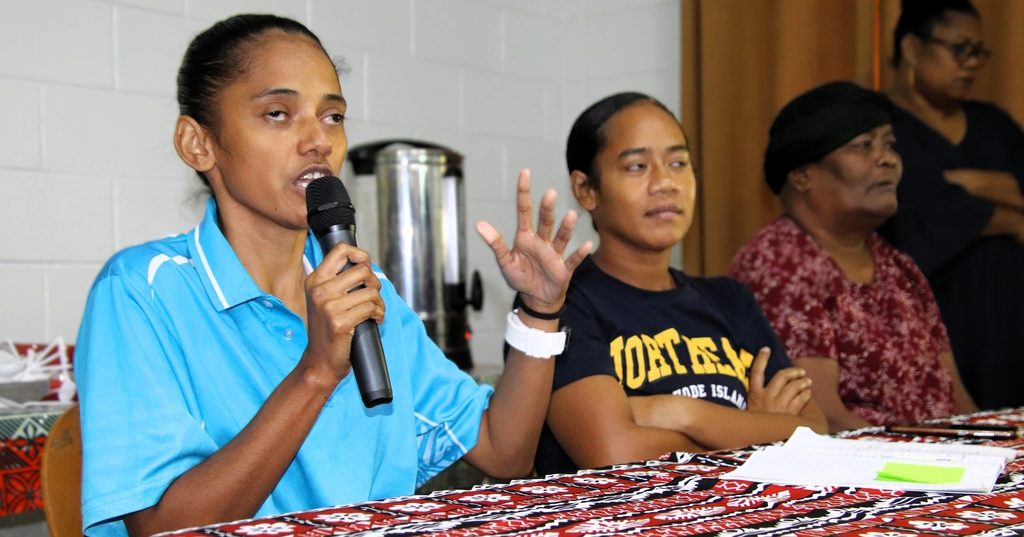
AS The Fiji Times marks International Women’s Day this year, Fulori Cavukiliu’s story speaks to the fight women carry and their will to push through when the odds are not in their favour. Sometimes, that fight starts as early as 15 years old.
She was in Form 4 at the time, a young woman going about life the way most teenagers do. But when she got sick, everything changed.
She was hospitalised for several months and when she was discharged, life was never to be the same again. The illness had affected her eyes and her vision began to decline.
As she struggled to come to terms with her new reality, a field worker from the Fiji Society for the Blind visited her family.
“My dad met the field workers, and they explained to him that they could assist and help a visually impaired student return to school.”
Fulori enrolled at the School for the Blind and spent a year learning Braille. She then returned to Dudley High School to complete Form 4. But in Form 6 her vision declined again, forcing her parents to take her back home. After another year of recovery she returned to the School for the Blind, then back to Dudley to start over.
Her former classmates were in Year 13 by then but she was not deterred by the gap.
“I had this mindset: I want to go back to school and complete my education so I needed to adapt to the situation and I did that.”
She completed Year 13 and enrolled at the University of the South Pacific (USP) to study secondary education, majoring in history and geography. Her integration teacher at USP was completely blind and held a degree in secondary education.
“That motivated me to go into education as a career.”
Geography at USP required fieldwork – reefs, hillsides. Fulori had support persons from USP’s Disability Resource Centre with her.
“It was a challenge for me, like walking up the hills and going to the reef. But there were people there to assist me. They said, you can do it and that motivated me to keep going.”
She completed her degree, finished her teacher’s certificate, and sat her teaching exam.
“Then there was a vacancy for the role of integration teacher and I said, yes, I can go.”
Now 35, Fulori works with visually impaired primary school students moving into mainstream secondary schools. She visits those schools before a student arrives, meets with teachers, explains what the child needs, and arranges resources.
“So as an integration teacher, this is about how we integrate our students from primary into secondary school. We assist them in their transition to secondary school – we liaise with the secondary school teachers and explain to them how to cater for their learning needs.”
In the first year of a student’s placement, Fulori sits with the receiving teachers directly. She asks sighted classmates to help too.
“Another student can bring their notes just to help them and assist them in the classroom.”
Fulori has worked with students who, like her, received a diagnosis and withdrew from school entirely.
“We met some students who had acquired a vision impairment. They refused to accept their condition so we had to create awareness to the community, parents and the students. They can do it with the right support and the resources – they can do it just like I did.”
Her advice to families is to seek help early and know where to find it.
“Reach out – learn which places and organisations can help you reach your goal.”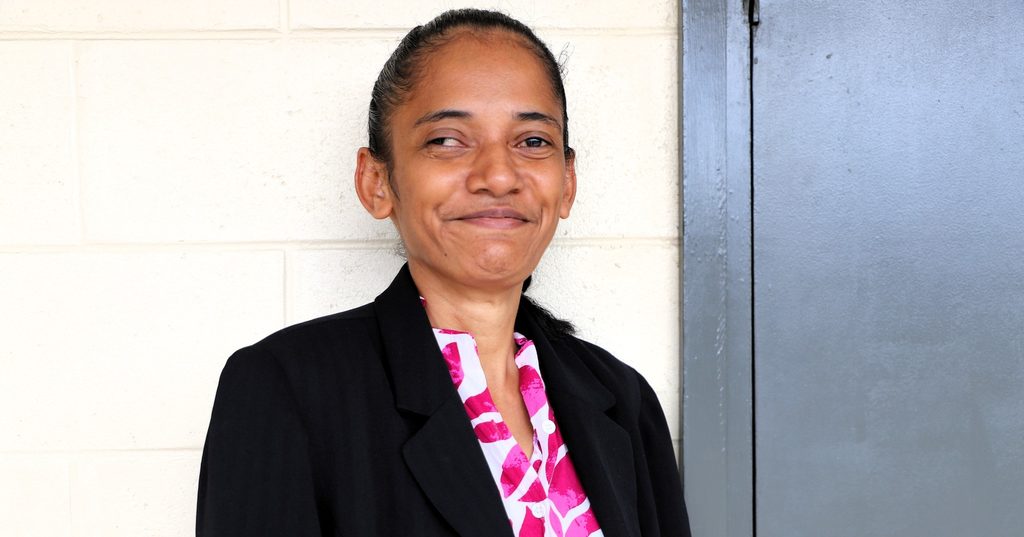
Fulori Cavukiliu. Picture: AUSTRALIAN HIGH COMMISSION/FACEBOOK

