
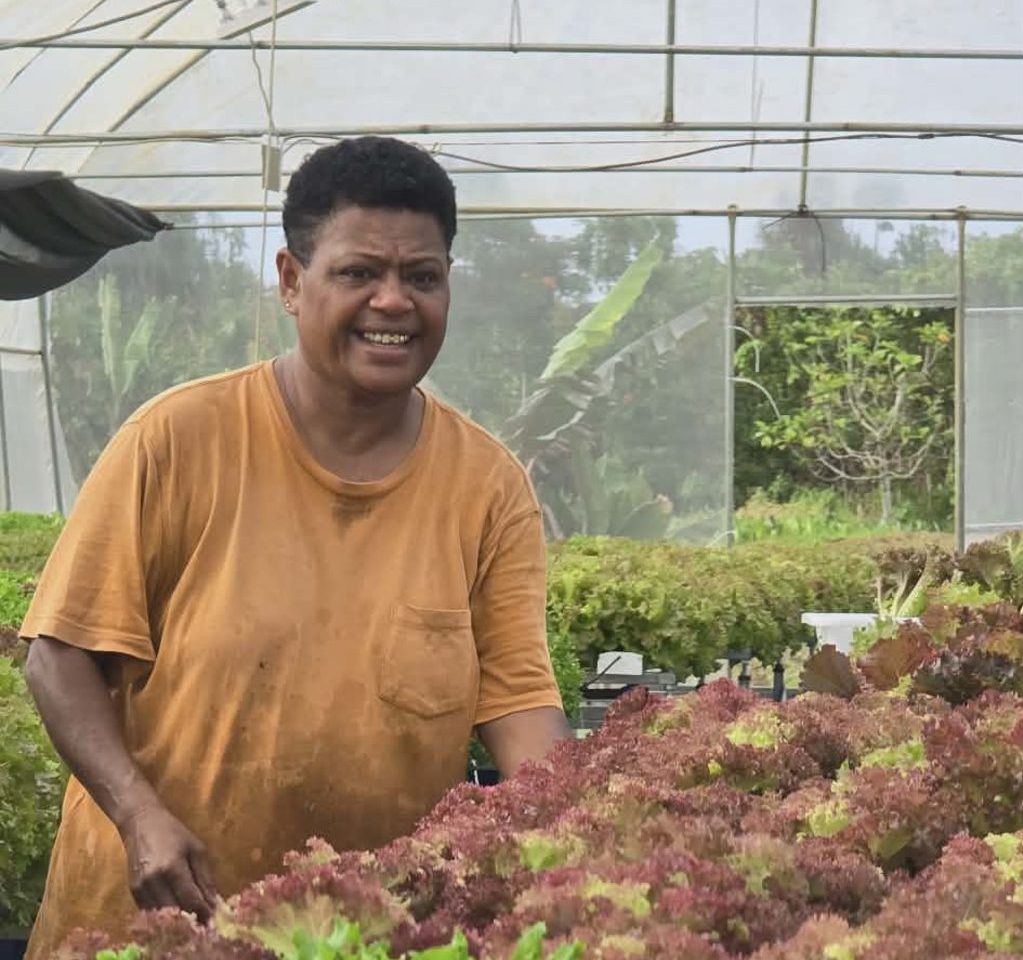
At 54, Ms Katarina Senabu, the owner of Kaybee Farms, looks the picture of vitality, fit and energetic, moving quickly through the rows of vegetables and fruit trees on her five-acre farm in Koronivia.
For the National Woman Spice Farmer of the Year 2025, farming is not just a livelihood. It is a philosophy, one rooted in discipline, knowledge and a deep respect for the soil.
“I have farmed here for about 15 years,” she says, gesturing across the thriving landscape of crops, fishponds and hydroponic sheds. “This is my farm. I live in Davuilevu, but I come here every day to work. If you want success in farming, you must be present. You must work the land.”
Ms Senabu runs an integrated farming system that combines vegetables, fruit trees, hydroponics, aquaculture and spices, a strategic model designed to balance income throughout the year.
On one side of the farm sit four tilapia ponds, each stocked with thousands of fish. On another are protected structures filled with hydroponic lettuce, nearly 4000 plants grown in staggered cycles to ensure a constant supply to the market.
Around them, tomatoes, cabbage, cucumbers, and eggplants grow under protective coverings.
Her second farm in Logani focuses on longer-term crops, including ginger and cassava. In fact, Ms Senabu supplies around 30 tonnes of ginger to government buyers, cultivated across four acres.
“It’s about planning. I have quick-turnover crops like vegetables and fish that give income within months, and long-term crops like ginger that take longer but bring bigger returns.”
That strategic thinking extends even to her fishponds. Ms Senabu has learned specialised techniques such as masculinisation of tilapia, a method that encourages fish to develop as males, allowing faster growth and more uniform harvest sizes.
“Farming is not just hard labour. Knowledge is very important in this business.”
Born the seventh child in a family of 12 siblings in Wailutu settlement in Savusavu, Ms Senabu grew up with farming as the household’s main source of income.
“From when I was born, I had a digging fork in my hands,” she laughs. “My parents taught us that farming feeds the family and pays for education.”
Those lessons carried her through life, including raising four children, one of whom is now a pilot whose education she financed entirely through farming.
“My children grew up working on the farm too,” she says proudly. “They know the value of the soil.”
Despite floods, high water tables and changing weather patterns linked to climate change, Ms Senabu continues to adapt. She has invested in drainage systems and climate-smart protected agriculture to protect crops from heavy rain and ensure a consistent supply to markets.
“Climate change is real for farmers,” she says. “Protected farming helps us manage the risks.”
Her work ethic is relentless, but she says the rewards are both financial and personal.
“It’s sweat income, but it keeps me healthy,” she says. “Farming is not a dirty job. We feed others, and we eat what we plant. Our family never worries about food.”
For Ms Senabu, the greatest reward is seeing other women take up farming.
“We women must trust ourselves first. Use your time wisely. Start small. Plant cabbage, tomato, and beans in your backyard. You will see money grow from the soil.”
She believes discipline is the difference between dreaming and achieving.
“A plan must have steps,” she explains. You cannot just plan, you must work it. Every year, I set goals, and I achieve them.”
Her philosophy is simple – failure is part of learning.
“If it’s a failure, fail and carry on. There is no failure, only lessons.”
Stories like Ms Senabu’s are exactly what the World Bank ENABLE Programme supported 2026 Women in Primary Industries Symposium, to be held in Suva from March 9–11, hopes to highlight.
Ministry of Agriculture, Waterways and Sugar Industry Chief Agricultural Economist Sainiana Kirisitiana says empowering women farmers is critical to Fiji’s food security and economic resilience.
“When women are given access to information, finance, land and markets, the impacts are enormous. Women naturally prioritise food security for their families. Supporting women farmers helps reduce poverty and improves nutrition and wellbeing across communities.”
Ms Kirisitiana says climate-smart and protected agriculture are key pathways for women to participate more actively in commercial farming.
“These systems require less land and can even be established in backyard spaces,” she explains. “They allow women to balance household responsibilities while generating income.”
Yet adoption remains low. Out of around 83,000 farmers in Fiji, only a small number have adopted protected agriculture systems.
Through the symposium, supported by initiatives such as the World Bank ENABLE program and partners, the Ministry of Agriculture hopes to accelerate the sharing of knowledge, training and resources across provinces.
Champion farmers like Ms Senabu Senabu will play an important role.
Back on her farm, Ms Senabu reflects on the lessons she learned growing up in a large farming family.
“The biggest thing my parents taught us is that money is in the soil.”
Then she smiles.
“And if others can do it, you can do it too.”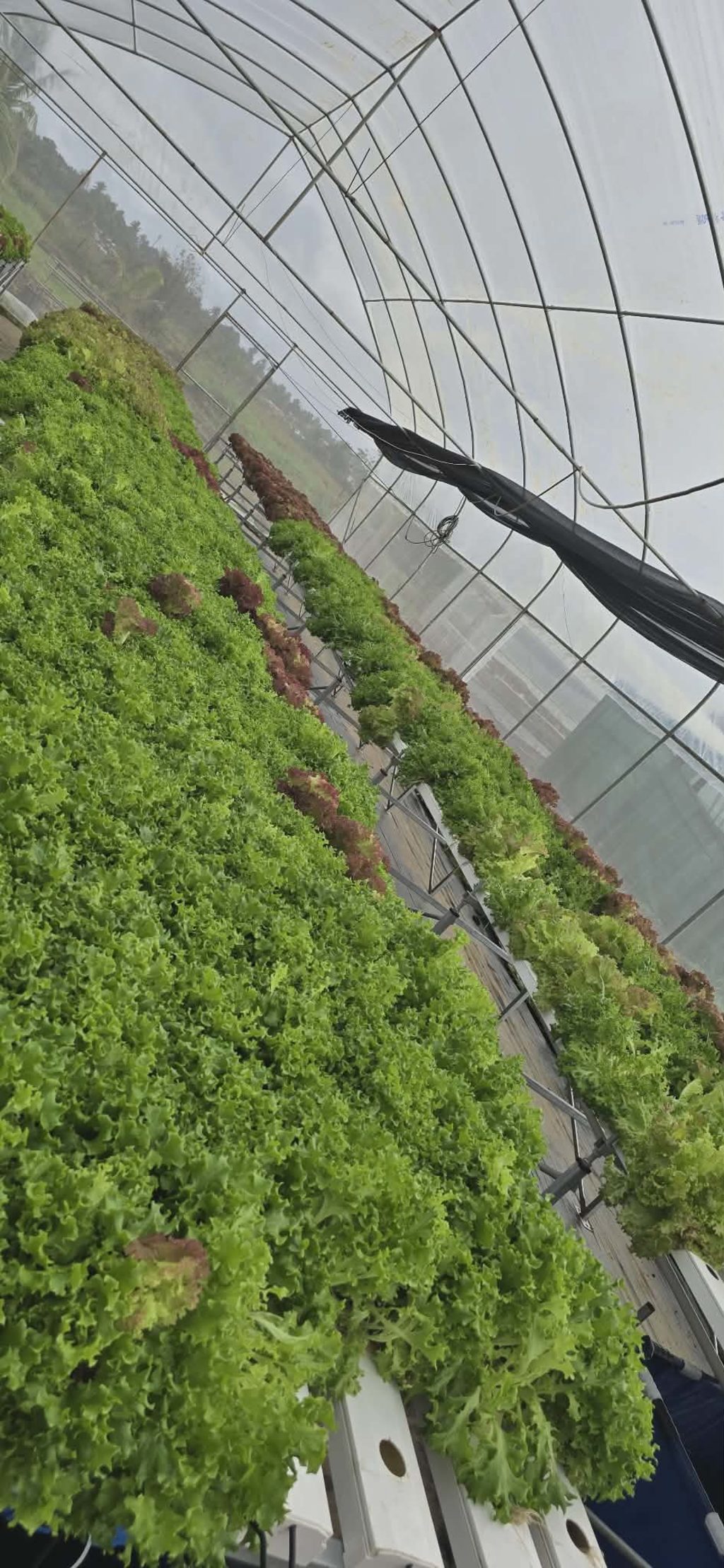
Picture: SUPPLIED

