
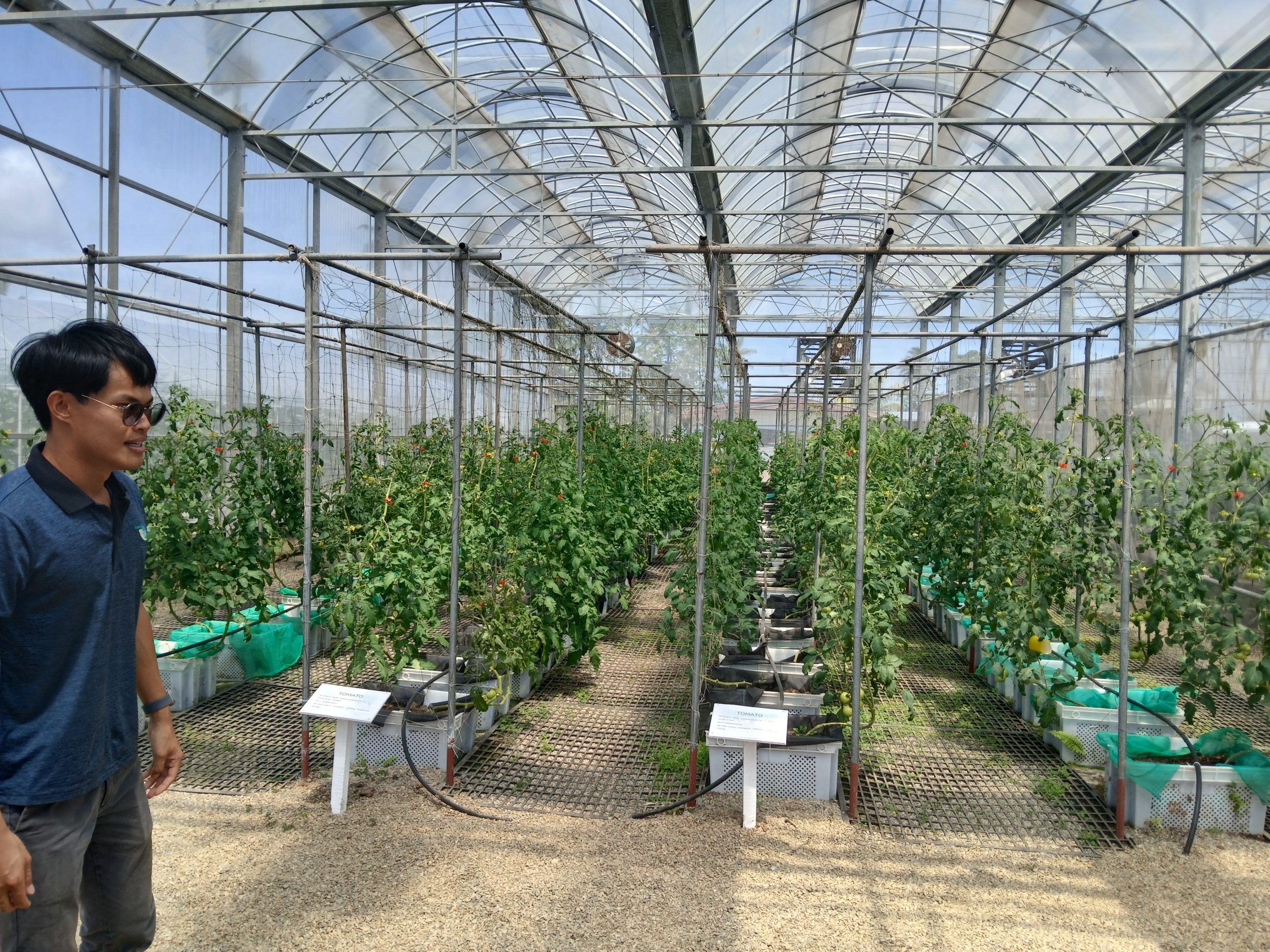
SOME 70 farmers attended the English Cabbage Field Day program that was held at the Taiwan Technical Mission’s (TTM) Centre for Agriculture Technology Transfer (CATT) at Bau Rd in Nausori last Thursday.
The farmers who came from the greater areas of Rewa, Tailevu, Naitasiri and Navua learnt of new climate resilient varieties of the English cabbage, new cultivation techniques, and pest and disease management.
This program is part of the five-year Resilient Cultivation Extension Project managed by the Taiwan Technical Mission in partnership with the Ministry of Agriculture, with a focus on different crop for each year.
This year, the focus is on English cabbage, thus the workshop for farmers to learn of its new resilient varieties and new cultivation methods.
Next year, under the same Resilient Cultivation Extension Project, the Taiwan Technical Mission will focus on the new resilient varieties and cultivation techniques for tomatoes.
TTM specialist Edward Chen said there were new varieties imported from Taiwan and approved by the Biosecurity of Fiji (BAF) – varieties 228, 493 and 2, which were already being trialled for the past few months on their farm.
The program aims to ensure farmers are equipped with the knowledge and technical know-how in order to consistently produce this popular consumed vegetable all year round.
“We wanted to brief the farmers of the cultivation methods we can use, and what kind of variety is suitable for the Fijian farmers to grow, especially in the rainy season,” Mr Chen said.
“Right now, this is the season for English cabbage, and it is flooded in the market. But when it comes to November and December, that is the time can have some more income by using the new method of growing the English cabbage.”
TTM prepared for this field day for more than three months.
“The reason why we planted a lot of varieties of the English cabbage, the melon and all the other vegetables is that because TTM here in Fiji is focused on assisting the farmers, to demonstrate how we can use local products to plant in different ways that Fijian farmers do.
“So by the help of the new techniques and new materials, we can assist farmers generate more income by growing the same vegetables throughout the year.
“We also provided real data for the farmers to know that we can boost production by planting the new varieties of those vegetables.”
As a result of the field day, farmers are now enquiring about the new varieties.
“At TTM, we always welcome everyone to join us and visit our farms because that is the main reason why we are here. We want to show them how you can do this and how you can improve.
“And then if any interested farmer, if any good farmer who is likely to cooperate with us, we are very open to the opportunities of helping you.”
New resilient varieties
The new varieties of English Cabbage being trialled at the TTM farm in Nausori are 493, 228 and 2.
These varieties have been approved for importation by the Biosecurity Authority of Fiji.
“In my presentation, I mentioned that because we know biosecurity here in Fiji is very strict, we are also trying to get some more of the commercial, like a seed company to Taiwan, to import it on their own,” Mr Chen said.
“So in the future, we hope the farmers in Fiji can get these seeds locally and not just from us.”
Mr Chen said the seeds of the new variety have yet to be distributed to farmers.
At the moment, the TTM is arranging for a trip to Taiwan with some of their stakeholders and are in the process of finalising biosecurity paper works.
“We hope, by the end of this year or next year, we can try to release the seed to the local company and then the people can go to buy on their own.”
Mr Chen said the new varies of English Cabbage and other vegetables could boost production of those crops during off season periods as well.
“Actually, at TTM, when we start to think of one project, the main question is that how this project will be effective in the Fijian agriculture sector.
“And in this project, we are trying to reduce the production loss from climate change to 15 per cent; which means that climate change and the effect from production loss – for example, 100 per cent and then we are just trying to reduce it into 75 per cent. So we are expecting, after we finish this project, we can achieve this goal.”
Food security
With climate change, disease prevalence, high costs, and other attributing factors now posing major challenges for the agriculture sector in the country, the main concern is the pressing issue of food security.
Ministry of Agriculture Director Extension Kasanita Ratu commended the focus of the Resilient Cultivation Extension Project in leading a more sustainable technique and productive agricultural future for the country.
“This project is not only technical intervention. It is a partnership of mutual respect, shared learning and a commitment to climate-smart agriculture. Through resilient cultivation practices, we aim to strengthen food security and ensure that our agriculture systems can withstand the pressures of the changing climate,” Ms Ratu told the farmers.
“To our hardworking farmers, we acknowledge your sacrifices and contributions towards the economic development of our agriculture sector and the nation.
Your dedication to the land, your resilience to the challenges and your openness to information are the backbone of such initiatives like what we will be learning together today,” she added.
Ms Ratu thanked TTM for its continued support saying they continued to be instrumental in advancing sustainable agriculture throughout Fiji.
“Food security is a very important issue in Fiji. Actually, there is a very big future plan for food security because every country, they are fighting for their self-sufficiency rate, no matter the rise of any root crop, any vegetables,” Mr Chen said in an interview.
“So if you are a local farmer and can produce vegetables on their own to reduce the importation of vegetables, then I think that would also be what the Ministry of Agriculture wants the future of Fiji’s agriculture to be.
“That is also what we’ve been doing from 1978. In the beginning, we started our sugarcane, after that, rice, and then these few years, we’re doing the orchard like the guava, and dragon fruit, which has already lowered some percentage of imported fruits in Fiji.
“So we are trying our best to assist what we can do and we are also looking forward to the changes in Fiji’s agriculture sector,” Mr Chen said.
Navua farmer Frances Kamikamica acknowledged the workshop saying they learnt of new varieties of vegetables that they did not know could be grown locally like broccoli and asparagus, rock melons and honey dews.
“This goes to show that in Fiji, there is a lot of potential to tap into if we can learn how to grow it,” Ms Kamikamica said.
—
Note: This article was first published under the headline: Resilient varieties and food security – Project promotes commitment to climate-smart agriculture in Page 13 of the print version of The Fiji Times dated Tuesday, September 30, 2025

