
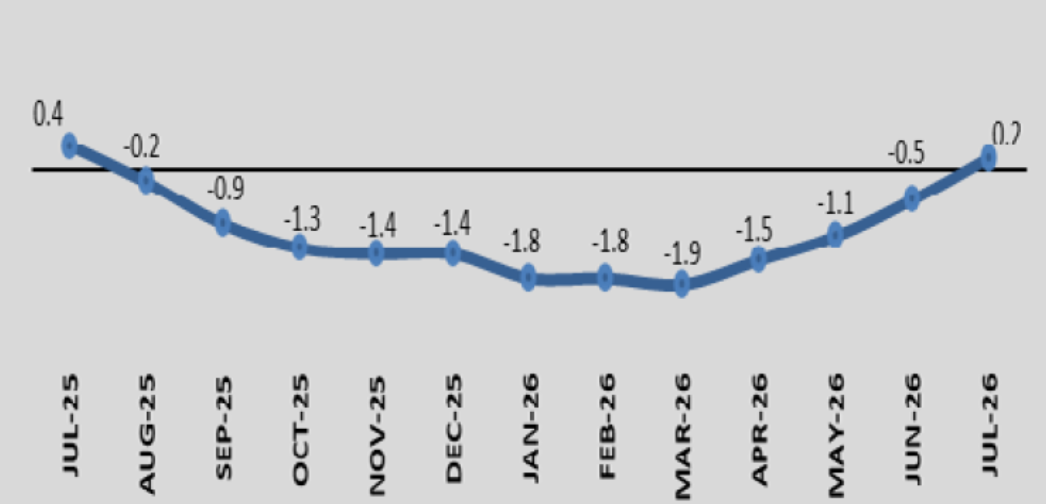
Fiji’s average annual inflation remained subdued at 0.2 percent in July 2026, despite consumer prices being 5.7 percent higher than a year ago, according to the latest Consumer Price Index released by the Fiji Bureau of Statistics.
The report shows the All Items Consumer Price Index (CPI) fell by 1.1 percent in July, declining from 119.5 in June to 118.2, indicating that prices eased during the month even though they remained significantly above July 2025 levels.
The Bureau uses two measures of inflation. The first compares the average CPI over the previous 12 months with the average over the preceding 12-month period, while the second measures price changes between the same month in consecutive years.
Health recorded the largest monthly increase among major expenditure groups, rising 1.1 percent, driven by higher prices for pharmaceutical products.
Food and non-alcoholic beverages increased by 0.5 percent, reflecting higher prices for bread and cereals, fish and seafood, oils and fats, as well as fruit and vegetables.
Recreation and culture also rose 0.5 percent, with increases in the cost of electronic equipment, information processing devices and newspapers.
Restaurant and hotel prices edged up 0.2 percent, while furnishings and household maintenance recorded a modest 0.1 percent increase.
Education costs remained unchanged during the month.
The largest decline was recorded in the transport division, which fell 6.6 percent, mainly due to lower prices for fuels and lubricants for private vehicles and passenger transport services.
Housing, water, electricity, gas and other fuels decreased 1.4 percent, driven by lower prices for gas and liquid fuels.
Other categories that recorded price declines included clothing and footwear (-0.4 percent), miscellaneous goods and services (-0.2 percent), communication (-0.1 percent) and alcoholic beverages, tobacco and narcotics (-0.1 percent).
The latest figures suggest that while some essential household items, particularly food and healthcare, continue to experience upward price pressure, falling fuel and transport costs helped ease overall consumer prices during July.

