
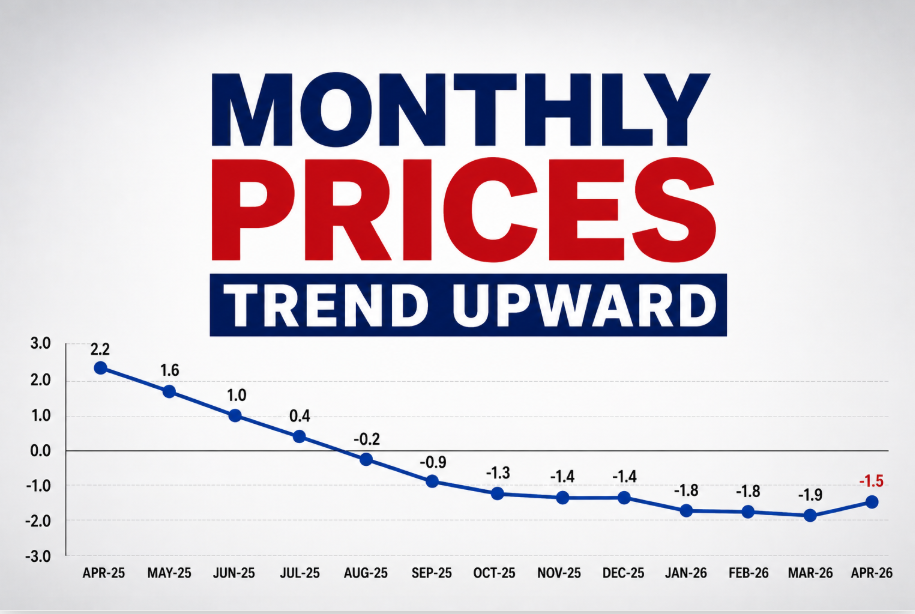
Fiji’s average annual inflation rate has fallen to -1.5 per cent for the 12 months to April 2026, according to the Fiji Bureau of Statistics.
The latest data shows that while overall inflation remains negative on an annual basis, prices are rising month-to-month, with inflation increasing by 1.8 per cent compared to April last year.
The Consumer Price Index (CPI) for April 2026 rose by 2.1 per cent from March, reaching 114.5.
The Bureau said transport recorded the largest increase, rising by 10.1 per cent, driven by higher fuel costs, airfares and boat transport prices.
Housing, water, electricity and fuels increased by 2.2 per cent, mainly due to higher liquid fuel prices, while food and non-alcoholic beverages rose by 0.9 per cent.
“Higher prices were recorded for bread and cereals, meat, fish and seafood, milk, cheese and eggs, oils and fats, vegetables and non-alcoholic beverages such as coffee, tea and cocoa,” the report stated.
Other categories that recorded increases included alcoholic beverages, tobacco and yaqona (+0.5%), and miscellaneous goods and services (+0.2%).
Smaller increases were also noted in household goods and maintenance (+0.1%), while clothing, health and education recorded no overall change.
However, some sectors saw slight declines, with prices for restaurants and hotels down 0.1 per cent, communication down 0.2 per cent, and recreation and culture down 0.3 per cent.
The Bureau noted that the CPI reflects average changes in prices of goods and services purchased by households, with data collected monthly in urban centres including Suva, Lautoka, Nadi, Ba and Labasa, and used as a proxy for national trends.
Despite the negative annual inflation rate, the latest figures highlight growing pressure on key household expenses, particularly fuel and transport costs.

