
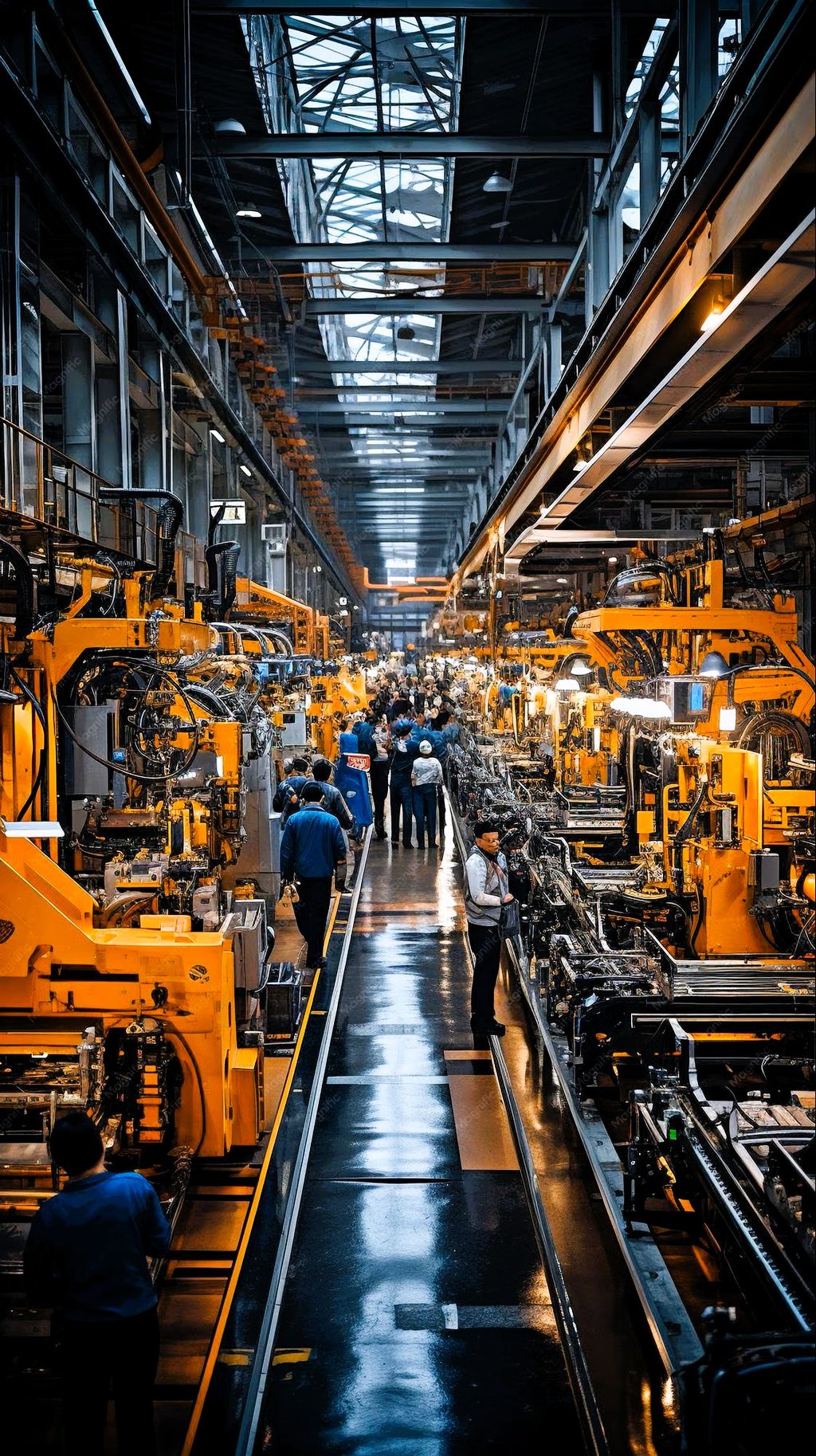
Industrial manufacturing is one of the most important sectors in the global economy, transforming raw materials into the products, machinery and components that power industries and support everyday life.
From vehicles and household appliances to industrial equipment and telecommunications infrastructure, manufacturing provides the foundation upon which countless other sectors depend.
The industry has evolved significantly over time according to the Science Insights website.
What began as small-scale production by skilled crafts people was transformed by the Industrial Revolution, which introduced steam-powered machinery and mechanised production.
The development of assembly lines in the early 20th Century further increased efficiency and productivity.
Today, advanced technologies such as robotics, automation and computer-controlled systems continue to reshape the manufacturing landscape, enabling greater precision, consistency and output.
Industrial manufacturing is generally divided into two main categories: discrete manufacturing and process manufacturing.
Discrete manufacturing involves the production of individual, countable items assembled from multiple components.
Products such as automobiles, mobile phones, aircraft and household appliances are examples of discrete manufacturing.
These items are produced through a series of steps where individual parts are assembled into a finished product.
Process manufacturing, on the other hand, focuses on creating products by combining ingredients or raw materials according to specific formulas or recipes.
Industries such as food and beverage production, pharmaceuticals, chemicals and petroleum refining rely on this approach.
Unlike discrete products, process-manufactured goods cannot easily be separated back into their original ingredients once production is complete. Regardless of the manufacturing method, every product follows a similar journey from concept to customer.
The process begins with planning and forecasting demand before moving to sourcing and procurement of materials. Manufacturing then transforms these materials into finished goods, which are stored, distributed and transported to customers. Even after delivery, activities such as recycling, returns management and product recovery remain important parts of the supply chain.
What distinguishes industrial manufacturing from smaller-scale production is its emphasis on standardisation and efficiency.
Manufacturers are designed to produce large volumes of products while maintaining consistent quality. Achieving this requires careful coordination across supply chains, production systems and quality management processes.
Technology is playing an increasingly important role in modern manufacturing.
The Industrial Internet of Things (IIoT) allows machines and equipment to communicate through sensors that collect real-time data.
This information helps manufacturers monitor performance, predict maintenance requirements and improve operational efficiency.
Digital twin technology further enhances this capability by creating virtual models of production systems, enabling engineers to test improvements without disrupting operations. Sustainability is also becoming a key focus.
Manufacturers are investing in energy-efficient equipment, reducing material waste and exploring renewable energy sources to minimise their environmental impact.
Real-time monitoring systems help identify inefficiencies, while employee engagement programmes encourage continuous improvement in energy management practices. Another emerging technology is additive manufacturing, commonly known as 3D printing.
Although primarily used for prototyping and specialised components, it offers opportunities to reduce waste, simplify inventory management and produce complex parts that would be difficult to manufacture using traditional methods.
As industries continue to evolve, industrial manufacturing remains a driving force behind economic growth and innovation.
By embracing advanced technology, improving efficiency and prioritising sustainability, manufacturers are helping shape a more productive and resilient future for industries worldwide.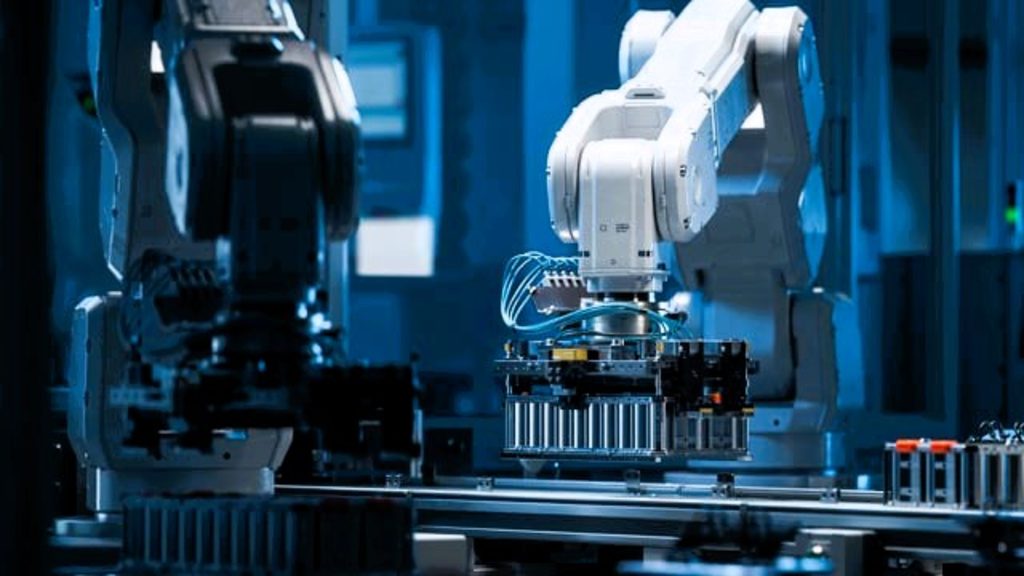
Manufacturing provides the foundation upon which countless other sectors depend on.

