
At the heart of a growing political and public storm over millions of dollars in government grants lies a larger question: how Fiji funds, regulates and safeguards technical education at a time of critical skills shortages.
Pacific Polytech, one of the country’s largest providers of trade and technical training, has found itself under intense scrutiny following allegations of financial mismanagement, concerns over delayed staff salaries and claims it received public funding before achieving full registration.
The institution’s chairman, Dr Ganesh Chand, rejects the allegations outright, saying Pacific Polytech has complied with the law, trained thousands of young people and become an easy political target because of its scale and impact.
“Polytech was established as a non-profit company in March 2021, three months after the Government closed Technical Colleges of Fiji, making 247 staff redundant and over 800 students uncertain of their future,” Dr Chand said.
“We stepped in to provide continuity for students and staff at a time when the system had collapsed.”
Registration and governance
Pacific Polytech operated under provisional registration from November 2022 before attaining full registration in August 2025, a timeline now central to the controversy.
Dr Chand said the institution had met the academic, governance and financial requirements for full registration from the outset and questioned why only provisional status was initially granted.
“Despite meeting all the requirements for recognition, the Higher Education Commission then refused to even accept our application fee.
“We believe this was on account of political pressure at the time. Eventually, recognition and provisional registration were granted in 2022.”
He said repeated requests for clarification on why full registration was delayed had gone unanswered.
“The commission has never advised Polytech why it granted only provisional registration despite Polytech meeting all criteria from 2021,” he said.
The Higher Education Commission Fiji (HECF), however, said Pacific Polytech’s registration followed due process.
In a response to questions by The Fiji Times, HECF confirmed the institution is now “a fully registered higher education institution under Fiji law”, having met academic, governance and financial requirements.
“In the course of its regulatory work, the HECF identified compliance gaps in Pacific Polytech’s programmes, registration and funding processes, many of which have since been addressed,” HECF director Dr Eci Naisele said.
“As the national regulator, the HECF is empowered to issue directives and impose penalties on institutions failing to meet compliance standards.”
Government grants under the microscope
The largest point of contention centres on government grants paid to Pacific Polytech since 2023.
Dr Chand said the law allowed institutions to apply directly to the Ministry of Finance in the absence of a transparent funding formula by the HECF.
“There is no requirement in any law that institutions must go through the HECF to submit funding requests.
“Once Parliament approves funding, it becomes law under the Appropriations Act. Holding approved funding is illegal.”
He said grant agreements clearly specified how funds were to be used and required quarterly acquittals, which Polytech had submitted “regularly without any issue”.
Former Finance Minister and National Federation Party leader Professor Biman Prasad backed that position, dismissing claims of political interference as “completely misplaced”.
“The first point people need to understand is that budget allocations are based on submissions because the Ministry of Finance calls for them,” Prof Prasad said.
“Once Parliament approves the budget, execution is done by the relevant ministries.”
He said oversight of higher education funding rested with the Ministry of Education and the HECF, not the Ministry of Finance.
“Every institution, whether it’s USP, FNU, UniFiji, Pacific Polytech or smaller providers sign a grant agreement vetted by the Solicitor-General’s Office.
“There is no need for a parliamentary inquiry or investigation.”
Allegations and political pressure
Opposition MP Alvick Maharaj has taken a sharply different view, calling for an urgent investigation following leaked internal emails that referred to a “salary holding” arrangement.
“This report reveals a shocking lack of oversight and potential illegality in the funding of Pacific Polytech,” Mr Maharaj said.
“Pacific Polytech has been receiving millions of dollars in taxpayer grants without even being a fully registered institution.” He questioned how the institution could face cash-flow pressures while purchasing property in Nadi.
“If an institution is so fragile that a single grant delay leads to freezing staff salaries, it is not viable – it is a liability to the state,” he said.
Meanwhile Dr Chand said the salary issue stemmed from delayed grant disbursements, not mismanagement.
“In the absence of the release of our first quarter grant on time, Polytech used its savings to fund operations,” he explained.
“The savings are now exhausted. Grants are legally due and we are confident they will be paid soon.”
He confirmed the purchase of the former Nadi College property but said it was largely loan-financed, with only the deposit paid from savings.
Committee report withdrawn
The Standing Committee on Social Affairs initially recommended further investigation, but its report was later withdrawn.
Dr Chand said the report contained “numerous errors” and that Polytech had asked the Speaker to refer the matter to Parliament’s Privileges Committee.
“We are pleased the report has been withdrawn,” he said.
Meanwhile the HECF says it would respect any parliamentary recommendation for investigation and reaffirmed its role in monitoring grants through quarterly acquittals reviewed by the Ministry of Education.
Impact on students
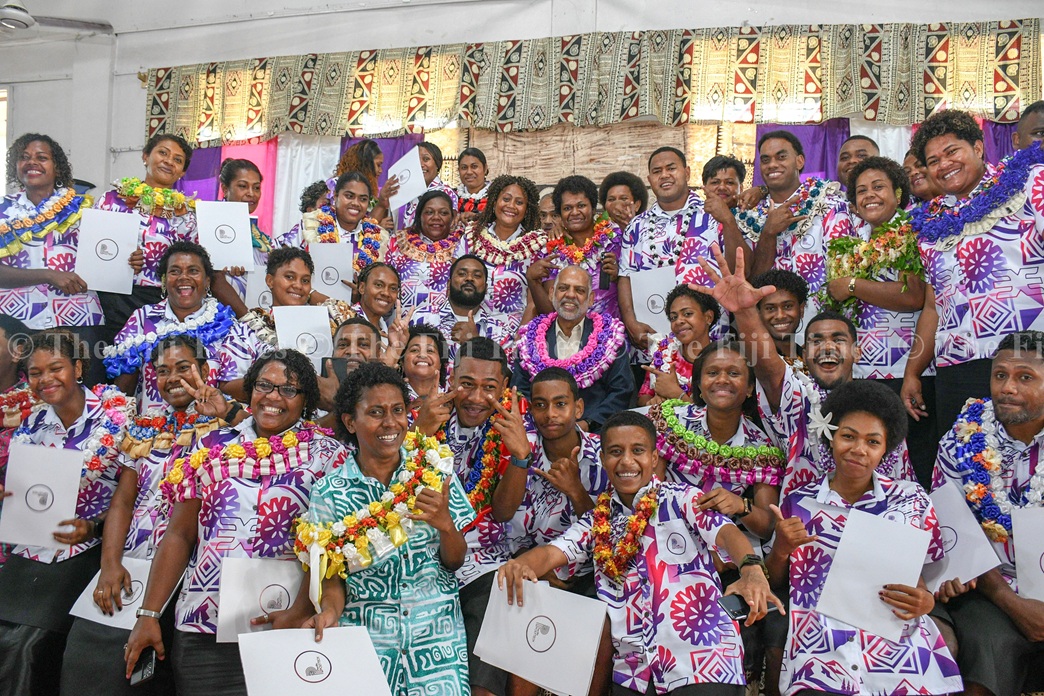
Beyond the politics, Pacific Polytech points to its scale and student outcomes as evidence of its value.
More than 90 per cent of its students are iTaukei, many of them early school leavers or unemployed youth.
“So far Polytech has graduated 2248 students with Certificate 3 qualifications in areas like carpentry, electrical, plumbing and hospitality,” Dr Chand said.
“It has also graduated 2565 youth with TSLS-supported micro-qualifications.”
He said Fiji needed about 8000 new skilled workers each year to sustain its industries.
“Training institutions still have a long way to go to meet this target,” he said.
Fiji Labour Party criticism
Meanwhile, in a statement issued on Friday, Fiji Labour Party leader Mahendra Chaudhry has challenged media reporting and questioned the legality of earlier grants.
“Pacific Polytech was not fully registered until August 2025 and therefore not entitled to government grants before that,” Mr Chaudhry said.
“This means the $6million given in grants in earlier budgets was illegal.”
He also criticised the Ministry of Finance for bypassing the HECF in handling grant processes, saying this alone justified a parliamentary inquiry.
Looking ahead
Dr Chand said Pacific Polytech would cooperate fully with any lawful audit or investigation.
“Our audits are clean, without qualification,” he said.
“We are serious about skilling Fiji and providing opportunities, particularly for iT aukei youth who have been sidelined from the mainstream.”
As Pacific Polytech prepares to train more than 2000 students in 2026, the controversy surrounding is far from over, raising bigger questions about accountability, regulation and who controls the future of technical education in Fiji.

