
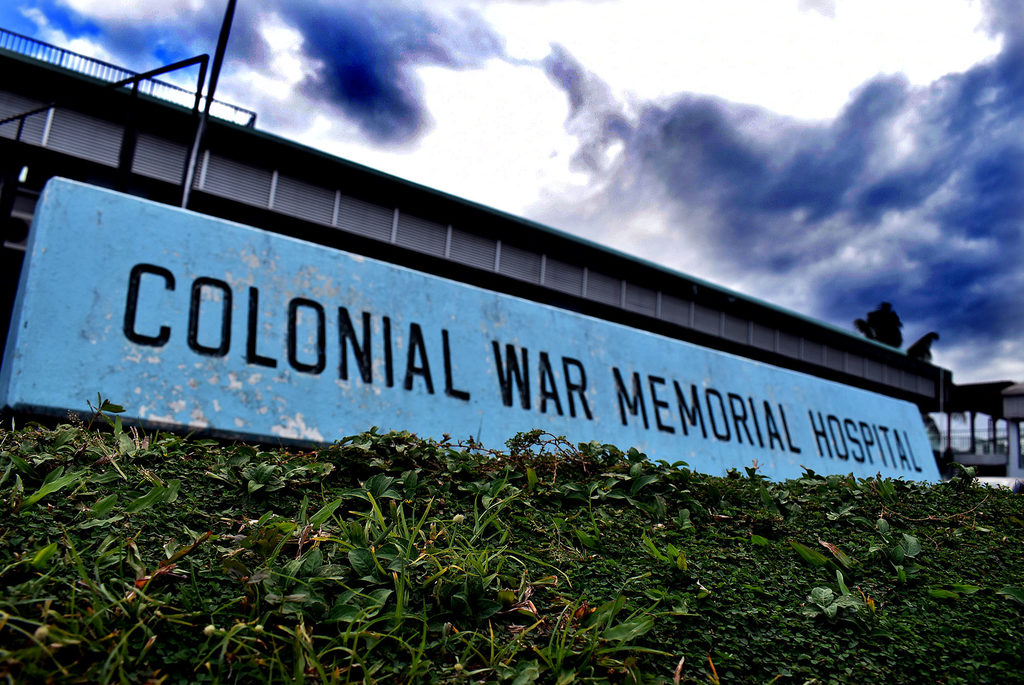
PROACTIVE management, better use of funds and improved working conditions will help improve service delivery, not only at the Colonial War Memorial Hospital (CWMH) but at other health centres as well.
This is according to Fiji Boxing Association chairperson Adi Narayan.
Mr Narayan spent 20 years working in the Cook Islands before returning to Fiji in 2014. Eight of those years were spent working in the island nation’s health sector as executive director of Finance and Administration, and acting secretary of health while subsequently being given the responsibility as manager Rarotonga Hospital, which also expanded his responsibilities to Aitutaki Hospital.
“I introduced online system in Cook Islands. Before when you go to outpatients, it was a card system. They’ll ask for your personal details and go look for your folder in a cabinet somewhere,” Mr Narayan said.
“I went to New Zealand and I researched a company. They call themselves MedTech so I wrote to them, and they sent their man. They spent one week with men, took all the information, they went back and then sent me that they got for me.
“I went to cabinet and got the money. Soon as I got the money, I gave them 50 per cent deposit. Within three months, we’ve installed online operation from the front office, right up to the four doctors rooms. And all the manual card system were logged into the computer.”
During his time as acting secretary of health in the Cook Islands, Mr Narayan oversaw a $225,000 facelift at the country’s main hospital, Rarotonga Hospital.
“The bottom line is that at the end of the day, the working conditions of the staff will improve, the attitude and motivation will improve — staff production increases which results in better services for the public.”
Mr Narayan highlighted three main issues relating to the Colonial War Memorial Hospital and they are aging infrastructure, poor service delivery and management failure.
“Number one is that infrastructure is falling apart and because of that number two comes in, which is poor service delivery. Service delivery is poor because of number three: management failure.
“We keep blaming the previous government because they’ve been in power for 16 years or whatever. This government took over almost two years ago and they knew what they were getting into.
“This was nothing new for them because they were very critical of the previous government about the service at the Ministry of Health, and CWM Hospital. This government knew all along.
“So what do you do? As soon as you get in, you take a stocktake of the problems that you have then you prioritise those problems. How are we going to tackle them?
“That’s where management comes in.”
He said the millions being set aside from the national budget annually was enough to address some of the minor challenges the hospital is facing while waiting for the big donors.
“Preventative maintenance program. This is a program where you prioritise your maintenance and how you’re going to schedule them and tackle them one by one.
“Broken doors needs fixing, right? Toilet seats are broken. So for these two, there’s no need to wait for a major Australian aide to come and do that. We keep listening every year in the budget that couple of months time, $400 million Australian aid will come but in the meantime, patients are suffering.
“The services are being affected because the workplace conditions are pathetic, and we can’t provide efficiency. So we spruce up what we got there.
“PWD (Public Works Department) was brought under this new government, given a new life so use them. You have a budget, you have a maintenance guy, sit with PWD, bring them in, take them to the wards, let them walk around with you, make a list of things that they can do like fixing up the doors.
Mr Narayan said the ministry is continuously advising members of the public to visit their nearest health centres for their healthcare needs but some health centres need urgent works and maintenance to be usable by the public.
“I think you should visit these public health centres and see the condition of the buildings there. The Samabula Health Centre. I just took a drive there and I saw people sitting outside the that corridor.
“During rainy weather, it leaks. It leaks and patients get wet.
“That day, it was so full I saw almost 30 people sitting outside on the ground. So the ministry is telling me to go to my nearest public health centre that would take me two hours to see a doctor there. Why? Because it’s too small. Maybe not enough doctors there. I don’t know why.”
Mr Narayan said those at managerial level need to spend more time talking to the staff below them, especially those on the ground, to be kept appraised on issues that needed to be addressed immediately.
He said that in that way, issues can be addressed more quickly.

