
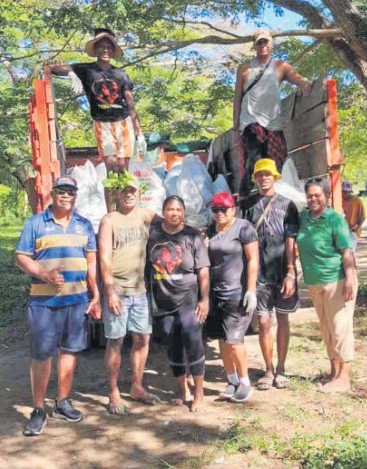
THE issue of improper waste disposal resurfaced after 55 sacks of trash was collected from two popular public beaches in Lautoka over the weekend.
The rubbish was collected by members of the Youth Assembly of Fiji and Ministry of Environment who led the campaign to clean up Saweni and Lomolomo beaches as a lead up to World Environment Day and World Oceans Day later this month.
In a statement, the ministry highlighted the rubbish — that consisted of single use plastics, PET bottles, aluminium cans, glass bottles and household waste — was a stark reminder for all Fijians to “do the right thing”.
“The large volume of rubbish recovered from the two beaches highlights the ongoing issue of improper waste disposal and its impact on the environment,” the statement read.
“The ministry is calling on all Fijians to ‘do the right thing’ by taking responsibility for their waste and disposing it of properly.
“Much of the litter discarded on land eventually blocks drains and enters waterways, rivers and the ocean, where it pollutes ecosystems and threatens marine life.
“While enforcement remains important, the ministry stresses that lasting solutions require behavioural change. Individuals, families and communities must develop a stronger sense of civic pride and environmental responsibility.”
The state agency explained that penalties were a last resort.
“However, members of the public are reminded that littering is an offence and those caught improperly disposing of waste can face a $200 fine, which will be enforced by the relevant enforcement authorities.
“The ministry commends the Youth Assembly for Fiji and all community groups and stakeholders who continue to take action to protect the environment.
“As Fiji marks World Environment Day and World Oceans Day in June, the ministry encourages everyone to play their part in keeping communities clean and safeguarding the country’s natural resources for future generations.”

